 EN


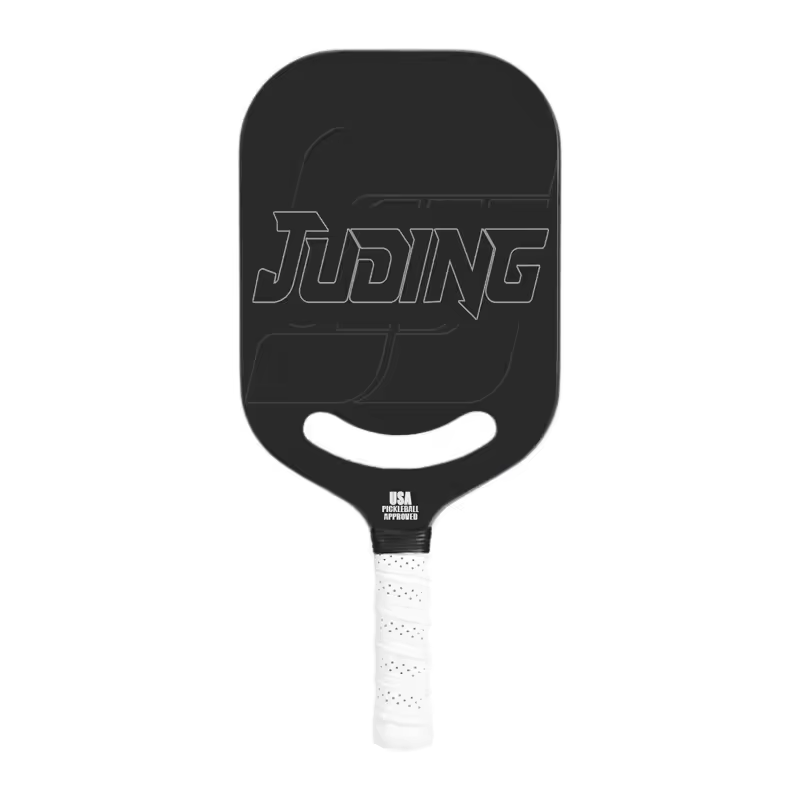
The Critical Balance Between Mass and Court Agility
When brands and tournament competitors configure custom pickleball paddles, selecting the right mass distribution determines tactical success. Choosing between different pickleball paddle weight options directly impacts swing acceleration, ball trajectory, and physical endurance. Novice players often underestimate how a fraction of an ounce shifts biomechanical leverage during rapid kitchen exchanges. A paddle that feels slightly too heavy causes delayed resets and missed volleys, whereas an excessively light frame lacks the punch needed to finish overhead put-aways. In competitive doubles, rapid hand speed at the non-volley line requires evaluating pickleball paddle weight options with scientific precision. Transitioning to a properly weighted midweight pickleball paddle allows players to absorb fast drives without sacrificing hand speed. For junior competitors or athletes managing tennis elbow, switching to a lightweight pickleball paddle relieves chronic joint stress. Commercial brand managers who develop custom pickleball paddles must understand how mass choices influence customer satisfaction across diverse skill tiers. Selecting appropriate pickleball paddle weight options ensures that every customer discovers an ideal blend of power and maneuverability. Offering carefully calibrated custom pickleball paddles enables sports brands to cater to both defensive dinkers and aggressive baseline drivers.
Biomechanics of Static Mass Versus Swing Weight
Understanding weight profiles requires distinguishing static mass from dynamic swing weight. While static mass measures overall weight on a digital scale, swing weight reflects the rotational inertia experienced during an actual stroke. When designing custom pickleball paddles, engineers calculate the moment of inertia around the grip pivot point. A lightweight pickleball paddle with head-heavy distribution can feel heavier in motion than a midweight pickleball paddle featuring handle-biased balancing. Players assessing pickleball paddle weight options must evaluate how mass placement alters head speed through contact. Distributing internal density toward the upper perimeter increases swing weight, generating explosive drives from baseline positions. Conversely, concentrating mass near the throat enhances maneuverability for players who prefer a midweight pickleball paddle during rapid kitchen line firefights. Brand specifiers creating custom pickleball paddles must balance these dynamic metrics to avoid dead spots. Comparing pickleball paddle weight options through rotational inertia measurements ensures predictable kinetic energy transfer. Whether a player demands the rapid reflex speed of a lightweight pickleball paddle or the solid stability of a midweight pickleball paddle, precision weight balancing establishes reliable court performance.
Categorical Breakdown Across Player Archetypes
Categorizing equipment by mass profiles enables targeted gear recommendations for diverse tactical roles. The market generally categorizes pickleball paddle weight options into three primary brackets: lightweight, midweight, and heavyweight profiles. A lightweight pickleball paddle typically ranges between 7.3 and 7.8 ounces, offering maximum maneuverability for defensive players who thrive on lightning-fast reflexes. This profile allows players to react instantly during rapid kitchen exchanges, although it demands higher swing velocity to generate deep groundstrokes. In contrast, a midweight pickleball paddle weighing between 7.9 and 8.3 ounces represents the universal sweet spot for modern tournament competition. This versatile mass category delivers balanced power on passing drives while maintaining soft touch for delicate third-shot drops. Heavyweight options exceeding 8.4 ounces cater to singles specialists who demand maximum plow-through power on baseline drives, though extended play increases forearm fatigue. Offering versatile pickleball paddle weight options across custom pickleball paddles allows clubs to equip players based on biomechanical needs. Discerning players favor a midweight pickleball paddle for all-court consistency, while control-focused athletes embrace a lightweight pickleball paddle to preserve elbow health. Specifying tailored custom pickleball paddles ensures optimal performance across all competitive tiers.
Perimeter Weighting and Twist Weight Optimization
Customization extends beyond raw mass into strategic perimeter weight placement. Modifying twist weight—the resistance to rotational twisting on off-center impacts—is vital when engineering custom pickleball paddles. When contact occurs outside the sweet spot, an unstable lightweight pickleball paddle twists in the player's grip, causing erratic ball flight. Incorporating high-density foam injection or perimeter weighted tape stabilizes the frame against torsional flutter. Players reviewing pickleball paddle weight options often utilize perimeter weighting to expand effective hitting zones without dramatically increasing swing weight. Positioning perimeter weights along the lower edges transforms a lightweight pickleball paddle into a stable defensive reset tool. For competitors wielding a midweight pickleball paddle, adding subtle perimeter ballast enhances baseline drive stability while preserving touch at the kitchen line. Commercial brands designing custom pickleball paddles must engineer internal weight channels that prevent edge delamination under high-velocity impacts. Exploring these refined pickleball paddle weight options empowers competitive players to fine-tune racket response. Balancing twist weight across custom pickleball paddles ensures that every midweight pickleball paddle delivers dependable defensive forgiveness during high-pressure tournament rallies.
Empirical Tournament Fleet Testing and Player Case Studies
Empirical field testing across competitive clubs highlights the performance dividends of proper mass allocation. During an extensive evaluation involving 90 tournament players across Texas and Arizona facilities, athletes evaluated various pickleball paddle weight options over four months of competitive league play. One testing group utilized a standard lightweight pickleball paddle, while another cohort competed with an engineered midweight pickleball paddle featuring perimeter stabilization. High-speed tracking data demonstrated that players wielding the optimized midweight pickleball paddle reduced unforced dink pop-ups by 27 percent during kitchen line exchanges. Furthermore, participants who transitioned from unbalanced heavy paddles to an ergonomic lightweight pickleball paddle reported a 34 percent reduction in wrist and forearm tendon fatigue. Club instructors confirmed that testing customized pickleball paddle weight options accelerated tactical development by aligning paddle mechanics with individual swing speeds. Equipping competitive fleets with properly balanced custom pickleball paddles significantly improved shot consistency during high-stakes tiebreaks. These field benchmarks prove that investing in properly specified custom pickleball paddles elevates player execution across all skill divisions.
Precision Engineering and Scalable Production Standards
Delivering consistent weight profiles requires rigorous industrial manufacturing and strict quality control. For sporting goods brands, retail chains, and club operators commissioning custom pickleball paddles, partnering with an established manufacturing specialist is essential. Taspo stands as a recognized composite sports equipment manufacturer, operating modern production facilities equipped with multi-axis CNC shaping, automated gram-scale balance testing, and high-pressure thermoforming lines. Utilizing aerospace-grade Toray carbon fiber prepreg and closed-cell polymer cores, Taspo engineers custom OEM and ODM equipment tailored to international tournament standards. Automated quality protocols guarantee that each custom pickleball paddles order maintains tight weight tolerances within two grams. Whether sourcing a fast lightweight pickleball paddle or an all-around midweight pickleball paddle, Taspo provides exact structural customization across all pickleball paddle weight options. Partnering with Taspo ensures consistent dynamic balance, structural durability, and superior on-court performance for sporting brands competing in global markets.
Table of Contents
- The Critical Balance Between Mass and Court Agility
- Biomechanics of Static Mass Versus Swing Weight
- Categorical Breakdown Across Player Archetypes
- Perimeter Weighting and Twist Weight Optimization
- Empirical Tournament Fleet Testing and Player Case Studies
- Precision Engineering and Scalable Production Standards