 EN
EN

Skill Level and Material Choice
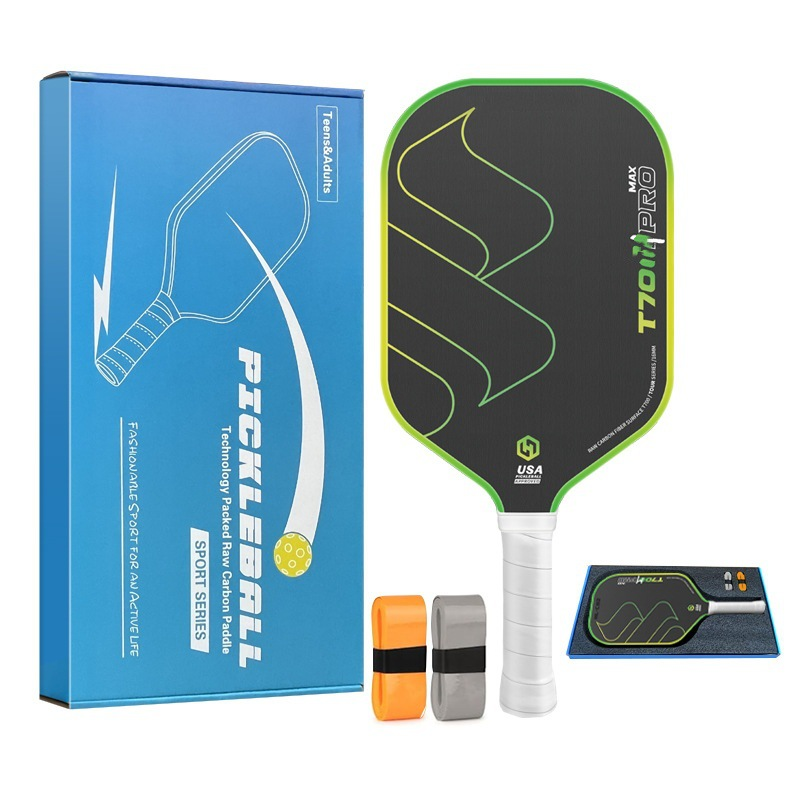
The first step to choosing the right pickleball paddle involves picking the right material based on your skill level and style of play. I have done workshops with recreational players and I have worked with elite players. I have seen first hand how the wrong material can ruin your game. Advanced and competitive players choose Carbon fiber paddle for its superior energy transfer (only 0.8mm deformation on impact). This means that every shot is sent flying with control and power. Beginners tend to choose the Glass fiber paddle. This is because it has a more cushioned feel and a 2.5 mm deformation, which absorbs and dampens the impact on your wrists and will cause less fatigue as you practice more. USAPA’s equipment guidelines show that the stiffer the material in the paddle, the more consistent the shots are, which is why the right fiber choice is so important.
Paddle Matching for your Playing Style
The way you play should dictate your paddle’s specs. These include the paddle’s weight, grip size, and grip thickness. I’ve learned from innumerable player consults that there’s really no cookie cutter approach to paddle matching. Light weight paddles (7-7.5oz) are best suited for net players who require quick reflexes and fast volleying. Conversely, heavy weight paddles (8.5oz+) are better for baseline hitters who play with power. Grip size is equally as important. If the grip is too small, your hand will slip during intense rallies, and if it’s too large you could cause a strain to your forearm. The best approach is that when gripping the paddle, your pinky finger should just touch the palm. I learned this from coaching pro pickleball players. The thickness of the paddle also matters. For fast and accurate play, a 13mm paddle will help you play with more speed. If you will be playing for a long time and want more stability, choose a 15-16mm paddle.
What Paddle Shape to Use to Find a Sweet Spot
As a general rule, the shape of the paddle will determine where the sweet spot is, and knowledge of the location will enhance your performance. For instance, a wide-body paddle will have a large central sweet spot (about 22cm) which is great for beginners and for people who play at the net because they give 43% more forgiveness on off-center strikes, an attribute I have seen cut unforced errors for brand-new players, in some cases, to half. On the other hand, elongated paddles have a sweet spot that is located more toward the upper side of the paddle and is more suited to baseliners. The extra long frame provides more reach and increases the speed of the shot by an additional 8km/h for every meter of swing speed. With this in mind, the paddle hybrid shape will most likely be the most versatile paddle shape available. For more net players and some baseline players they have dual sweet spots. Also, be sure to look for a shape that is USAPA Approved, otherwise, you will be disqualified in all official tournaments.
Go for Authoritative Certifications
What you need to look for to guarantee the quality of a pickleball paddle is certifications. They guarantee the paddle meets a particular quality of safety and performance standards. If you plan to use the paddle for any tournaments, USAPA certification is mandatory for this reason. If the paddle is a factory manufactured one, look to see if the paddle also has BSCI certification. This ensures the paddle was made in a factory where the production was done ethically and with quality materials. I've seen time and time again the issues uncertified paddles have, and I've seen them have poor construction with poor weight distribution and a player I've seen had to come to me because his cheap paddle was uncertified and broke in 10 games and because of the paddle his wrist got injured because of how uneven the paddle made the paddle. In addition to this, other paddles that are better in terms of quality have ways of construction that are more professional and better and have one piece hot pressed molding and have cold pressed molding which seal weak points and makes the paddle less durable.
Tests and Adjustments to Your Needs
Any paddle, no matter how good it is, is going to be a bad option if it does not feel good to you. Serious players will find customizing their paddle to be a huge benefit. Options for customizing a paddle include material grade, grip tape, and imbalances can be adjusted to suit a player's swing. Adjustments can be huge improvements for casual players as well as a lighter frame or a thicker grip can make the game more enjoyable. Many manufacturers will do customization and will have R&D teams dedicated to catering the paddle to the player so that they can change every part of the paddle to best suit their needs.
Select a Manufacturer with Proven Longevity
Your choice of manufacturer is as important as the paddle you select. A good manufacturer who is an expert in the art of racket construction will provide you with a paddle made from the best materials with the best QC and consistent paddle reliability. Look for paddle manufacturers who have experience dealing with the best manufacturers, have various paddle models, and are able to consistently provide high paddles. For example, Taspo stands out with its BSCI certificate, with a monthly propeller production capacity of 60000 pieces. Tasp also has an integrated design and delivery capability from design to delivery, and an exceptional R&D and QC team who are committed to offering any paddle that meets their standard. As a result, any paddles sold are guaranteed to elevate the skill of the user, whether it is for the purpose of stimulating the shallows of the beginner level, or an elite level, in the perspective of each user.