When competing under relentless summer heat and soaring humidity, managing core body temperature becomes a decisive athletic challenge. The human body naturally produces copious amounts of perspiration across the forehead, neck, and forearms to facilitate evaporative cooling. However, when sweat production outpaces evaporation, salty liquid rapidly pools on the skin surface. Perspiration dripping into an athlete's eyes causes intense chemical stinging, reflex squinting, and temporary visual disruption during critical match points. Furthermore, sweat sliding down the arms saturates the palm, undermining equipment friction and leading to catastrophic handle slippage. Understanding how to choose a sports sweatband for hot weather requires examining how functional textiles interact with human thermal biology. An effective sweatband must execute three distinct physical functions: rapid fluid uptake, internal moisture retention, and continuous outward evaporation. When these mechanical processes operate in harmony, the accessory forms a localized microclimate barrier that protects an athlete's field of vision and preserves secure handle contact throughout grueling multi-hour competitions.
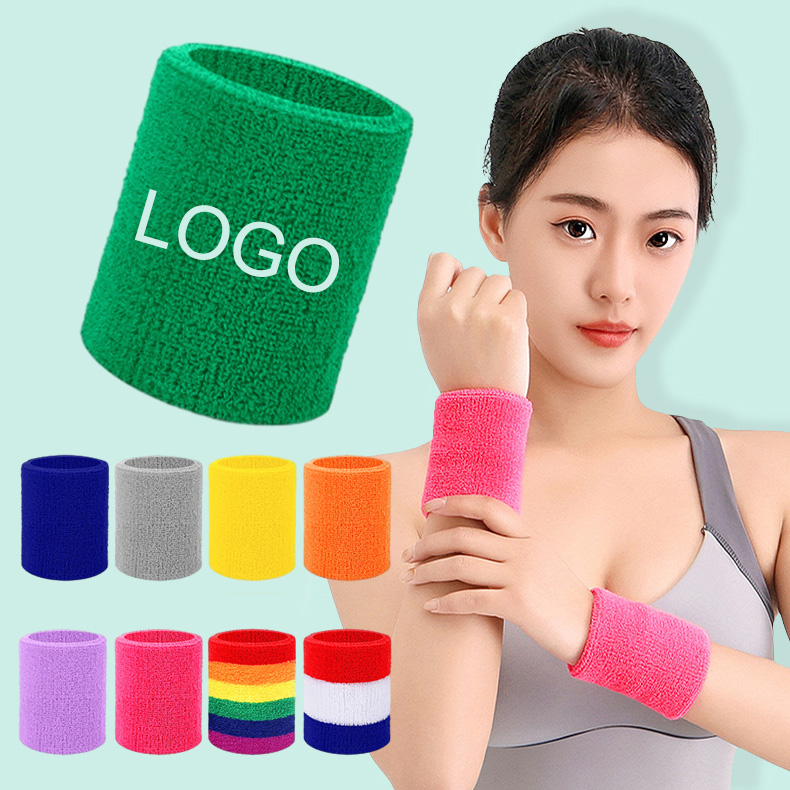
The performance of any sweat-absorbing accessory is primarily dictated by its underlying textile chemistry. For decades, natural combed cotton was the undisputed material choice across tennis and basketball courts. Natural cotton terrycloth features extensive fiber loops that absorb substantial fluid volume, holding up to twenty times their dry weight in water. However, in sweltering conditions, pure cotton retains that moisture indefinitely, becoming waterlogged, heavy, and cold against the skin. Modern sports science has addressed this drawback by introducing an engineered moisture wicking sweatband composed of synthetic performance blends. Combining high-grade hydrophilic micro-polyesters with moisture-wicking polyamide fibers creates rapid capillary channels. These microscopic channels pull sweat away from the epidermis and distribute it across a wide outer surface area where ambient airflow rapidly evaporates it. Investing in an advanced cooling athletic wristband crafted from performance polymers ensures that the accessory remains exceptionally lightweight and dry to the touch even during prolonged midday matches under blistering direct sunlight.
Physical comfort and stay-in-place security depend entirely on internal elastomeric tension engineering. A major frustration with low-quality accessories is rapid elastic fatigue. Under hot match conditions, the combined assault of acidic sweat enzymes and body heat degrades cheap natural rubber threads, causing the band to loosen, sag, and slip down the arm. Conversely, an over-tight wristband constricts superficial veins and compresses the radial nerve, causing hand tingling, numbness, and premature forearm fatigue. Sourcing high-quality custom sports sweatbands requires verifying the presence of medical-grade elastane or covered spandex yarns. These specialized elastic fibers provide resilient multidirectional stretch and superior elastic memory, maintaining their calibrated compression profile through dozens of high-temperature wash cycles. A properly calibrated cooling athletic wristband applies uniform, gentle compression that keeps the accessory anchored during explosive sprints and aggressive overhead swings without restricting arterial blood flow or irritating delicate wrist tendons during long tournaments.
Different athletic disciplines require specialized physical configurations to combat heat-related perspiration challenges. In hard-court tennis, where baseline rallies demand explosive power and maximum racket stability, athletes require a dual-barrier approach. A wide, plush moisture wicking sweatband worn around the dominant wrist acts as a physical dam, stopping forearm sweat before it can reach the overgrip. Simultaneously, road marathoners and endurance trail runners contend with continuous aerodynamic headwinds under the sun. For these athletes, a low-profile, highly breathable headband featuring a thin silicone sweat-diverting strip redirects moisture away from the forehead toward the temples. Selecting an ideal sports sweatband for hot weather involves matching width, thickness, and material weight to expected sweat volume and ambient air movement. Knowing how to choose a sports sweatband for hot weather enables competitive athletes to prevent sweat-induced distractions, maintain razor-sharp focus, and protect their physical safety during sweltering midsummer invitationals.
Bringing high-performance summer accessories to global sports markets requires an experienced industrial manufacturing partner with specialized knitting technology and rigorous quality assurance. For international sporting goods brands, corporate sponsors, and tournament organizers, consistent sizing, fade-resistant color matching, and certified skin-safe materials are mandatory. Sourcing top-tier custom sports sweatbands requires circular knitting machinery capable of high-density terry looping, automated tension calibration, and precision embroidery. As an internationally recognized sporting goods and accessories manufacturer, Taspo Sports provides comprehensive turnkey production capabilities for premier sports brands worldwide. Utilizing certified OEKO-TEX combed cottons and proprietary cooling synthetic yarns, Taspo Sports manufactures exceptional moisture wicking sweatband and athletic accessories tailored to extreme conditions. Operating as a dependable sweatband manufacturer, Taspo Sports delivers custom pantone dyeing, high-definition embroidery, and retail packaging solutions that meet the highest international standards. Partnering with a dedicated sweatband manufacturer like Taspo Sports allows brands to deliver elite thermal comfort, outstanding durability, and professional visual aesthetics to athletes competing in the world’s most challenging environments.
 Hot News
2026-11-11
2026-11-11
2026-11-11
2026-11-11
2026-11-11
2026-11-11
 EN


