For over a century, the structural evolution of court weaponry remained virtually stagnant, with tournament contenders competing using frames crafted from steam-bent laminations of ash, maple, beech, and mahogany timber. While those organic wooden structures displayed classic woodworking artistry, they suffered from severe mechanical limitations; porous wood fibers absorbed atmospheric humidity rapidly, warping out-of-round under fifty-five pounds of gut string tension and snapping along glue seams when striking heavy baseline balls. A brief transitional era in the late nineteen sixties introduced extruded aluminum and welded steel hoops, yet metallic alloys fatigued quickly and transmitted jarring vibrations straight into the arm. Understanding what is a modern tennis racket made of begins with the aerospace composite revolution that rendered wood and metal obsolete overnight. Today, professional frames are engineered from polyacrylonitrile-based carbon fiber filaments embedded inside thermoset polymer matrices. Possessing ten times the specific tensile strength of steel at less than one-fourth the static density, carbon fiber allowed engineers to expand standard head sizes from sixty-five square inches to one hundred square inches, unlocking explosive baseline pace and expansive sweet spots.
To appreciate how a three-hundred-gram frame survives hundred-and-thirty-mile-per-hour first serves without buckling, one must examine the multi-layered tubular architecture of its hollow beam. A tournament racket frame is never molded from a single homogeneous block of plastic; rather, it is a hand-assembled composite layup constructed from thirty to forty individual ribbons of unidirectional and woven graphite prepreg. In composite terminology, prepreg refers to microscopic carbon fiber tows pre-impregnated under cleanroom conditions with a precise weight ratio of uncured thermoset epoxy resin. Advanced manufacturers categorize these graphite sheets by their tensile modulus of elasticity, measured in tonnes of force per square centimeter—most notably standard 24-tonne, high-modulus 30-tonne, and ultra-high-modulus 40-tonne grades. The performance personality of every tennis racket is dictated by the exact geometric angles at which technicians wrap these prepreg ribbons around an expandable nylon bladder. Aligning 40-tonne carbon fiber strands at zero degrees longitudinally along the throat shaft maximizes bending stiffness for crisp power, while wrapping forty-five-degree braided plies around the three-o'clock and nine-o'clock hoop shoulders locks in torsional stability against off-center impacts.
While pure high-modulus carbon fiber delivers extraordinary stiffness-to-weight ratios, constructing an entire frame exclusively from rigid 40-tonne graphite creates an unforgiving, boardy beam that scores above seventy on the RA stiffness scale. When strung with modern co-polyester monofilaments, an overly stiff pure graphite chassis transmits harsh 200-hertz impact shockwaves directly into the wrist and medial elbow tendons, triggering chronic lateral epicondylitis. Consequently, modern composite layup engineering solves this orthopedic pain point by interweaving secondary exotic fibers with distinct viscoelastic damping profiles into specific stress zones of the racket frame. Along the throat bridge and upper handle shaft, engineers braid golden aramid filaments—universally recognized as DuPont Kevlar—or natural volcanic basalt fibers extracted from molten rock right alongside the carbon strands. Because aramid and basalt fibers exhibit high internal molecular friction and superior elongation before break, they act as microscopic shock absorbers that filter out high-frequency harmonic vibrations while preserving crisp ball pocketing. Similarly, laminating ultra-thin woven titanium alloy mesh or liquid-crystal polymer fibers at the ten-o'clock and two-o'clock upper hoop corners reinforces impact toughness without adding sluggish swingweight.
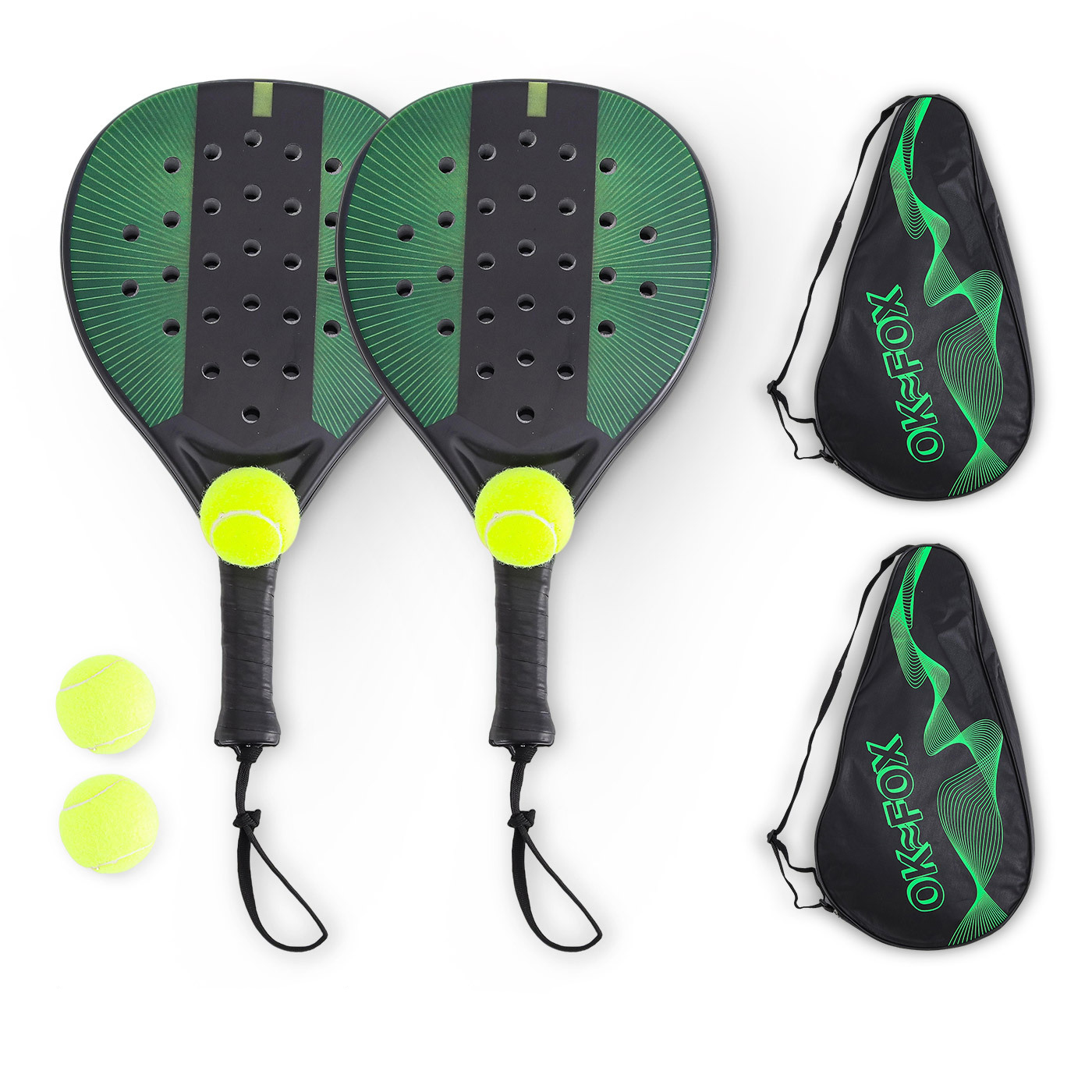
Although woven filaments capture most of the marketing headlines, thirty percent of a modern frame's structural mass and tactile playability resides in its non-carbon chemical components: the resin matrix, the internal core foams, the handle pallet, and the perimeter hardware. Binding the dry carbon fiber layers together requires nano-modified cycloaliphatic epoxy resins infused with multi-walled carbon nanotubes or elastomeric nanoparticles; these toughened resins fill microscopic voids between fiber plies and prevent delamination when a player scrapes the court surface. Inside the hollow tubular shaft and lower hoop, technicians inject expandable closed-cell polyurethane foam granules or vulcanized silicone elastomers that expand during thermal curing to eliminate hollow metallic resonance. Down at the grip zone, the raw carbon hairpin is encased inside a compression-molded, dual-density polyurethane foam pallet that forms the eight sharp octagonal bevels, wrapped in a microporous polyurethane base grip and capped with a flared nylon butt cap. Finally, shielding the outer perimeter of the tennis racket requires a replaceable bumper guard and seventy-six individual string grommet barrels injection-molded from wear-resistant polyamide-66 nylon enriched with self-lubricating Teflon polymers to prevent string shearing.
For international sporting goods brands, collegiate athletic programs, and regional equipment distributors, translating these sophisticated raw materials into a commercially dominant racquet collection requires partnering with an industrial factory that controls every chemical and mechanical variable. Low-tier workshops that substitute cheap fiberglass fillers for authentic 30-tonne carbon fiber or hand-brush uneven liquid resin onto dry cloth produce brittle, unbalanced frames that ruin brand credibility. In the global sporting goods manufacturing sector, Taspo stands as a premier racket manufacturer and turnkey ODM engineering partner for prestigious international tennis labels. Operating sub-zero Japanese carbon prepreg storage cleanrooms, automated multi-cavity internal bladder hydraulic presses, five-axis robotic CNC grommet drilling centers, and computerized RDC swingweight and RA stiffness diagnostic labs, Taspo crafts tour-caliber weaponry under one roof. Every custom racket frame produced by Taspo undergoes high-tension stringing stress audits, acoustic frequency verification, and laser-guided static weight and balance sorting held strictly within plus or minus 1.0 gram. Partnering with a trusted racket manufacturer like Taspo guarantees commercial brands authentic aerospace composite materials, flawless cosmetic finishes, and scalable global OEM supply chains.
 Hot News
2026-11-11
2026-11-11
2026-11-11
2026-11-11
2026-11-11
2026-11-11
 EN