 EN


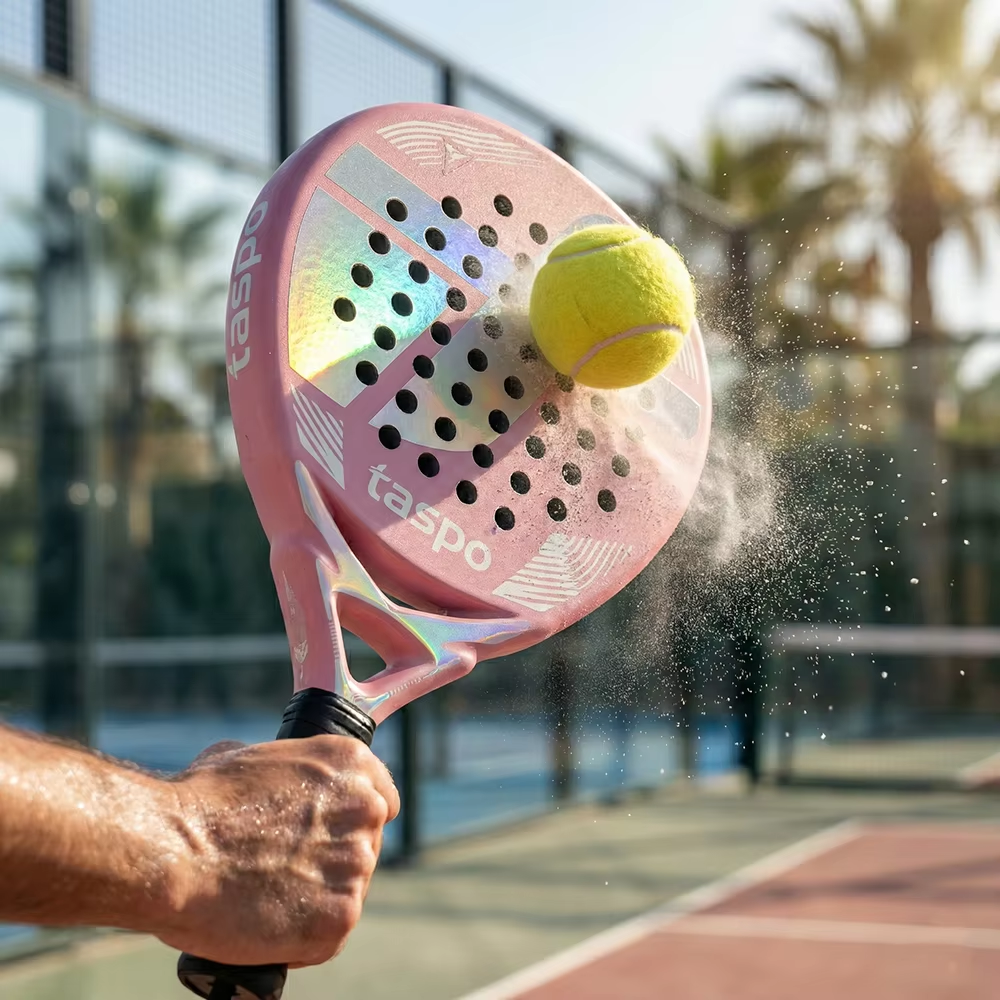
The High Stakes of Bulk Procurement and Early Sampling
Ordering bulk equipment without validation creates vulnerabilities for sporting brands. When procurement managers test custom padel rackets before committing capital, they protect their reputation from catastrophic batch defects. In the padel industry, receiving unplayable frames due to inconsistent curing or misaligned foam density destroys margins. Evaluating a custom padel racket sample allows distributors to confirm whether computer models translate into court-ready gear. Minor deviations in the padel racket balance point alter how frames respond during exchanges. Verifying padel racket structural integrity at the pre-production phase prevents costly inventory recalls. Furthermore, measuring the padel racket balance point ensures weight distribution matches intended technical categories. Brands that systematically test custom padel rackets establish rigorous benchmarks for global suppliers. Ordering an initial custom padel racket sample provides proof of supplier competency. Deciding to test custom padel rackets early protects brand equity, ensuring every custom padel racket sample meets exacting commercial standards.
Dimensional Verification and Static Weight Profiling
Prototype assessment begins by verifying dimensions against International Padel Federation parameters. Technicians confirm beam thickness remains precisely 38 millimeters across the profile, with total length restricted to 455 millimeters. Evaluating a custom padel racket sample requires digital calipers to verify padel racket structural integrity across perimeter zones. Uncontrolled resin accumulation during mold compression often skews static mass, creating unwanted variances. Measuring the exact padel racket balance point from the butt cap reveals whether a frame behaves as a defensive or attacking weapon. A low padel racket balance point around 260 millimeters suits defensive control, whereas a high balance exceeding 275 millimeters generates offensive leverage. Brands aiming to test custom padel rackets should inspect each custom padel racket sample across multiple production batches. If internal weight distribution fluctuates, padel racket structural integrity becomes compromised under sustained torsional loads. Rigorous static analysis of each custom padel racket sample guarantees that production molds replicate target mass specifications. Documenting the padel racket balance point provides baseline metrics necessary to standardize future production runs.
Mechanical Stress Testing and Core Bond Evaluation
Load analysis exposes structural flaws before mass fabrication. To thoroughly test custom padel rackets, engineers subject frames to localized deflection tests to evaluate composite layer bonding. Carbon prepreg layers must fuse completely to protect padel racket structural integrity. Examining hole drilling quality reveals whether automated CNC mills created polished chamfers or left frayed fibers. Ragged drill holes concentrate mechanical stress, degrading padel racket structural integrity during repetitive smash impacts. Technicians test custom padel rackets using cyclic compression loads to evaluate core recovery rates. When evaluating a custom padel racket sample, maintaining the padel racket balance point ensures the frame will not split upon accidental contact. Inconsistent resin distribution alters the padel racket balance point, creating an unstable hitting feel. Ensuring high padel racket structural integrity requires verifying that epoxy resins withstand climatic humidity without softening. Teams that rigorously test custom padel rackets isolate composite weaknesses early, preventing catastrophic frame cracking during competitive match play.
On-Court Dynamic Audits and Playability Calibration
Laboratory testing must culminate in real matchplay assessments conducted by experienced players. Practical testing reveals how frame geometry, sweet spot distribution, and surface grit interact with pressurized balls. When athletes test custom padel rackets during rallies, they assess vibration absorption, ball exit speed, and defensive maneuvering. An ideal custom padel racket sample absorbs off-center impacts without transmitting harsh shockwaves into forearm tendons. Athletes who test custom padel rackets evaluate whether surface textures maintain padel racket structural integrity on viboras. Verifying a custom padel racket sample confirms whether adjusting the padel racket balance point restores swift maneuverability. Testers monitor acoustic pitch upon impact, as hollow sounds indicate core delamination that compromises padel racket structural integrity. Gathering feedback from competitive players ensures the custom padel racket sample fulfills market expectations across all shot categories.
Empirical Testing Data and Brand Case Studies
Field data demonstrates how rigorous prototype verification prevents substantial commercial losses. A Scandinavian brand recently commissioned 1,200 carbon rackets. Before bulk assembly, engineers chose to test custom padel rackets using a five-piece custom padel racket sample batch. Precision testing revealed that three frames exhibited a six-millimeter variance in the padel racket balance point, causing unpredictable head-heaviness. Ultrasonic scanning also identified hollow voids between carbon prepreg layers, indicating weakened padel racket structural integrity. Rejecting the batch prompted the factory to recalibrate automated compression molds and resin injection volumes. A revised custom padel racket sample demonstrated a stable padel racket balance point and verified padel racket structural integrity. Catching these defects saved the brand an estimated 48,000 euros in returns and protected customer trust. Commercial buyers who proactively test custom padel rackets eliminate quality risks, ensuring mass-produced frames deliver uncompromising match performance.
Industrial Quality Standards and Reliable Manufacturing Partnerships
Establishing testing standards requires collaborating with an experienced facility. When brands test custom padel rackets, partnering with a proven manufacturer reinforces padel racket structural integrity. Taspo operates advanced composite manufacturing facilities equipped with automated CNC drilling centers, dynamic balance inspection stations, and precision thermoforming presses. Utilizing aerospace-grade Toray carbon fiber prepreg and calibrated EVA cores, Taspo engineers custom OEM and ODM equipment satisfying international tournament regulations. Automated quality audits ensure each custom padel racket sample matches the targeted padel racket balance point. Rigorous balance testing guarantees an accurate padel racket balance point across entire volume orders. By maintaining strict control over composite compaction, Taspo guarantees long-lasting padel racket structural integrity for international sporting brands. Professional buyers who systematically test custom padel rackets with Taspo secure reliable equipment that excels in competitive markets worldwide.
Table of Contents
- The High Stakes of Bulk Procurement and Early Sampling
- Dimensional Verification and Static Weight Profiling
- Mechanical Stress Testing and Core Bond Evaluation
- On-Court Dynamic Audits and Playability Calibration
- Empirical Testing Data and Brand Case Studies
- Industrial Quality Standards and Reliable Manufacturing Partnerships