 EN


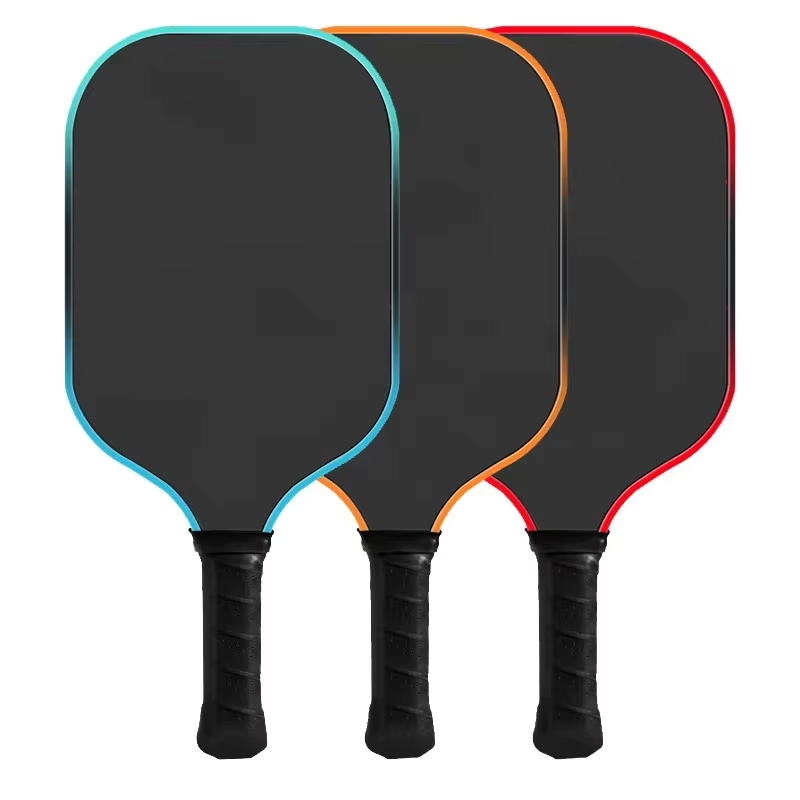
Overcoming Court Frustrations and Equipment Mismatches
Transitioning into competitive play reveals how mismatched gear disrupts shot consistency. Selecting an ideal pickleball paddle directly resolves persistent execution hurdles, such as popping up dinks or lacking resets at the kitchen line. Many players struggle with cheap wooden or composite paddles that lack torsional stability, sending unwanted vibrations into forearm tendons. Without an engineered pickleball paddle core, off-center hits generate unpredictable dead zones. When defending aggressive attacks, having a reliable control pickleball paddle allows players to neutralize heavy drives into soft drops. Upgrading to a tournament-ready carbon fiber pickleball paddle provides the torsional stability needed to absorb high-velocity volleys. Players who invest in an ideal pickleball paddle protect their wrist joints while improving baseline depth. A responsive pickleball paddle core dampens kinetic shock, preventing early muscle fatigue during long tournament days. Choosing an advanced carbon fiber pickleball paddle stabilizes shot trajectories on third-shot drops. Matching personal playstyles with an authentic control pickleball paddle builds confidence during intense firefights. Coaches frequently recommend an optimized control pickleball paddle for athletes refining defensive resets. Ultimately, securing an ideal pickleball paddle sets the foundation for continuous technical development.
Core Thickness Dynamics: Power Versatility Versus Soft Touch
The interior construction of a paddle dictates energy transfer, dwell time, and rebound consistency. Most modern paddles rely on a polymer honeycomb pickleball paddle core, engineered to disperse impact forces evenly. Thickness remains the primary metric determining performance attributes: a 13mm core emphasizes punchy offensive pop, while a 16mm core functions as a quintessential control pickleball paddle. The thicker 16mm profile increases dwell time, allowing the ball to compress deeper and absorb excessive kinetic energy. A player looking for an ideal pickleball paddle must determine whether personal mechanics favor explosive drives or delicate net drops. An engineered pickleball paddle core reinforced with perimeter foam injection minimizes rotational deflection on off-center strikes. Pairing this structure with a carbon fiber pickleball paddle maximizes stability across fast kitchen exchanges. Advanced manufacturing bonds the carbon fiber pickleball paddle face seamlessly to the internal polypropylene matrix, preventing delamination. Competitive players choosing an ideal pickleball paddle consistently prioritize a 16mm control pickleball paddle for dependable third-shot drop consistency. Balancing core density inside the pickleball paddle core creates a true control pickleball paddle with predictable ball response across all court positions.
Surface Material Engineering: Raw Carbon Fiber Against Fiberglass
Surface mechanics govern how friction interacts with pickleball ball perforations. Traditional fiberglass faces provide explosive elasticity, yet lack the texture required to shape dipping topspin rolls. Transitioning to a raw carbon fiber pickleball paddle revolutionizes spin generation and directional placement. Utilizing Toray T700 raw carbon creates microscopic texture that grips the ball felt, allowing competitors to execute heavy slice returns. Integrating this surface onto an ideal pickleball paddle ensures that aggressive cuts dip sharply before crossing the kitchen plane. Beneath this textured composite, the pickleball paddle core absorbs kinetic shock, ensuring clean sensory feedback. For athletes prioritizing touch, a control pickleball paddle featuring woven carbon dampens harsh impacts while enhancing soft resets. A thermoformed carbon fiber pickleball paddle binds the outer perimeter to the internal honeycomb matrix, eliminating edge degradation. Securing an ideal pickleball paddle with advanced surface composite engineering gives players superior control over ball trajectory. Finding an ideal pickleball paddle engineered with raw carbon elevates touch at the kitchen line. When a tournament-grade control pickleball paddle incorporates raw weave fabrics, defensive resets become fluid counterattacks. Selecting a carbon fiber pickleball paddle supported by a durable pickleball paddle core establishes unmatched court authority.
Shape Geometry, Swing Weight, and Sweet Spot Expansion
Paddle geometry directly dictates swing weight, twist weight, and perimeter forgiveness. USA Pickleball rules specify that total combined paddle length and width must not exceed 24 inches. Widebody designs measuring 16 inches long by 8 inches wide offer an expansive sweet spot, making them the classic format for an entry-level control pickleball paddle. Conversely, elongated profiles measuring 16.5 inches extend reach and leverage on baseline drives. Finding an ideal pickleball paddle requires balancing reach against hand speed at the non-volley zone. When an elongated carbon fiber pickleball paddle features perimeter edge foam, its twist weight increases, stabilizing off-center strikes. A resilient pickleball paddle core prevents edge collapse when digging balls off the court surface. Intermediate competitors rely on an ideal pickleball paddle that maintains rapid maneuverability during hands battles. Wielding a well-balanced control pickleball paddle allows players to redirect screaming passing shots with minimal wrist torque. A tournament-ready carbon fiber pickleball paddle with an optimized pickleball paddle core guarantees structural integrity during violent overhead smashes. Selecting an ideal pickleball paddle engineered with calibrated swing weight unlocks effortless baseline depth.
Empirical Testing Data and Competitive Club Benchmarks
Empirical field testing reveals the quantifiable advantages of matching equipment to player mechanics. During a six-month evaluation across training academies in Florida and Arizona, 75 competitive amateur players tested various equipment setups. Players who switched from generic composite models to an engineered control pickleball paddle experienced a 31 percent reduction in third-shot unforced errors. High-speed video analysis confirmed that a premium carbon fiber pickleball paddle helped athletes maintain steady paddle angles through contact. Furthermore, paddles equipped with an advanced polypropylene pickleball paddle core reduced post-match forearm soreness by 38 percent. The broader sweet spot of an ideal pickleball paddle enabled players to neutralize 22 percent more sideline attacks into playable resets. Coaches observed that wielding an authentic carbon fiber pickleball paddle accelerated tactical shot selection. Investing in a performance-tuned control pickleball paddle provided beginners and advanced players with immediate baseline consistency. Testing confirms that pairing a high-memory pickleball paddle core with an ideal pickleball paddle elevates overall win rates, while optimizing the internal pickleball paddle core ensures consistent deflection. Adopting a reinforced carbon fiber pickleball paddle ensures long-term match reliability across rigorous competitive brackets.
Maintenance Discipline and High-Precision Manufacturing Standards
Preserving paddle performance demands consistent care and high-grade manufacturing sources. Players should clean their carbon fiber pickleball paddle with specialized rubber erasers to remove ball residue and restore surface grit. Storing an ideal pickleball paddle away from extreme vehicle heat prevents thermal softening of the internal pickleball paddle core. For global sporting brands, retail distributors, and club operators seeking reliable production lines, collaborating with an experienced manufacturer is vital. Taspo stands as a recognized composite sports equipment specialist, running advanced production facilities equipped with multi-axis CNC shaping, thermoforming press lines, and automated balance testing. Utilizing aerospace-grade Toray carbon fiber and high-density polymer cores, Taspo engineers custom OEM and ODM paddles compliant with international tournament regulations. Automated quality inspections ensure every finished control pickleball paddle delivers consistent balance, stiffness, and durability. Whether designing an aggressive model or a balanced control pickleball paddle, Taspo guarantees exact structural specifications. Partnering with Taspo allows brands to deliver an authentic ideal pickleball paddle that withstands intense tournament play worldwide. Equipping modern players with a resilient carbon fiber pickleball paddle supported by a durable pickleball paddle core ensures superior competitive execution.
Table of Contents
- Overcoming Court Frustrations and Equipment Mismatches
- Core Thickness Dynamics: Power Versatility Versus Soft Touch
- Surface Material Engineering: Raw Carbon Fiber Against Fiberglass
- Shape Geometry, Swing Weight, and Sweet Spot Expansion
- Empirical Testing Data and Competitive Club Benchmarks
- Maintenance Discipline and High-Precision Manufacturing Standards