As the global padel market matures from an emerging trend into a multi-billion-dollar athletic industry, sports equipment brands face a critical strategic crossroads. In the early stages of market entry, many startups rely on factory open molds—standardized, pre-existing frame shapes available to any buyer—to launch their initial collections quickly. However, as retail competition intensifies, relying on generic open-mold silhouettes traps a brand in a race to the bottom on pricing, since competing distributors can sell the exact same physical frame under different paint decals. Escaping this commodity trap requires investing in custom mold development to create an unmistakable, proprietary product identity. Owning an exclusive steel mold grants a sporting goods brand complete intellectual property protection over its frame silhouette, throat bridge architecture, and surface geometry. When players step onto the court wielding a unique custom padel racket featuring a distinctive structural profile that cannot be found anywhere else on the market, it immediately elevates perceived brand value, commands higher retail margins, and fosters fierce customer loyalty among design-conscious athletes.
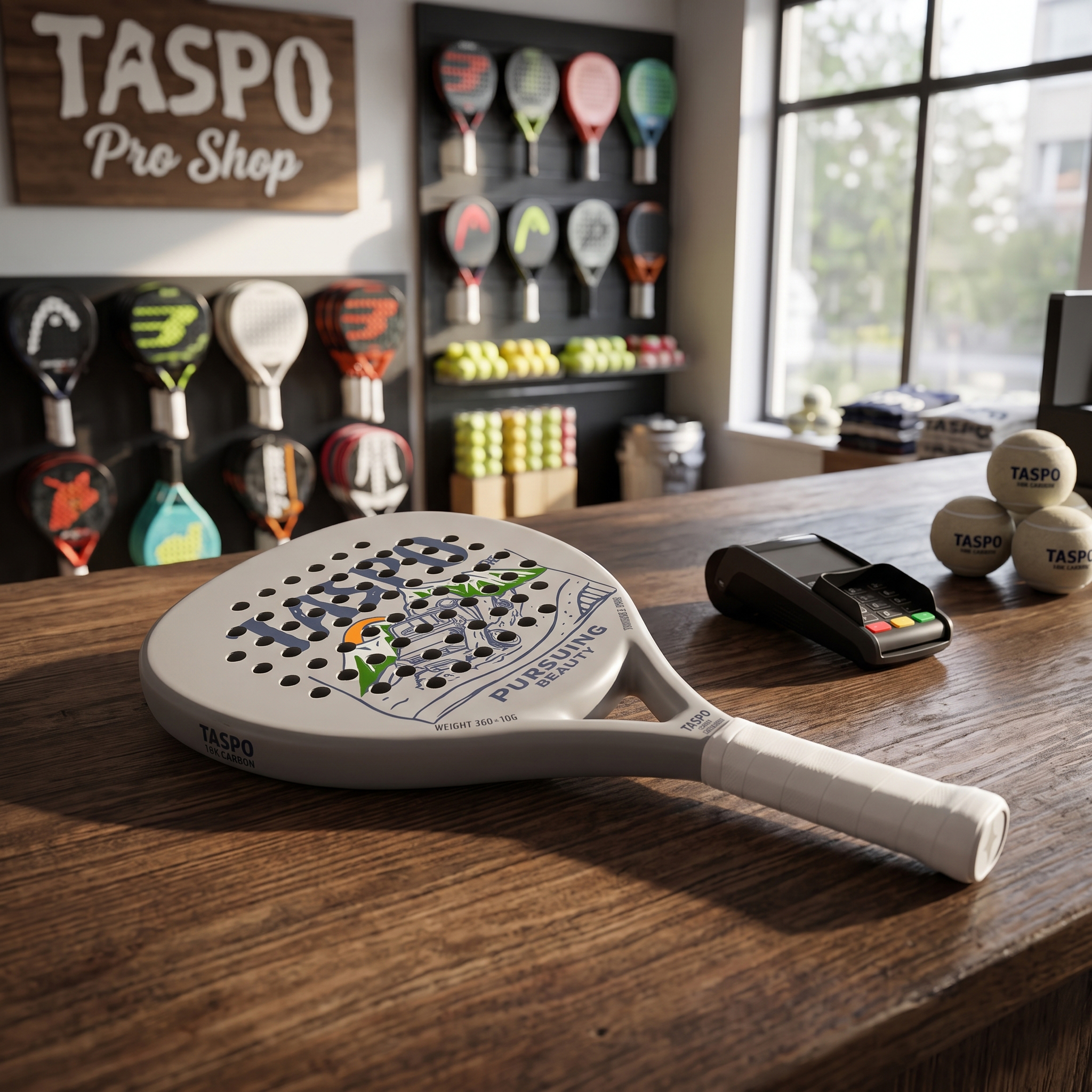
The journey toward creating a proprietary weapon begins long before molten resin or carbon fiber enters a press; it starts on advanced engineering workstations through computer-aided design and biomechanical simulation. During the initial phase of custom mold development, industrial designers collaborate with composite engineers to translate athletic performance goals into precise three-dimensional CAD geometries. Rather than guessing how a new frame contour will behave under stress, engineers subject the digital model to Finite Element Analysis (FEA) and computational fluid dynamics testing. The most complex and rewarding area of bespoke padel racket tooling is the engineering of the racket heart, or throat bridge. The throat serves as the structural fulcrum connecting the tubular handle shaft to the wide hitting face. By sculpting asymmetric aerodynamic struts, hollow venturi airflow channels, or integrated anti-torsion stabilizer bars into the throat mold, engineers can simultaneously reduce air drag during fast volleys and prevent the hitting face from twisting upon off-center ball impacts. Validating these structural load paths digitally ensures that the physical mold will yield a balanced, structurally sound frame right from the initial engineering blueprint.
Once the three-dimensional engineering blueprint is finalized, the digital file moves to the toolroom for precision metallurgical fabrication. Because composite thermoforming requires subjecting carbon prepreg layers and expandable internal bladders to temperatures exceeding 150 degrees Celsius and immense hydraulic clamping pressures, mold durability is paramount. Inferior workshops often mill molds from soft aluminum alloys to cut tooling expenses; however, soft aluminum warps rapidly under repeated thermal cycling, causing frame thickness variations and resin flashing after just a few hundred production cycles. In contrast, an authoritative padel racket mold manufacturer machines proprietary cavities from hardened P20 or H13 tool steel blocks using five-axis CNC milling centers. These heavy-duty steel platens are bored with internal thermal oil or steam channels to guarantee uniform heat distribution within plus or minus two degrees across the entire cavity. Furthermore, the internal parting lines and pneumatic bladder ports are hand-polished to a mirror finish, ensuring smooth epoxy release, zero structural weak points along the twin-tube perimeter, and a mold lifespan capable of producing tens of thousands of identical tournament frames.
One of the greatest commercial advantages of investing in custom padel racket tooling is the ability to integrate functional performance features directly into the steel cavity wall. On standard open-mold paddles, surface roughness for spin is typically added after molding by spraying a layer of silica sand mixed with clear lacquer. While effective initially, sprayed grit wears off after several weeks of abrasive play. Through precision laser engraving or chemical etching inside the steel mold cavity itself, engineers can create permanent, in-mold 3D spin topography. When the carbon fiber prepreg expands under high pneumatic pressure during curing, the epoxy resin flows into these microscopic steel engravings, forming raised hexagonal honeycombs, directional chevron ridges, or branded micro-logos directly in the composite skin. Simultaneously, custom mold development allows brands to engineer recessed perimeter channels along the top hoop to house flush-fitting protective bumper strips, or thicken the carbon walls at the three-o'clock and nine-o'clock sweet spot axis, delivering a unique custom padel racket that combines permanent spin generation with superior structural longevity.
Transitioning a proprietary steel mold from initial T1 sample trials into full-scale commercial mass production requires a vertically integrated manufacturing partner with ironclad intellectual property security and rigorous quality assurance labs. After the first prototype frames emerge from the newly machined steel cavity, they must undergo destructive laboratory testing—including mechanical pendulum impact trials, harmonic vibration frequency mapping, and dynamic balance calibration—to fine-tune the carbon layup schedule before mass retail rollout. In this specialized industrial arena, Taspo Sports stands as a premier global leader in bespoke composite racket engineering and tooling fabrication. Operating in-house CAD engineering teams, precision CNC toolmaking partnerships, and state-of-the-art thermoforming production lines under strict non-disclosure agreements, Taspo Sports guides international brands seamlessly through every stage of bespoke padel racket tooling. By partnering with an established padel racket mold manufacturer like Taspo Sports, ambitious sports companies gain exclusive ownership of groundbreaking frame geometries, microscopic weight and balance consistency, and scalable OEM manufacturing capacity, empowering them to launch a truly unique custom padel racket collection that leads global markets.
 Hot News
2026-11-20
2026-11-20
2026-11-20
2026-11-20
2026-11-20
2026-11-20
 EN


