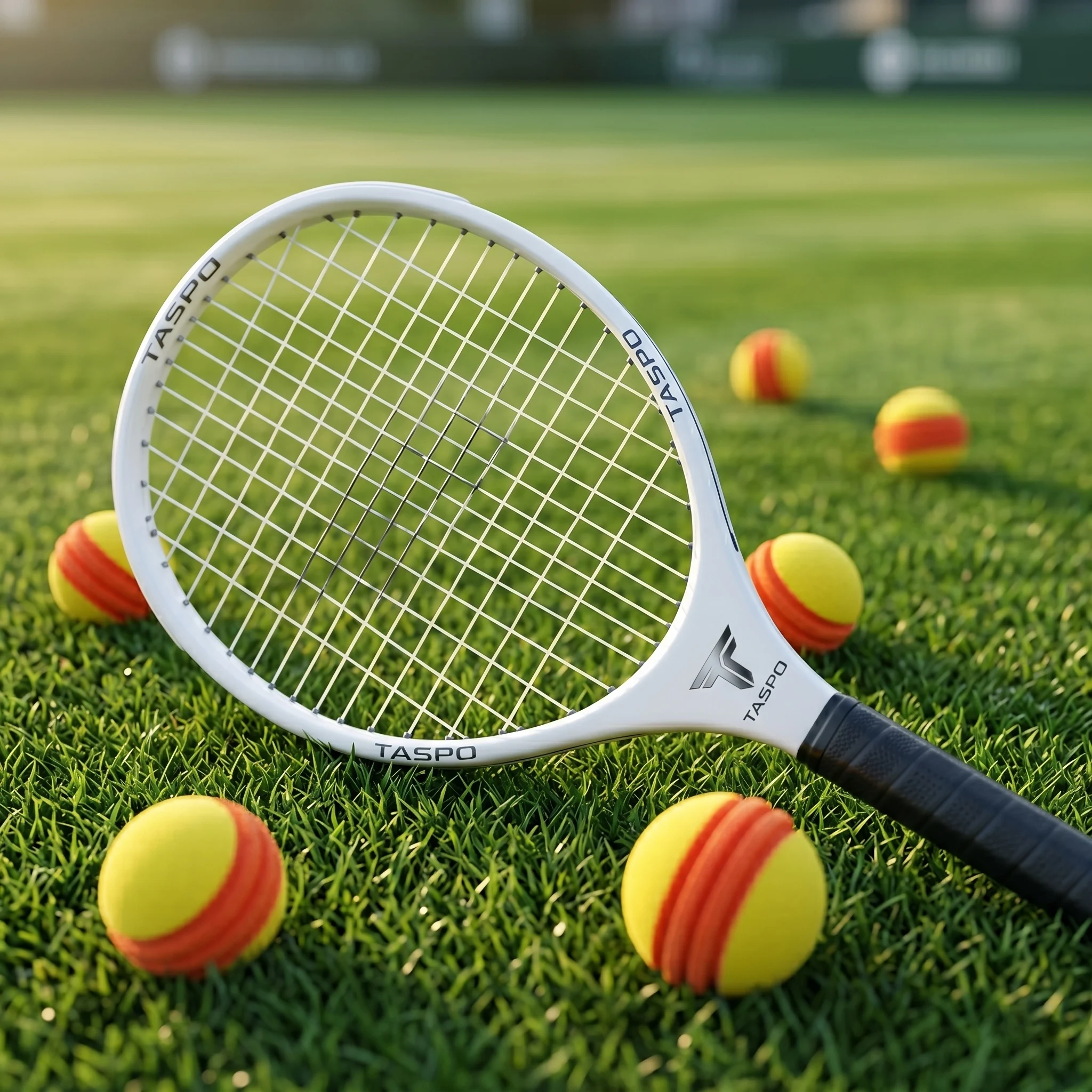
Watch an accomplished baseliner step inside the court to take a heavy cross-court rally ball on the rise, and the entire stroke depends on subconscious spatial prediction. Based on incoming spin, trajectory height over the net strap, and court speed, the athlete's brain calculates the exact millisecond and vertical height where the sphere will apex after striking the acrylic surface. Yet when a tournament or club match uses poorly manufactured spheres, one ball in the canister kicks up to shoulder height while the next skids flat at the knees despite identical swing speeds. Understanding how consistent bounce rates improve tennis ball performance explains why elite competitors obsess over batch uniformity. When tennis ball bounce consistency falters, players lose trust in their footwork timing, hesitate on aggressive approach shots, and suffer a surge in off-center frame mishits that strain the wrist and ruin match flow.
In sports engineering, bounce consistency is governed by the Coefficient of Restitution—the ratio of a sphere's outgoing velocity to its incoming velocity after colliding with a rigid surface. According to official regulations mandated by the International Tennis Federation, when a conditioned ball is dropped from a height of two hundred and fifty-four centimeters onto a granite block, its vertical rebound must land between one hundred and thirty-five and one hundred and forty-seven centimeters. While a twelve-centimeter window sounds narrow on paper, if a single three-ball canister contains one sphere rebounding at one hundred and thirty-five centimeters and another rebounding at one hundred and forty-seven centimeters, a player swinging at one hundred kilometers per hour will miss the center of their string bed by several centimeters. A premium tournament tennis ball narrows that internal factory tolerance down to plus or minus one point five centimeters within the same production lot, ensuring that kinetic energy recovery remains identical on every single groundstroke.
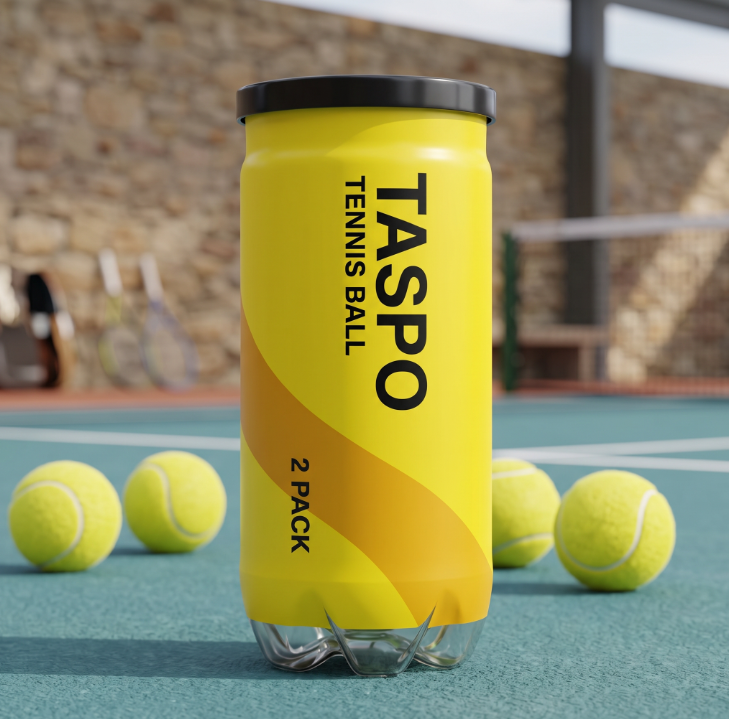
Achieving razor-sharp tennis ball bounce consistency requires eliminating two hidden structural flaws inside the sphere: uneven rubber core wall thickness and overly rigid equatorial glue seams. During half-shell compression molding, if the molten natural rubber and high-cis polybutadiene compound flows unevenly inside the cavity, one side of the pressurized tennis ball core ends up slightly thicker and stiffer than the opposite hemisphere. Whenever the ball lands on that thicker pole, it rebounds sharply; when it lands on the thinner side, it compresses too deeply and skids low. A similar anomaly occurs when factories apply excessive vulcanizing cement along the equator where the two half-shells join or where the dumbbell-shaped woven wool felt panels meet. If the seam line is substantially stiffer than the surrounding rubber wall, landing directly on the seam causes an erratic sideways kick. Precision manufacturing solves this by grinding rubber slugs to exact decigram weights and curing seam adhesives to match the exact elastic modulus of the surrounding rubber shell.
On-court telemetry from competitive collegiate tennis programs demonstrates how tightly calibrated bounce rates elevate offensive shot-making and rally quality. During an eight-week study across four university hard-court facilities, thirty-two varsity singles players competed using two different ball batches blind-marked for testing. Batch A consisted of standard commercial spheres with a measured drop-test variance of nine point eight centimeters across cans, while Batch B featured a precision-sorted high bounce consistency tennis ball batch holding variance under one point six centimeters. High-speed Hawk-Eye trajectory cameras and string-bed impact sensors revealed that when competing with the uniform Batch B spheres, players increased their sweet-spot contact accuracy on rising service returns by twenty-three percent. Furthermore, average baseline rally lengths increased by three point four shots per point, as athletes felt confident stepping inside the baseline to redirect pace rather than backing up defensively behind the court curtain to wait for unpredictable bounces to settle.
Consistent bounce rates are equally transformative for coaching academies and players who log hours practicing against automated ball-feeding machines. Modern oscillating ball machines use dual spinning urethane wheels to pinch and launch spheres at programmed speeds and topspin rates. If a coach fills a two-hundred-ball hopper with mixed or poorly calibrated spheres where forward compression deformation varies wildly, the machine's wheels grip each ball differently—sending one feed deep to the baseline and dumping the very next feed into the bottom of the net. To prevent this training frustration, top-tier factories subject every tournament tennis ball and pressureless academy sphere to three-axis Stevens compression deflection testing under an eight-point-one-six-five-kilogram load, paired with automated optical drop-tower sorting. Grouping balls by exact rebound millimeter and compression stiffness guarantees that every feed from a coaching hopper lands in a tight, repeatable target zone for muscle-memory grooved strokes.
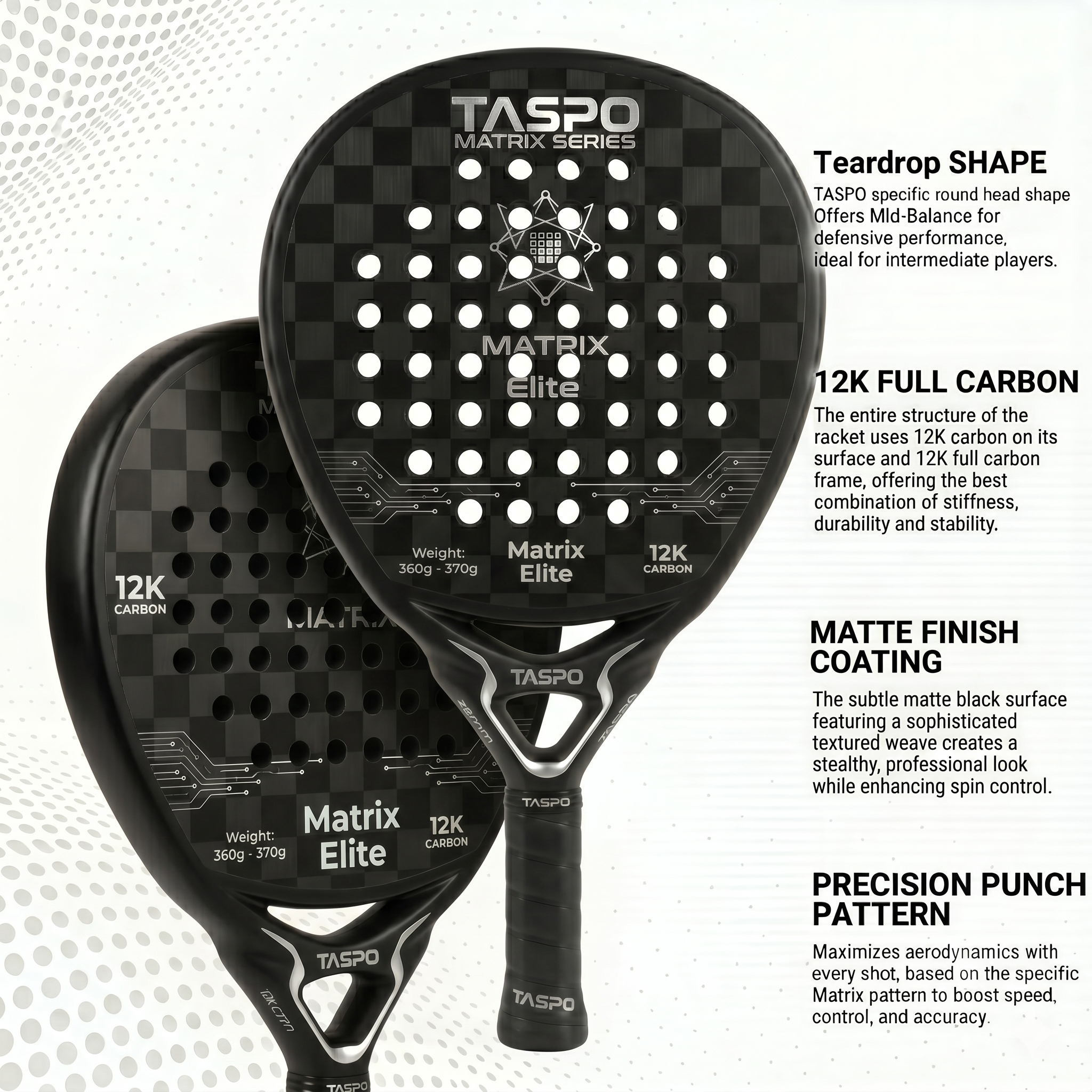
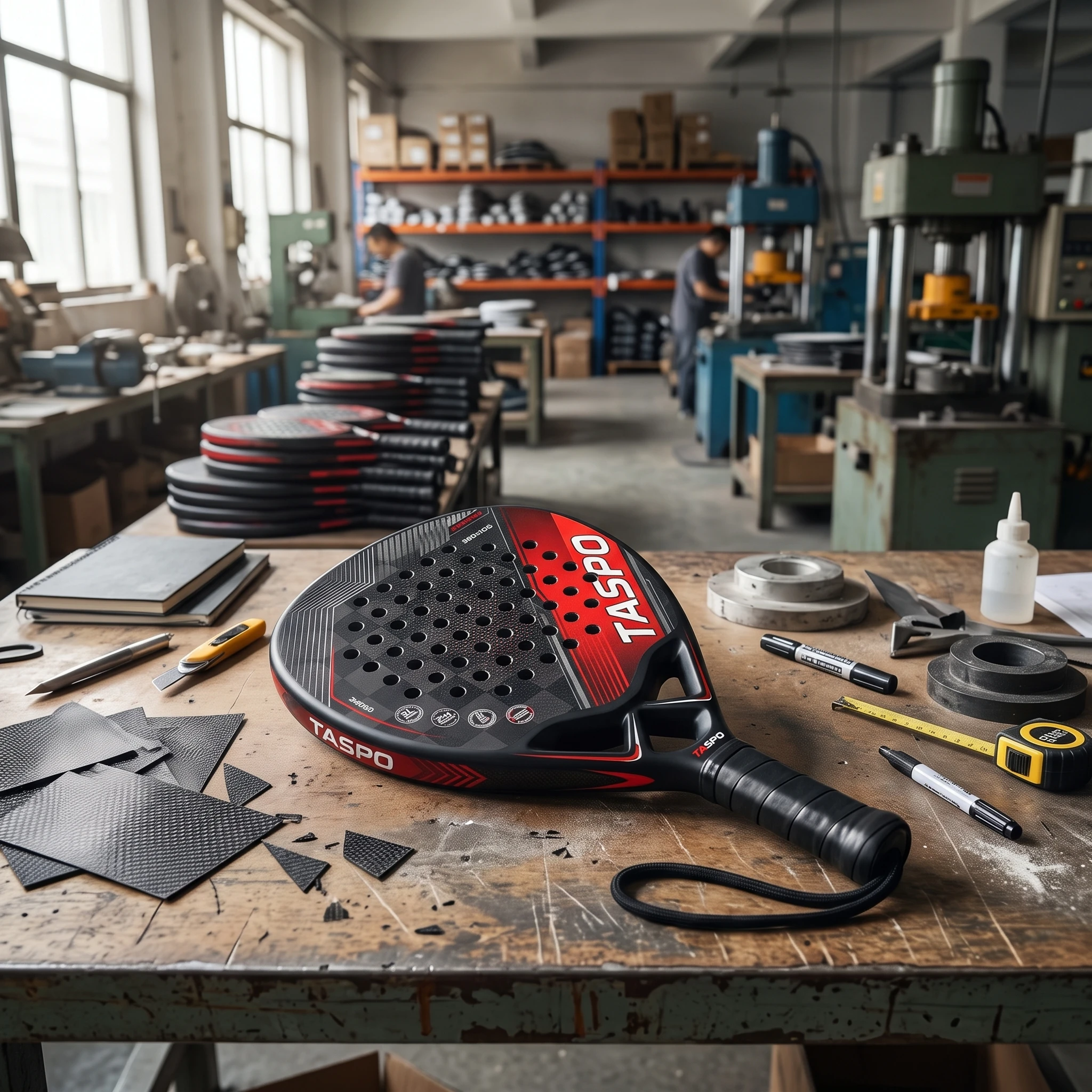
Supplying tournaments, coaching academies, and retail pro shops with spheres that bounce true from the first game to the final tiebreak requires partnering with a manufacturer dedicated to metrological precision. Taspo operates as a premier B2B sports equipment manufacturer backed by over one hundred and thirty experienced engineers and self-owned standardized production bases. Alongside crafting tour-grade carbon fiber tennis rackets, pickleball paddles, and padel frames through advanced autoclave and thermoforming processes, Taspo provides comprehensive one-stop OEM and ODM solutions for precision-calibrated custom tennis balls, extra-duty hard court canisters, pressureless training balls, tacky overgrips, sweatbands, and thermal court bags. Every pressurized tennis ball produced at Taspo passes through seven strict quality inspection gates auditing three-axis compression uniformity, laser roundness, drop-tower bounce consistency, and wool felt abrasion durability. With custom prototypes ready in seven to fifteen working days and twenty-four-hour technical support, Taspo helps global brands deliver championship-level ball performance.
 Hot News
2026-11-20
2026-11-20
2026-11-20
2026-11-20
2026-11-20
2026-11-20
 EN