For serious court athletes and recreational weekend players alike, physical comfort begins at the physical interface where the palm meets the frame. When striking a high-velocity tennis ball, the impact force generated at the string bed travels downward into the handle in milliseconds. On a standard rectangular or sharp octagonal grip, this kinetic shock creates localized pressure spikes across the thenar eminence and the base of the fifth metacarpal. Over several sets, these intense friction points create painful blisters, skin abrasions, and deep muscular soreness across the hand. Understanding how an ergonomic tennis racket handle improves playing comfort requires examining palmar anatomy during active play. An ergonomic handle features subtle contours that contour naturally to the human palm's resting curvature. By distributing contact force across a broader surface area, an ergonomic racket design eliminates localized friction hotspots. Players no longer have to squeeze the grip excessively to keep the frame stable during baseline drives. Incorporating an ergonomic tennis racket handle allows players to maintain an effortless, natural grip that maximizes tactile security while keeping forearm muscles relaxed throughout grueling multi-hour matches.
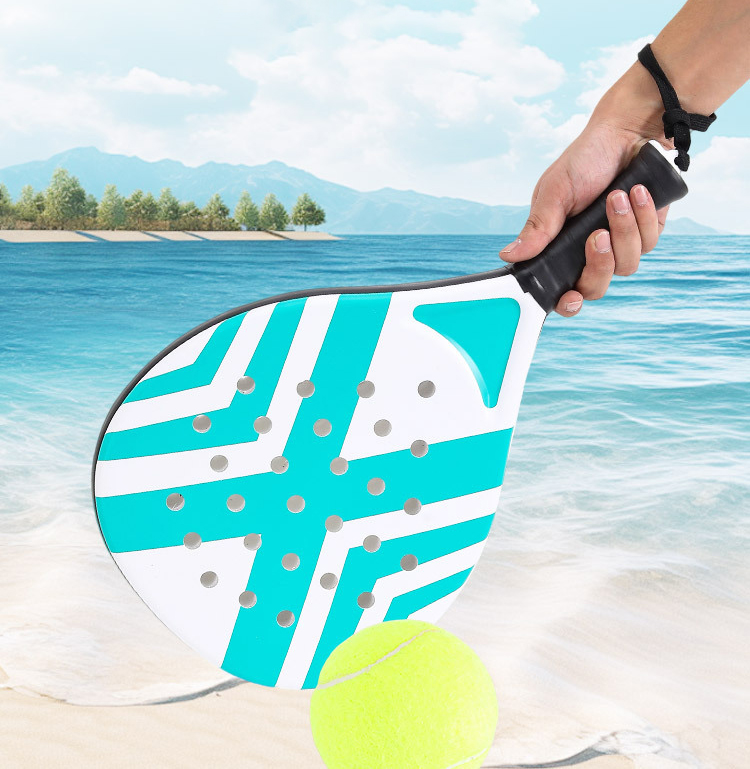
Modern tennis frames constructed from high-modulus graphite offer incredible ball speed, but their stiff structural profiles can transmit harsh mechanical shock directly to the player's skeletal system. When a player strikes the ball outside the frame's sweet spot, violent torsional twisting sends high-frequency vibrations traveling down the carbon shaft. Without adequate dampening, these shockwaves travel through the hand bones, shock the wrist tendons, and travel up the forearm into the elbow. An advanced ergonomic tennis racket handle solves this physiological challenge by integrating specialized dampening polymers within the handle core. Rather than utilizing basic polyurethane foam, leading manufacturers inject viscoelastic elastomers and silicone dampening inserts inside the handle chamber. This specialized internal construction interrupts the harmonic resonance before it can reach the human arm, providing exceptional tennis handle shock absorption. Testing confirms that optimizing tennis racket grip comfort through internal core dampening reduces joint impact stress significantly compared to traditional solid handles. By filtering out destructive vibrational spikes while preserving crisp, clean ball feedback, an ergonomic racket design protects vulnerable arm tendons and delivers a plush, stable sensation on every groundstroke.
Repetitive strain injuries have ended countless tennis careers and sidelined millions of amateur club enthusiasts. The primary cause of lateral epicondylitis, commonly known as tennis elbow, is not the swing motion itself, but rather chronic muscular tension resulting from insecure grip mechanics. When an athlete feels that a racket might twist or slip in their hand, they instinctively overcompensate by clenching their fingers tighter. This chronic contraction places immense mechanical strain on the forearm extensor tendons, leading to microscopic tears, painful inflammation, and chronic tendon degeneration. Furthermore, harsh impacts combined with excessive clenching can compress the median nerve, triggering carpal tunnel numbness. Implementing an ergonomic tennis racket handle directly addresses this mechanical root cause. Because the contoured grip profile nests naturally into the natural anatomy of the hand, athletes achieve complete rotational stability with significantly less muscular effort. By maximizing tennis racket grip comfort, players can release their grip between shots, allowing forearm tendons to rest and recover during rallies. Choosing equipment engineered by a specialized custom tennis racket manufacturer provides critical joint protection, enabling players to train intensely without developing chronic tendon conditions.
Achieving optimal ergonomic performance requires sophisticated structural engineering beneath the outer grip tape. Historically, tennis handles were carved from heavy wood blocks or molded with rigid polyurethane foam directly over the carbon graphite throat. While simple to produce, these legacy handles offered zero customizability and transmitted harsh vibrations directly into the player's palm. Modern frame engineering has revolutionized this structural component through modular pallet systems and composite core architecture. Today, an experienced custom tennis racket manufacturer utilizes high-precision molded pallets constructed from lightweight thermoplastic elastomers. These ergonomic pallets can be customized to match exact palm measurements, ranging from standard grip size one through size five, while preserving the defined geometric bevels essential for blind grip indexing. By pairing an ergonomic tennis racket handle with internal dampening chambers, engineers achieve world-class tennis handle shock absorption without adding unwanted dead weight to the frame. This sophisticated integration ensures that the handle remains structurally lightweight, allowing the overall frame weight to remain balanced for rapid net volleys while delivering maximum tennis racket grip comfort during heavy topspin baseline exchanges.
Bringing a commercially successful ergonomic racket to international sporting markets requires extreme manufacturing precision and deep technical expertise in polymer engineering. For private label sporting brands, retail distributors, and sports academy chains, consistency across production runs is the ultimate operational standard. Developing an ergonomic racket design that satisfies discerning international players demands strict mold tolerances, high-pressure injection molding facilities, and comprehensive mechanical stress testing. As a globally recognized composite equipment manufacturer, Taspo Sports has established itself as an industry leader in cutting-edge racket production. With state-of-the-art carbon molding technology, multi-axis automated finishing, and proprietary vibration-testing laboratories, Taspo Sports delivers turnkey OEM and ODM solutions for premier tennis brands worldwide. From engineering custom handle pallets with superior tennis handle shock absorption to manufacturing complete tour-level frames, Taspo Sports provides the complete industrial infrastructure needed to lead the market. By choosing Taspo Sports as a dedicated custom tennis racket manufacturer, commercial clients access world-class research and development, exceptional batch-to-batch consistency, and bespoke ergonomic handle customization, empowering global brands to deliver unmatched comfort, elite playability, and lasting durability to tennis enthusiasts across the world.
 Hot News
2026-11-20
2026-11-20
2026-11-20
2026-11-20
2026-11-20
2026-11-20
 EN


