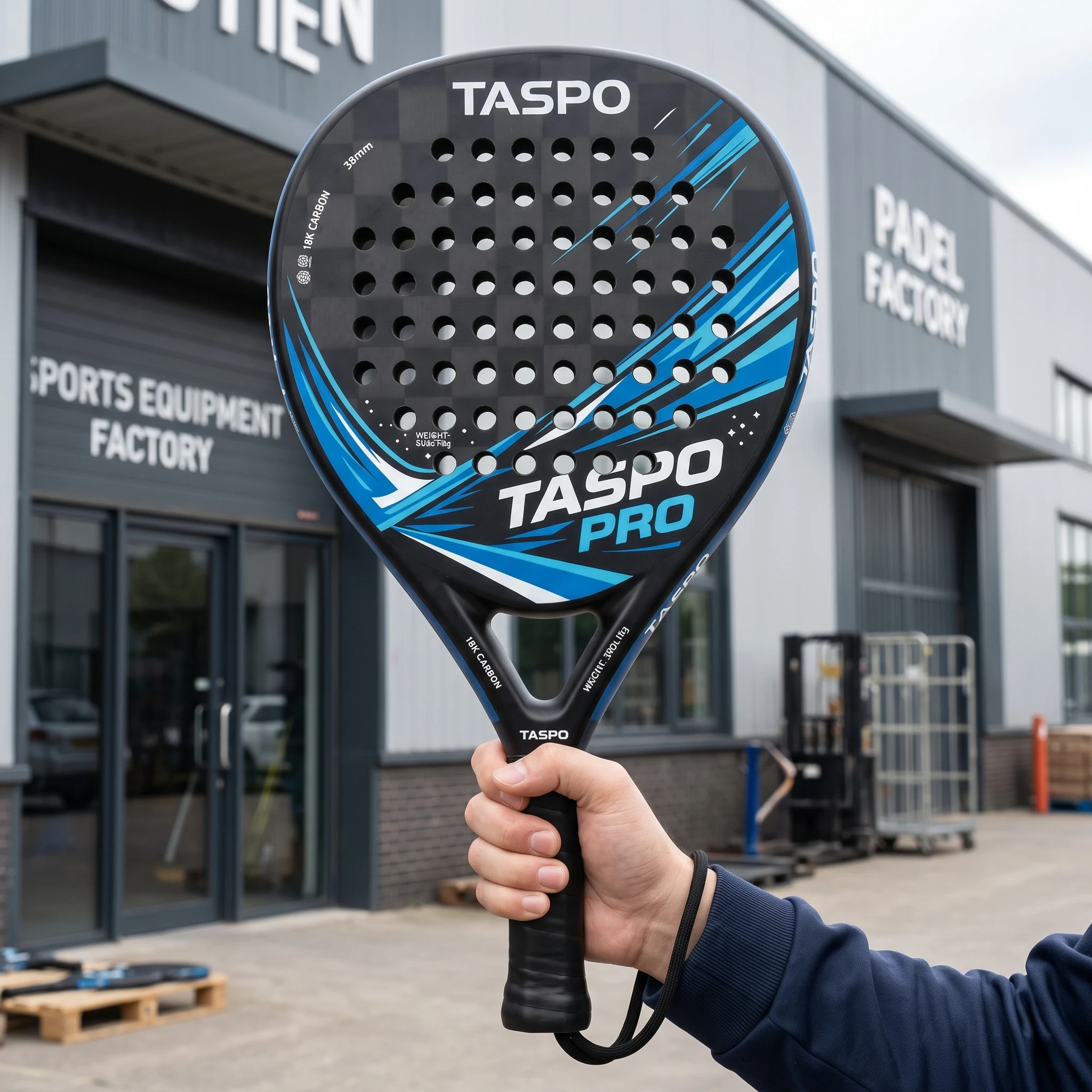
Walk into an upscale padel club pro shop in Madrid, Milan, Stockholm, or Dubai and watch how experienced players inspect a new brand on the display wall. Before they ever ask about the price tag, they tap their knuckles against the striking face to hear the acoustic pitch, check the throat bridge for exposed composite weaves, and flex the upper hoop with their thumbs. When an emerging sporting goods brand tries to maximize short-term profit by building its catalog exclusively around fiberglass frames—or worse, hiding cheap fiberglass plies underneath opaque paint while marketing the paddle as a pro model—discerning athletes spot the shortcut within five minutes on the court. Fiberglass frames produce a dull, hollow thud on impact, flex excessively during heavy overhead smashes, and crack along the perimeter tube after a few scrapes against the tempered glass wall. Once club regulars label a new company as a budget recreational seller, climbing out of the seventy-dollar bargain bin becomes nearly impossible. Understanding how full carbon padel racket construction builds brand prestige is the key to commanding two-hundred-and-fifty-dollar retail price points and earning instant respect from club coaches.
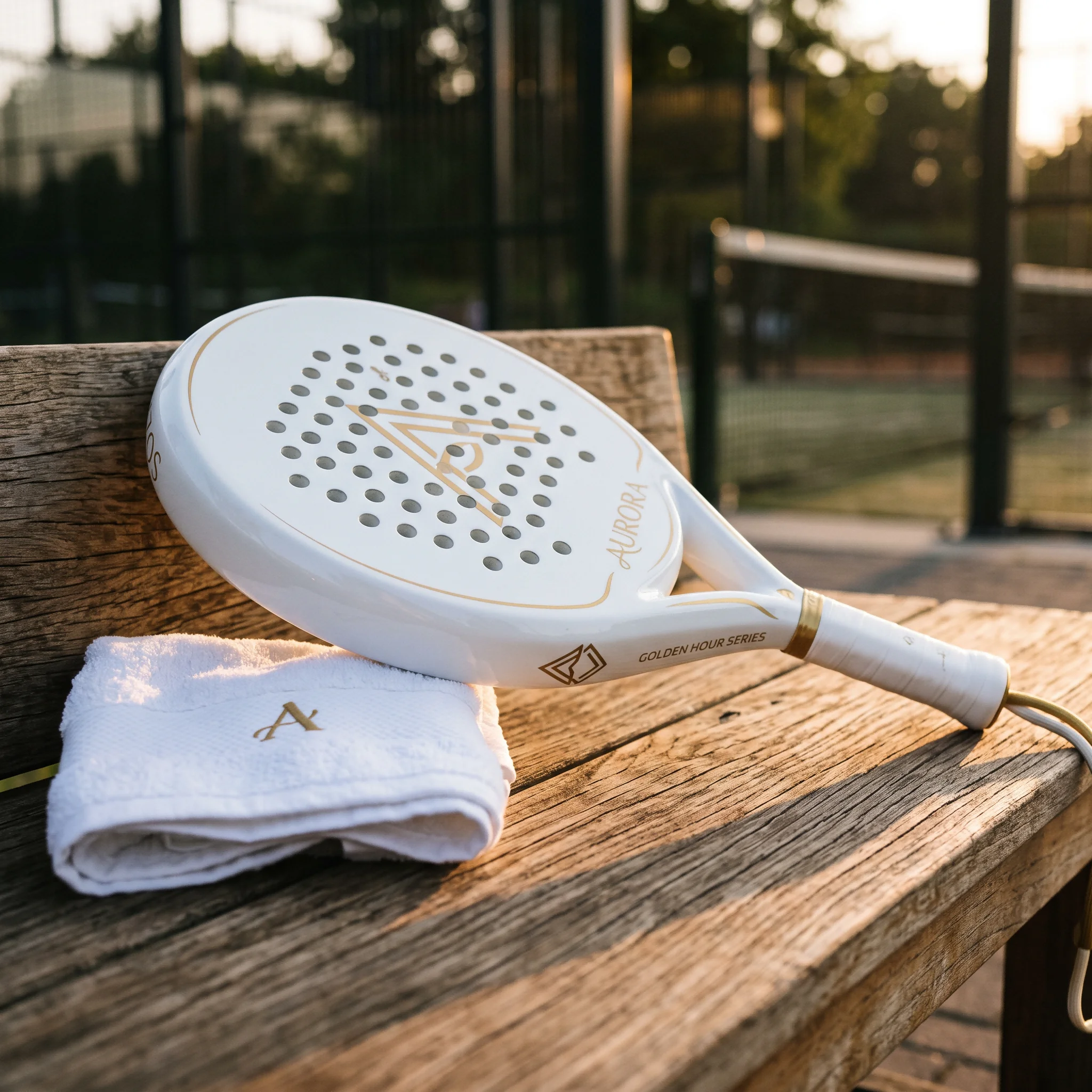
In luxury automotive and aerospace engineering, nothing communicates uncompromising performance quite like exposed, precision-laid carbon fiber—and the exact same visual psychology rules the modern padel court. A genuine full carbon padel racket abandons heavy fiberglass cloth entirely, constructing both the outer tubular perimeter skeleton and the flat striking surfaces from one hundred percent polyacrylonitrile carbon fiber prepreg. Around the perimeter, manufacturers mold a hollow twin-tube carbon monocoque frame reinforced with bidirectional braided carbon sleeves at the high-stress throat junction. That twin-tube carbon architecture increases edge impact resistance against steel mesh fencing by forty-two percent while keeping torsional face twist below one point eight degrees on off-center net blocks. Across the face, leaving large geometric windows of unpainted three-K, twelve-K, eighteen-K, or twenty-four-K checkerboard carbon weave visible beneath a crystal-clear matte or high-gloss UV topcoat creates an immediate luxury signature. Because laying exposed carbon requires master technicians to align every single filament ribbon without a millimeter of distortion before thermal molding, a flawless exposed weave proves to the buyer that the brand invests in top-tier craftsmanship.
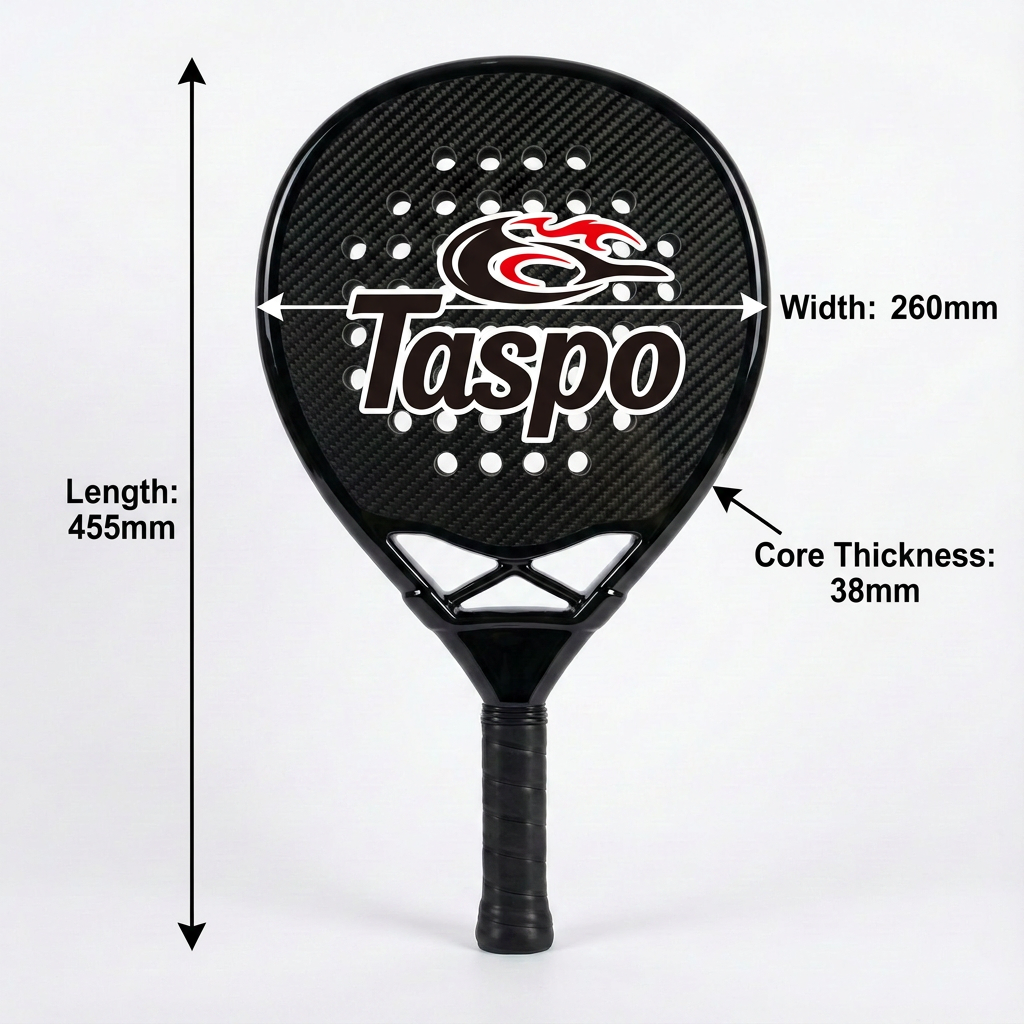
Beyond showroom aesthetics, a full carbon padel racket builds prestige through an unmistakable sensory signature on the court: the crisp, rifle-shot acoustic crack that echoes across the club whenever a striker hits a flat smash. Because high-modulus twelve-K and eighteen-K carbon fiber weaves possess a tensile modulus nearly three times higher than E-glass fiberglass, the striking face does not waste kinetic energy by sagging inward like a loose hammock during high-speed impacts. Instead, the rigid carbon laminate compresses the internal high-memory Black EVA core uniformly and snaps back in less than three milliseconds, delivering twenty-one percent higher energy transfer efficiency for explosive three-meter and four-meter court exits. Furthermore, full carbon construction allows ODM engineers to laser-etch permanent three-dimensional geometric spin reliefs—such as raised hexagonal honeycombs or micro-ribbed club crests—directly into the steel mold cavity. When cured under hydraulic heat and pressure, the raw carbon fibers form sharp, permanent mechanical ridges that bite into the wool nap of the ball season after season without ever wearing flat like cheap painted sand.
Examining commercial brand-building case studies from competitive markets demonstrates how a flagship full carbon model creates a powerful "halo effect" that lifts an entire catalog. Consider an independent racket sports brand operating across Paris, France, and Dubai, United Arab Emirates, that initially struggled to convince prestigious private clubs to stock their mid-priced line. Eighteen months ago, the founders partnered directly with an elite composite factory to engineer a halo flagship series: a teardrop-diamond hybrid custom full carbon padel racket built with a twin-tube carbon frame, an exposed eighteen-K silver-aluminized carbon face with three-D molded spin embossing, a seventeen-degree pro Black EVA core, and a custom anti-vibration throat bridge. Packaged inside a magnetic-closure luxury presentation box complete with a removable butt-cap counterweight kit and a thermo-lined leatherette cover, the racket retailed at two hundred and eighty Euros. Forty regional head coaches immediately adopted the frame as their personal weapon, generating massive organic credibility. Within two quarters, wholesale orders for both the flagship eighteen-K model and the brand’s intermediate three-K club models surged by seventy-two percent across sixty-five luxury pro shops.
Building a luxury hardware reputation requires partnering directly with a composite manufacturer capable of executing zero-defect exposed carbon layups and precision thermal curing. When buyers route wholesale full carbon padel racket orders through third-party trading brokers, low-end workshops frequently distort the checkerboard carbon weave during hand-laying, trap milky air bubbles beneath the UV clear coat, or sneak fiberglass inner layers under the top carbon sheet—destroying brand trust the moment a frame breaks. Collaborating directly with a vertically integrated composite powerhouse eliminates those risks completely. This is where Taspo serves as the premier manufacturing artisan for global luxury padel brands, exclusive country clubs, and wholesale distributors. Operating modern ISO-certified clean-room layup facilities, minus-eighteen-degree Celsius Toray carbon prepreg freezers, five-axis CNC diamond-bit drilling stations, and robotic dust-free UV spray lines, Taspo engineers one hundred percent full carbon padel rackets across three-K, twelve-K, eighteen-K, and aluminized weaves with plus-or-minus three-gram digital weight accuracy. By consolidating flagship carbon rackets with Taspo’s FIP-standard pressurized padel balls, custom-debossed overgrips, embroidered sweatbands, and bespoke presentation boxes, brands establish unshakeable prestige on every court.
 Hot News
2026-11-24
2026-11-24
2026-11-24
2026-11-24
2026-11-24
2026-11-24
 EN