In the dynamic sport of padel, rally speed and shot trajectories are fundamentally governed by fluid mechanics. While casual players focus heavily on racket selection, professional competitors understand that ball behavior dictates the tempo of the entire match. Understanding how outer felt density shapes padel ball speed begins with examining the aerodynamic boundary layer created around the sphere in flight. When struck by a carbon paddle, the ball travels through ambient air while spinning rapidly. The exterior felt covering is not a smooth skin; it features a fibrous nap consisting of woven wool and nylon strands. As outer felt density increases, these protruding fibers create greater skin friction drag against incoming air molecules. This aerodynamic drag thickens the turbulent boundary layer, causing the ball to decelerate quickly during high-speed aerial flight. Consequently, balls engineered with a denser, fluffier nap produce a slower, more controllable flight path. Conversely, a ball with a tightly woven, low-density felt cuts through air resistance cleanly, sustaining explosive velocity from baseline to glass. Selecting high-grade professional padel balls allows players to experience predictable aerodynamic deceleration, ensuring that aggressive topspin drives dip reliably within the court perimeter.
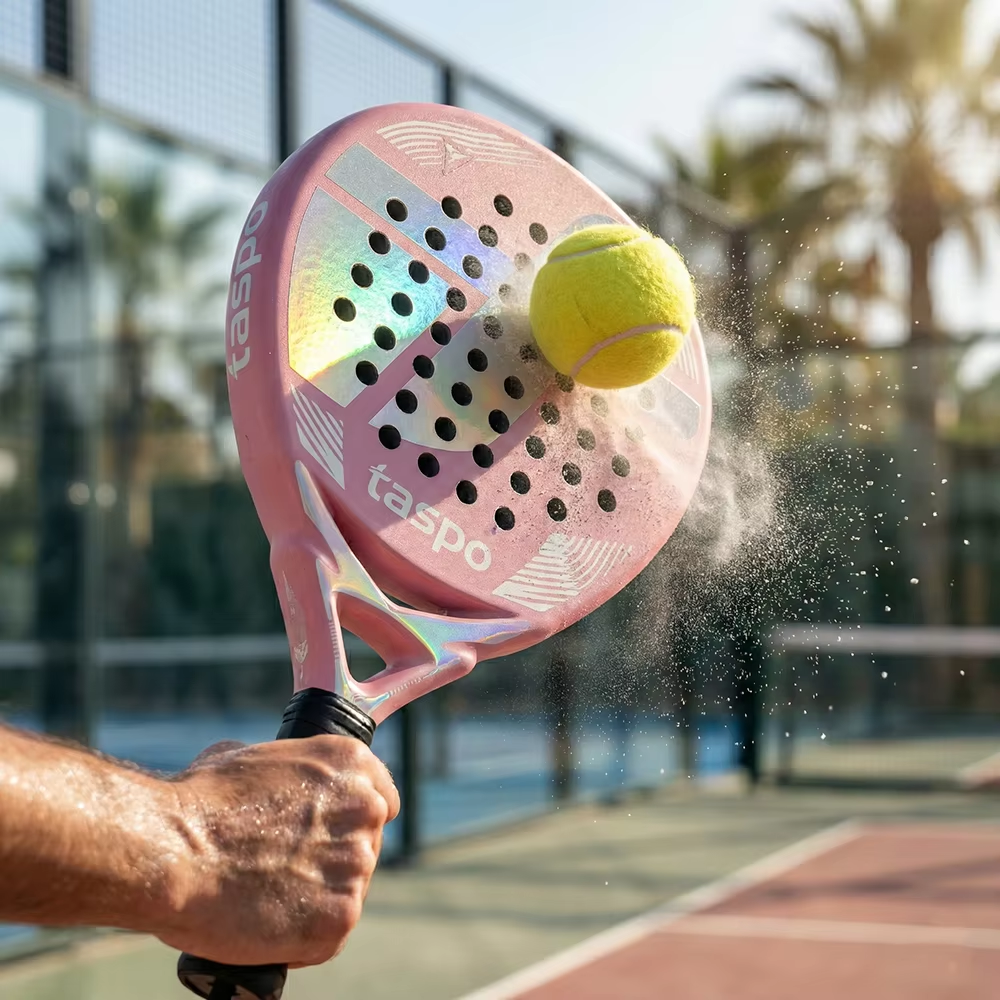
Beyond aerial aerodynamics, the structural weave of the exterior cloth plays a vital role in energy transfer during paddle collisions. Modern pressurized padel balls rely on a delicate mechanical balance between internal pneumatic nitrogen pressure and exterior textile stiffness. When a ball collides with a composite paddle or rebounds off a tempered glass wall, the rubber bladder compresses significantly. The outer felt layer acts as an external elastic corset that modulates this compression. Utilizing an engineered outer felt density ensures that impact forces are distributed evenly across the spherical rubber core. Premium cloth incorporating high wool content absorbs a measured fraction of kinetic impact, slightly softening rebound response and enhancing dwell time on the paddle face. In contrast, basic needle-punched synthetic felt compresses erratically, causing unpredictable rebound trajectories and abrupt speed spikes. Partnering with a dedicated padel ball manufacturer allows sporting brands to calibrate the ratio of natural wool to synthetic fibers. This precise chemical and textile calibration ensures that pressurized padel balls achieve consistent compression profiles, providing athletes with comfortable shock absorption and reliable ball feedback throughout extended multi-set tournament matches.
The physical interaction between ball felt and court turf presents one of the harshest abrasive environments in sports. Padel courts feature dense artificial grass infill laden with abrasive silica sand. During baseline skids and wall bounces, this sand acts like sandpaper against the spinning ball. Examining how outer felt density shapes padel ball speed requires analyzing fiber degradation over time. Inferior felt cloths quickly lose their nap under sandy friction, resulting in bald spots that cause the ball to skid unpredictably low off the concrete or turf. Conversely, an optimized outer felt density constructed with high-tenacity interlocking nylon weaves resists fiber shedding, maintaining uniform roughness across several hours of play. Furthermore, humidity drastically impacts felt behavior. On damp evening courts, low-density synthetic felt absorbs ambient water like a sponge, becoming excessively heavy and dramatically slowing down padel ball speed. Professional padel balls utilize hydrophobic barrier treatments infused into the woven cloth, preventing moisture absorption and ensuring that the ball retains its official mass and lively bounce regardless of environmental humidity.
Manufacturing tournament-grade equipment requires strict adherence to international regulatory standards. The International Padel Federation enforces rigorous physical tolerances regarding ball diameter, total weight, rebound height, and deformation resistance. To pass official homologation testing, professional padel balls must demonstrate rebound heights between 135 and 145 centimeters when dropped onto hard granite surfaces from a standardized height. Meeting these narrow metrics depends directly on managing outer felt density during the vulcanization process. If the felt is applied with uneven tension or excessive rubber adhesive, the ball becomes too heavy and exceeds regulatory mass limits, resulting in a sluggish ball that violates tournament rules. Experienced engineering teams utilize laser micrometer gauges and digital rebound sensors to verify that every production batch satisfies official governing standards. Establishing relationships with an accredited padel ball manufacturer ensures that every finished container delivers tournament-legal speed, consistent rebound metrics, and pristine cosmetic appearance, protecting brand owners from regulatory disqualification during premier international sporting events.
Mass-producing consistent, high-performance court equipment demands advanced pneumatic vulcanization lines, climate-controlled raw textile storage, and meticulous quality management systems. Global equipment brands cannot afford batch-to-batch variations where one can contains fast balls while the next contains sluggish alternatives. Sourcing premium pressurized padel balls requires an industrial partner with deep composite and rubber engineering capabilities. As an established global manufacturer of premier sporting goods and court equipment, Taspo Sports has set the standard for professional racket and ball production. Utilizing proprietary core vulcanization molds, high-purity nitrogen injection systems, and premium woven felt sourcing, Taspo Sports manufactures industry-leading professional padel balls for prominent global sporting brands. Through automated adhesive application lines and strict weight-matching protocols, Taspo Sports ensures that every ball exhibits uniform outer felt density and optimal bounce mechanics. By partnering with an agile, full-service padel ball manufacturer like Taspo Sports, international brands gain access to comprehensive OEM and ODM solutions, custom felt tinting, and bespoke pressurization can packaging, empowering them to deliver exceptional court speed, pinpoint control, and lasting durability to padel athletes worldwide.
 Hot News
2026-11-20
2026-11-20
2026-11-20
2026-11-20
2026-11-20
2026-11-20
 EN


