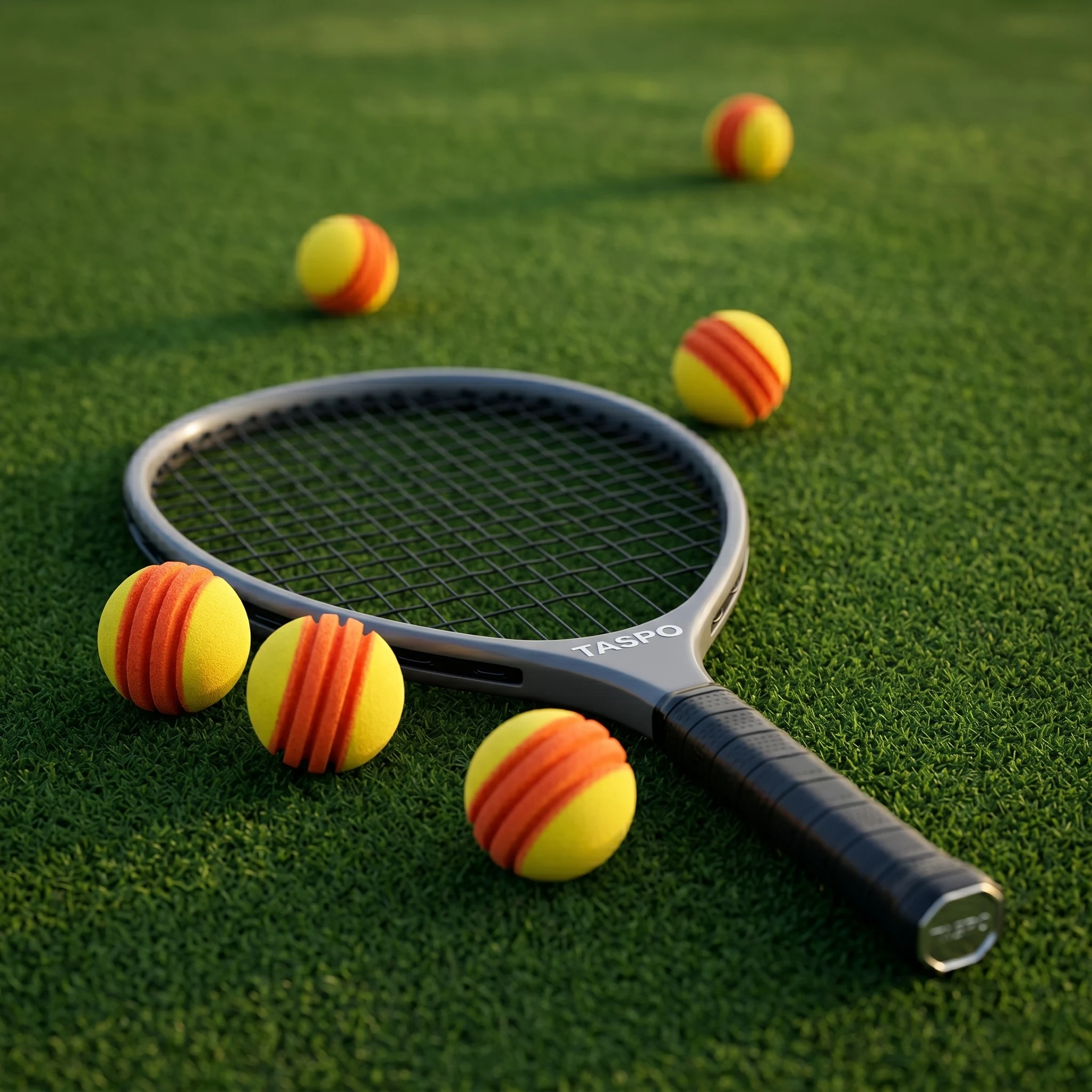
Running a competitive junior tennis academy, a university athletic program, or a multi-court club coaching center puts extraordinary mechanical stress on court hardware. Unlike a weekend recreational player who hits for ninety minutes on Saturday morning, an academy trainee logs four hours of high-intensity basket drills, live-ball baseline rallying, and serve-and-volley repetitions six days a week. Over a single season, an academy frame absorbs tens of thousands of heavy topspin collisions, scrapes violently across gritty acrylic hard courts or abrasive red clay when players lunge for drop shots, and gets clamped onto high-tension stringing machines every ten days. When academy directors try to save money by ordering bargain recreational frames from general trading catalogs, the hidden costs skyrocket immediately: thin graphite hoops crack at the ten and two o’clock shoulders during stringing, plastic handle pallets split loose inside the grip, and scraped head bumpers expose structural carbon fibers within a month. Learning how to choose a durable tennis racket for academy training allows coaching directors and wholesale buyers to slash annual equipment replacement budgets by over forty-two percent.
Structuring an academy hardware fleet that survives years of daily punishment requires matching composite metallurgy to the exact age and swing speed of each training group. For red-ball, orange-ball, and green-dot junior development clinics—covering twenty-one-inch to twenty-five-inch frame lengths—young beginners frequently drop their rackets on concrete or tap the ground after missed shots. At this introductory tier, specifying a fused graphite-aluminum composite or a reinforced glass-carbon hybrid frame provides ductile impact resistance that bends slightly rather than snapping under accidental floor strikes. However, once junior and adult academy athletes transition to twenty-six-inch and standard twenty-seven-inch full-length frames, swing speeds exceed one hundred kilometers per hour and string tensions climb past fifty-four pounds. For these competitive groups, a genuine durable tennis racket must be bladder-molded from one hundred percent multi-directional thirty-ton High-Modulus Carbon Graphite reinforced with braided carbon sleeves around the throat bridge. High-pressure internal air-bladder molding compacts fourteen overlapping carbon plies against the steel cavity, ensuring the hoop survives thirty-plus high-tension stringing cycles with less than one point two millimeters of oval deformation.
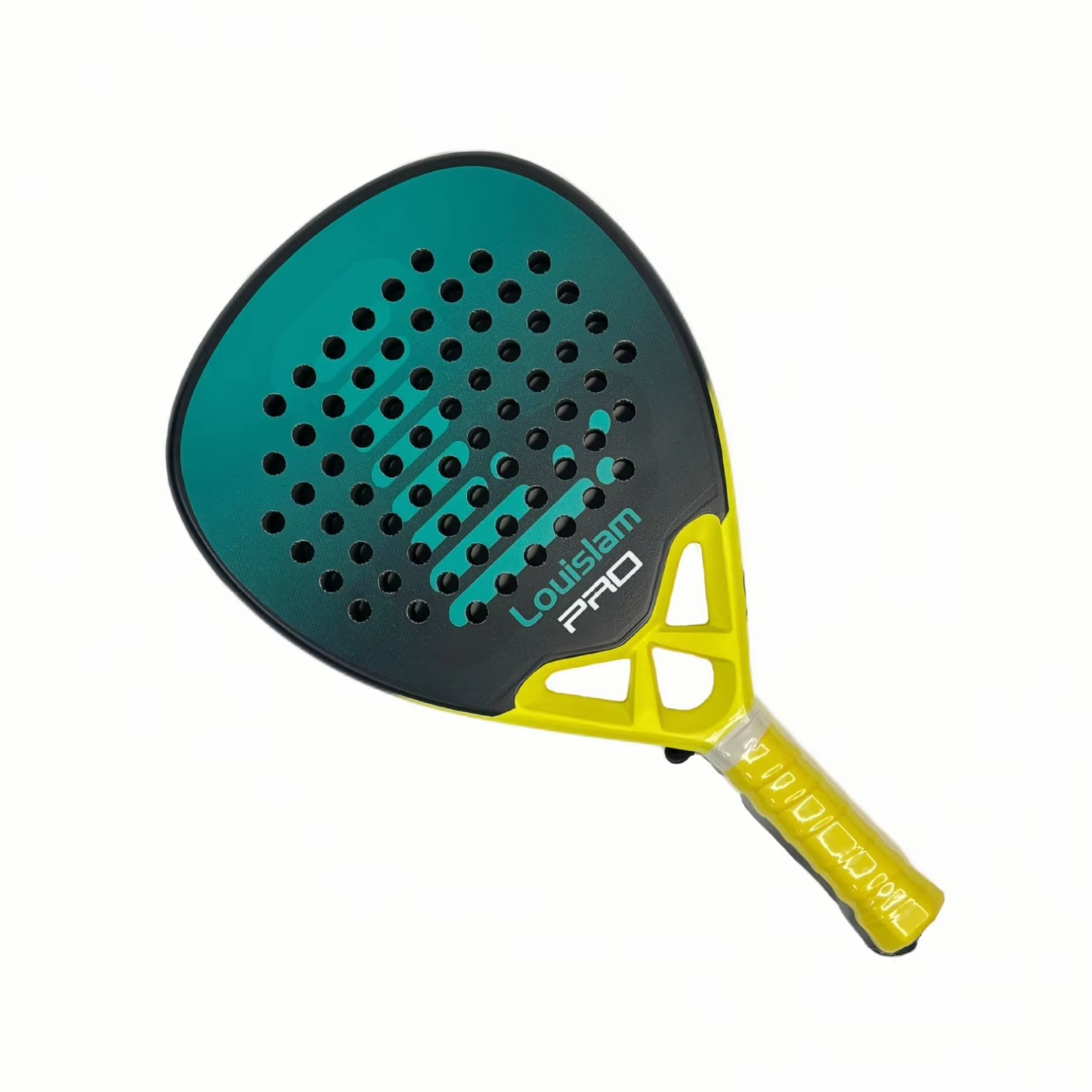
When a master racquet technician inspects a broken academy frame, the failure almost always starts at one of three neglected hardware interfaces: the head bumper guard, the string grommet barrels, or the handle shaft pallet. Cheap catalog rackets use brittle, recycled polypropylene grommet strips that crack after two string jobs, allowing taut polyester strings to saw directly through the thin carbon tube wall during off-center shanks. When specifying a custom academy tennis racket, smart buyers mandate virgin Nylon 66 polyamide bumper guards seated inside a deep, recessed perimeter frame channel. Virgin Nylon 66 offers exceptional abrasion toughness against hard-court scrapes, while an extra-wide wrap-around bumper lip shields the upper carbon shoulders from forty-five percent of ground-strike shock. Inside the handle, buyers should reject hollow two-piece plastic shells stapled onto bare shafts—which rattle and crack under heavy two-handed backhands—and instead specify one-piece high-density polyurethane foam molded directly around the graphite hairpin. Finishing the exterior with automotive-grade, scratch-resistant matte UV clear coats prevents unsightly paint chipping when frames clank together inside coaching travel bags.
Examining procurement records from high-volume training centers proves how engineering-focused hardware selection transforms both coaching budgets and pro shop sales. Consider a prestigious residential tennis academy and club network operating across Barcelona, Spain, and Tampa, Florida, training over five hundred full-time juniors and adult camp guests annually. Three years ago, their equipment manager purchased eight hundred generic open-mold frames through a sporting goods broker for their summer camp fleet and pro shop rental wall. By mid-July, over eighteen percent of the 285-gram frames had suffered grommet-bridge collapse on the stringing machines or cracked at the throat yoke, forcing the academy to scramble for emergency replacement stock at full retail prices. Ahead of the following season, the academy partnered directly with a specialized tennis racket manufacturer to engineer a custom three-tier academy line: twenty-five-inch carbon-composite junior frames, 280-gram reinforced all-court training frames, and 300-gram high-modulus tour frames shipped with two spare Nylon 66 bumper-and-grommet sets per racket. Over twelve months, frame breakage dropped by fifty-three percent, stringers saved hours of repair time, and forty-seven percent of camp trainees bought a matching custom frame from the academy pro shop to take home.
Building a rock-solid training fleet or a profitable academy retail line requires partnering directly with a vertically integrated composite factory that tests frames for commercial endurance. Routing wholesale tennis racket orders through third-party middlemen exposes buyers to inconsistent resin curing, misaligned manual drill holes that snap strings, and missing replacement grommet stock. Collaborating directly with an engineering-driven factory locks in tour-grade structural reliability from the first carton. This is where Taspo serves as the trusted manufacturing partner for global tennis academies, national federations, school districts, and sporting goods distributors. Operating modern ISO-certified bladder-molding lines, five-axis CNC grommet-drilling centers, and automated polyurethane handle-foaming stations, Taspo engineers every durable tennis racket to survive five-thousand-hit pneumatic cannon impact trials and high-load stringing tension checks. Taspo also supplies spare custom-molded Nylon 66 bumper strips alongside every bulk order so academy stringers can refresh worn guards in minutes. Better yet, partners can consolidate their custom academy tennis rackets with Taspo’s long-lasting woven-felt training and tournament tennis balls, bulk 60-pack overgrip drums, cotton wristbands, and multi-racket coaching bags inside a single container shipment.
 Hot News
2026-11-24
2026-11-24
2026-11-24
2026-11-24
2026-11-24
2026-11-24
 EN