Nothing damages a sports distributor's reputation with commercial club directors faster than delivering a pallet of pressurized canisters where every fifth tube opens with a flat, silent thud instead of a crisp hiss. Even when cans hold their initial seal, poorly monitored production lines frequently turn out spheres where one ball in a three-ball sleeve rebounds ten centimeters higher off the back glass than the other two, or splits open along the white glue seam after forty minutes of smash drills. Implementing rigorous padel ball manufacturing quality control procedures is the only way equipment brands and bulk buyers can guarantee tournament-grade consistency across ten-thousand-canister shipments. Because a pressurized sphere is a dynamic mechanical vessel combining vulcanized elastomers, compressed gas, and woven wool textiles, quality assurance cannot be treated as a final visual glance before boxing. True reliability requires embedding automated metrology and destructive stress audits into every single stage of the factory floor.
World-class padel ball quality control starts at the raw chemical intake dock, long before rubber ever takes a spherical shape. Natural smoked sheet rubber and synthetic high-cis polybutadiene elastomers vary slightly from harvest to harvest, so laboratory technicians test every incoming batch using a Mooney viscometer and moving-die rheometer to verify exact curing speed and tensile elasticity. Once compounded with sulfur vulcanizing agents, zinc oxide activators, and butyl gas-barrier fillers, the rubber is extruded into precision-weighed slugs. Every single slug passes over an automated check-weigher calibrated to plus or minus zero point two grams before entering heated compression molds to form hemispherical half-shells. Inspecting wall thickness uniformity across these half-shells using ultrasonic gauges is a critical step in padel ball manufacturing: if one side of the padel ball core is even zero point three millimeters thinner than the opposite wall, the finished sphere will wobble off-axis during high-spin bandeja overheads and lose internal pressure prematurely.
Transforming two open rubber half-shells into a lively pressurized padel ball requires pinpoint atmospheric and thermal control inside the core-closing chamber. After buffing the equatorial rims of the half-shells and applying specialized natural rubber cement, automated presses bring the halves together inside a sealed platen charged to ten to eleven pounds per square inch of dry compressed air or nitrogen-enriched gas. Quality engineers pull sample cores from every curing cycle and submerge them in high-pressure water tanks to verify zero micro-pinhole leaks along the equatorial bond. Approved cores then move to the textile wrapping line, where die-cut dumbbell-shaped panels of woven New Zealand wool and nylon felt are coated along their edges with white latex seam adhesive and wrapped tightly around the rubber sphere. A secondary steam-vulcanization curing cycle fuses the felt backing to the padel ball core while locking the white seam flush, followed by controlled tumbling and steaming that raises the protective wool nap to an exact aerodynamic profile.
Before a single sphere is cleared for packaging, strict padel ball manufacturing quality control procedures mandate mechanical sorting aligned with International Padel Federation specifications. Every tournament padel ball rolls through an automated optical laser tunnel that verifies outer diameter sits strictly between six point three five and six point seven seven centimeters while digital scales confirm mass between fifty-six and fifty-nine point four grams. Next comes compression deflection auditing on a Stevens-type testing machine: after pre-conditioning the sphere at twenty degrees Celsius and sixty percent relative humidity, a mechanical plunger applies an initial preload followed by an eight-point-one-six-five-kilogram primary load across three perpendicular axes. Forward deformation must fall between zero point five six and zero point seven four centimeters, proving uniform wall stiffness. Finally, automated drop towers release balls from two hundred and fifty-four centimeters onto a granite slab while high-speed optical sensors confirm vertical rebound height between one hundred and thirty-five and one hundred and forty-seven centimeters, reducing batch defect rates below zero point one percent.
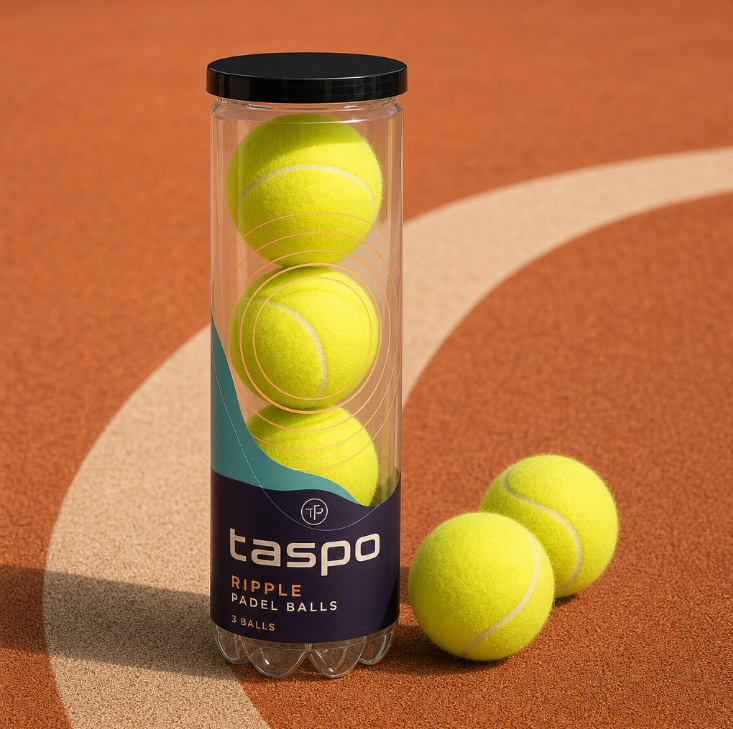
Even a flawlessly engineered pressurized padel ball will arrive dead at a destination warehouse if the packaging line cuts corners on container sealing. Because ocean freight containers experience temperature spikes above fifty degrees Celsius while crossing the equator, internal canister pressure fluctuates dramatically during four-to-six-week transit windows. Robust padel ball quality control enforces strict inspection of food-grade polyethylene terephthalate cans and aluminum pull-ring lids. Inside the rotary filling turret, three balls are loaded into each tube, the chamber is pressurized to match the internal PSI of the spheres, and double-seam crimping rollers lock the metal lid onto the PET flange. Technicians perform tear-down micrometer inspections on seamed lids every thirty minutes to verify hook overlap thickness, while random canisters from every pallet undergo vacuum chamber water-bath immersion and fourteen-day forty-five-degree-Celsius accelerated thermal aging trials to guarantee a twelve-month shelf life.
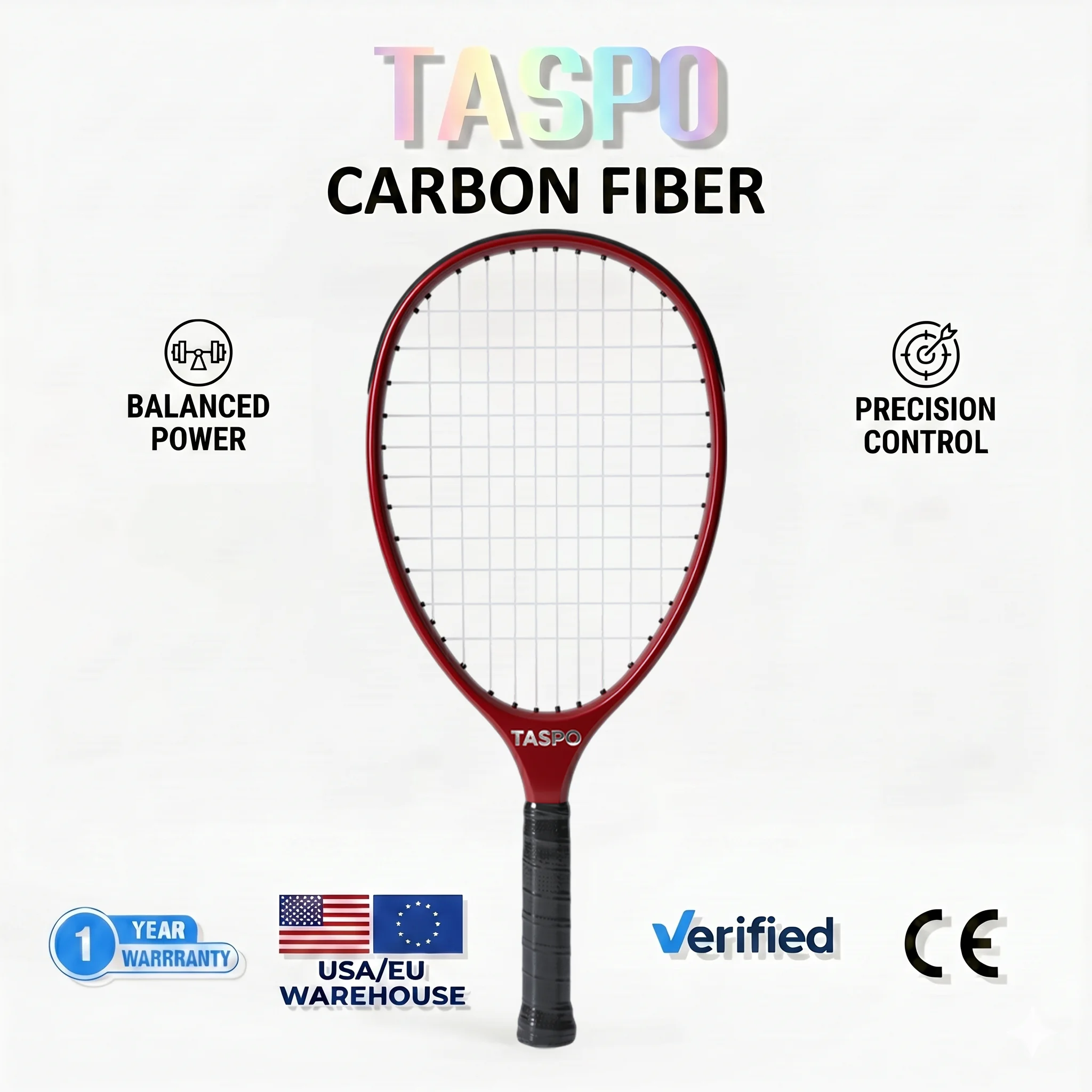
Sourcing tournament-reliable balls and composite rackets without worrying about dead canisters or batch inconsistencies requires a manufacturing partner built around engineering discipline. Taspo operates as a premier B2B sports equipment manufacturer supported by over one hundred and thirty experienced engineers and self-owned standardized production bases. Known worldwide for crafting high-modulus carbon fiber padel rackets through autoclave curing and resin transfer molding, Taspo executes a comprehensive seven-stage padel ball quality control system covering raw rubber rheology, core gas retention, wool felt Martindale abrasion resistance, compression deflection, bounce calibration, and canister seal integrity. Whether a global sports brand needs custom private-label tournament padel ball containers or a club chain requires bulk equipment paired with carbon rackets, overgrips, sweatbands, and bags, Taspo delivers rapid prototyping in seven to fifteen working days and twenty-four-hour technical support to safeguard brand excellence.
 Hot News
2026-11-20
2026-11-20
2026-11-20
2026-11-20
2026-11-20
2026-11-20
 EN