Shipping a container of composite hardware across international borders is no longer as simple as approving a pretty graphic mockup and booking an ocean vessel. As padel cements its status as a mainstream commercial sport across the European Union, the United Kingdom, North America, Latin America, and the Gulf Cooperation Council states, regulatory scrutiny from both athletic federations and customs authorities has tightened dramatically. Emerging brands and wholesale importers that source through unverified trading brokers frequently discover too late that their inventory violates critical destination-market rules—whether through oversized frame thickness that disqualifies players at sanctioned tournaments, toxic handle plasticizers that fail European customs checks, or un-stabilized epoxy resins that delaminate inside fifty-degree Celsius Middle Eastern shipping containers. Establishing strict padel racket manufacturing standards for global markets is the essential operational shield that protects international distributors from costly product recalls, warranty waves, and rejected retail chain pitches.
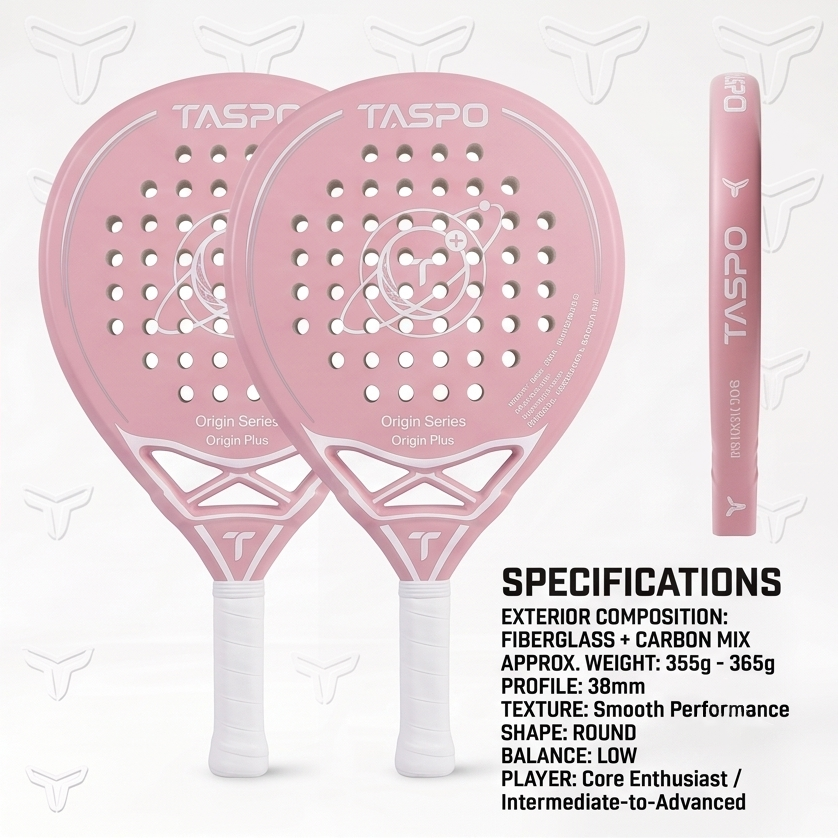
The foundational engineering bible for any globally distributed paddle is the official equipment rulebook enforced by the International Padel Federation and mirrored by national governing bodies worldwide. Under these global hardware mandates, a compliant custom padel racket must fit strictly inside a three-dimensional bounding box: total length from the bottom of the butt cap to the top of the hoop cannot exceed forty-five point five centimeters, total width cannot surpass twenty-six centimeters, and profile thickness across the entire frame and striking face cannot exceed thirty-eight millimeters. While rules allow a tiny two point five percent thickness tolerance for protective bumper guards, experienced composite manufacturers engineer their steel compression molds at thirty-seven point six millimeters so that even after applying multi-layer primers, water decals, three-D quartz-sand spin grit, and automotive UV clear coats, the finished paddle never breaches the thirty-eight-millimeter ceiling. Furthermore, CNC hole-drilling programs must bore circular apertures measuring strictly between nine and thirteen millimeters in diameter across the central striking zone, while every handle must anchor a non-elastic wrist safety cord measuring a maximum of thirty-five centimeters in length.
For wholesale buyers supplying big-box sporting goods chains, department stores, or e-commerce platforms in Europe and North America, mechanical dimensions are only half the compliance battle; chemical toxicology governance is equally non-negotiable. During an intense two-hour match, human sweat acts as a warm acidic solvent against the polyurethane handle grip, the braided wrist safety strap, and the painted throat bridge. Low-end workshops routinely cut costs by using industrial polyvinyl chloride grips softened with restricted phthalate plasticizers, cheap azo dyes on wrist cords, and solvent-heavy paints containing lead or cadmium pigments. Under European Union REACH regulations and California Proposition 65 consumer safety laws, any skin-contact sporting good exceeding strict parts-per-million thresholds for Polycyclic Aromatic Hydrocarbons, phthalates, or heavy metals faces immediate customs seizure and mandatory public recall. World-class padel racket manufacturers enforce a strict Restricted Substances List across their supply chain—utilizing water-based primers, phthalate-free wet-coagulated polyurethane handle wraps, Oeko-Tex-certified wrist tethers, and RoHS-compliant UV-curable topcoats backed by accredited laboratory test reports.
Shipping a global product line means a single production batch might be unloaded inside a humid forty-five-degree Celsius port in Dubai or Miami one week, and swung inside an unheated eight-degree Celsius court hall in Stockholm or Toronto the next. Standard epoxy resins cured hastily inside uncalibrated hydraulic presses suffer from incomplete molecular cross-linking—a hidden flaw known as a low Glass Transition Temperature. When an under-cured frame sits inside a hot car trunk or a sun-baked ocean container, the epoxy matrix softens and releases internal gas pressure from the EVA foam core, creating ugly delamination blisters across the carbon face. Conversely, in freezing northern winters, un-toughened resin turns brittle like window glass and shatters on off-center smashes. Leading OEM padel racket factories solve global climate extremes by infusing three-K, twelve-K, and eighteen-K carbon prepreg with nano-elastomer-modified epoxy systems and routing every demolded frame through a six-hour, temperature-ramped post-curing oven cycle. Laboratory thermal-shock chambers cycling between minus ten and plus fifty-five degrees Celsius confirm that post-cured frames reduce cross-climate delamination and paint-yellowing claims from seven point eight percent down to zero point three percent.
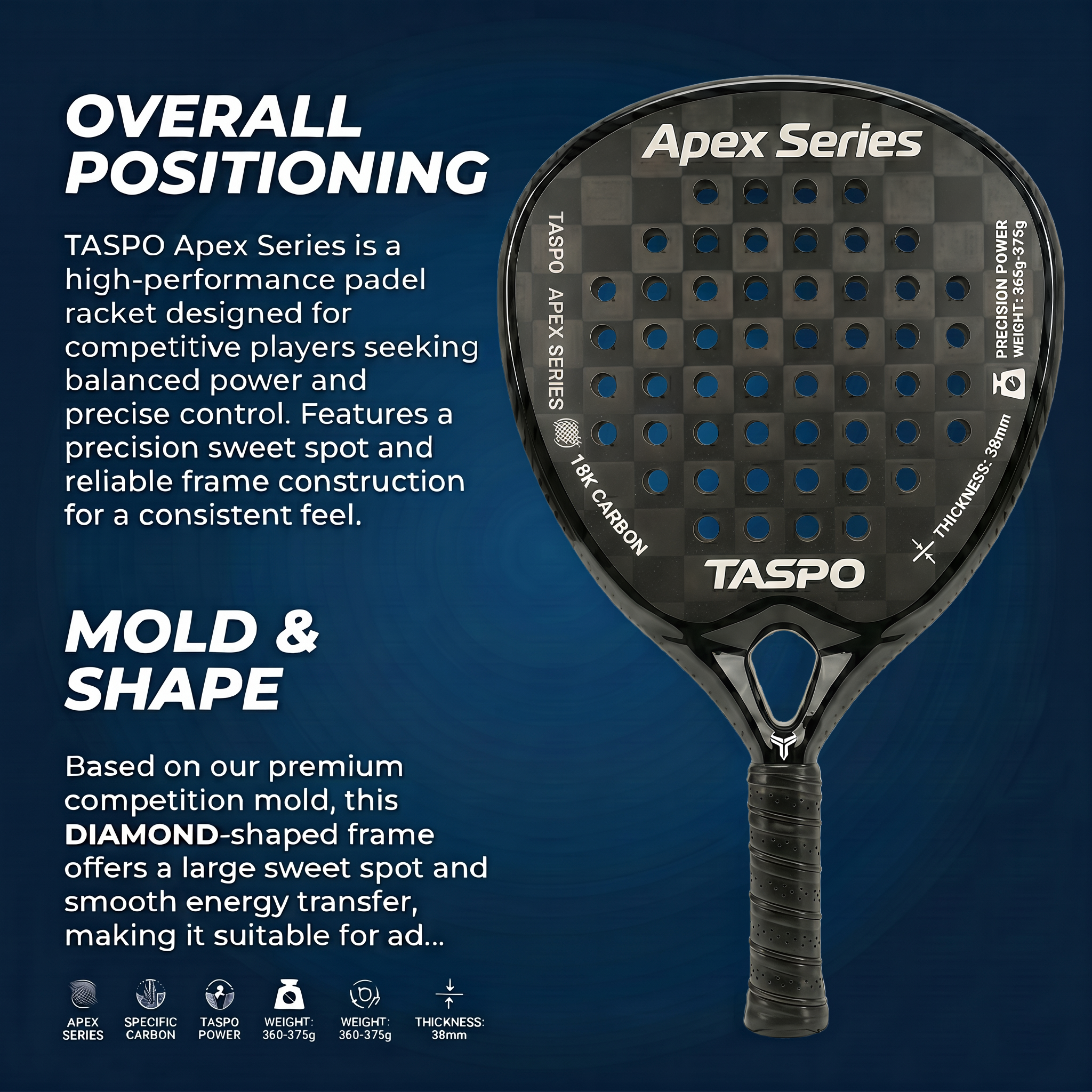
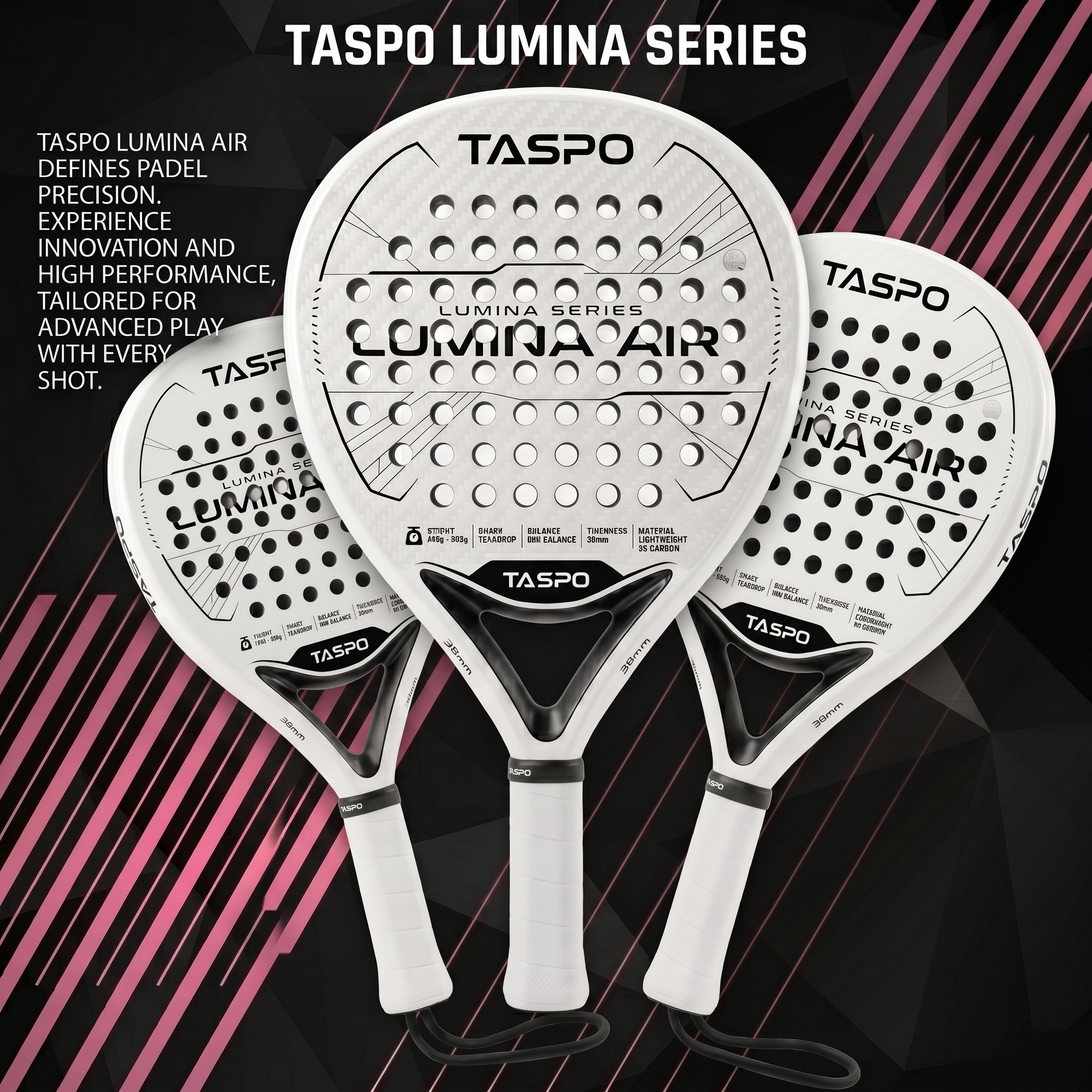
Scaling an international racket sports brand without compliance bottlenecks requires partnering directly with a vertically integrated manufacturer engineered around global quality standards from the ground up. Routing bulk orders through third-party brokers leaves importers blind to raw material toxicology, mold thickness drift, and rushed curing cycles. Collaborating directly with an audit-ready industrial leader eliminates those cross-border risks completely. This is where Taspo serves as the trusted global manufacturing powerhouse for international padel brands, retail chains, and national distributors. Operating a modern, ISO 9001-certified composite manufacturing facility, Taspo engineers every custom padel racket strictly within International Padel Federation dimensional boundaries while enforcing full EU REACH and international chemical safety compliance across all resins, UV coatings, wrist straps, and grip tapes. Every production batch at Taspo undergoes six-hour thermal post-curing, five-axis CNC hole drilling, one-hundred-and-fifty-kilogram wrist-tether tensile testing, six-axis pneumatic cannon impact fatigue verification, and digital weight sorting within plus-or-minus three grams. Better yet, global buyers can consolidate their compliant carbon rackets with Taspo’s FIP-standard pressurized padel balls, Oeko-Tex cotton sweatbands, custom overgrips, and thermal court bags in a single container—unlocking seamless worldwide market access.
 Hot News
2026-11-20
2026-11-20
2026-11-20
2026-11-20
2026-11-20
2026-11-20
 EN