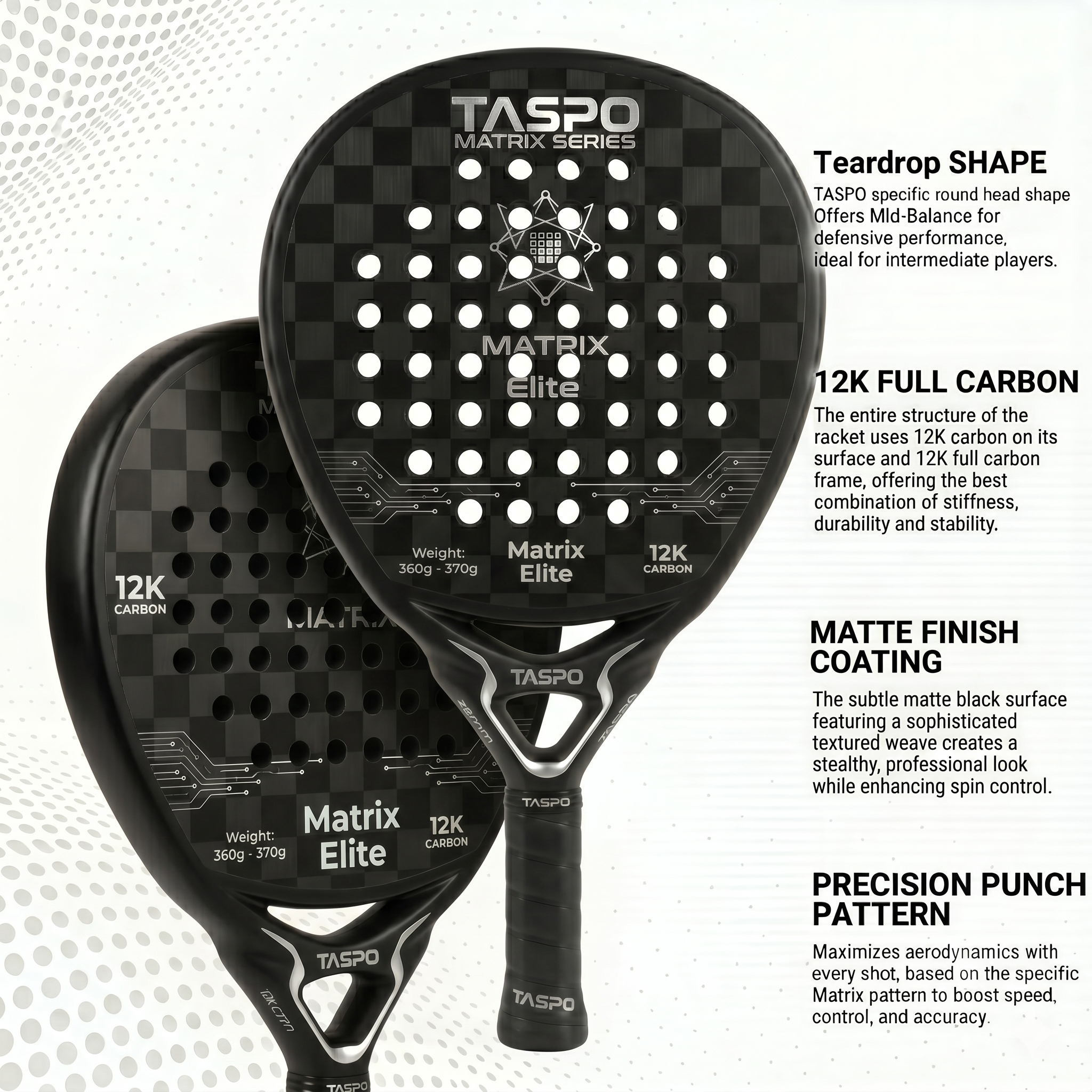
Walking up to the referee desk ten minutes before a quarterfinal match only to have a primary frame rejected during equipment inspection is every competitive athlete's worst nightmare. As global prize-money circuits and regional federation leagues enforce stricter technical audits, players and emerging equipment brands are discovering that a flashy cosmetic finish does not make a frame legal for official play. When a tournament padel racket exceeds maximum beam thickness by even two millimeters, lacks a compliant non-elastic wrist tether, or features illegal sharp-edged surface decals, officials will disqualify the hardware on the spot. Understanding professional padel racket standards for tournaments protects both competing athletes and B2B sports labels from costly compliance failures. A genuine professional padel racket is engineered from the initial mold blueprint to operate right at the ceiling of international governing regulations while maximizing sweet-spot stability and ball exit speed.
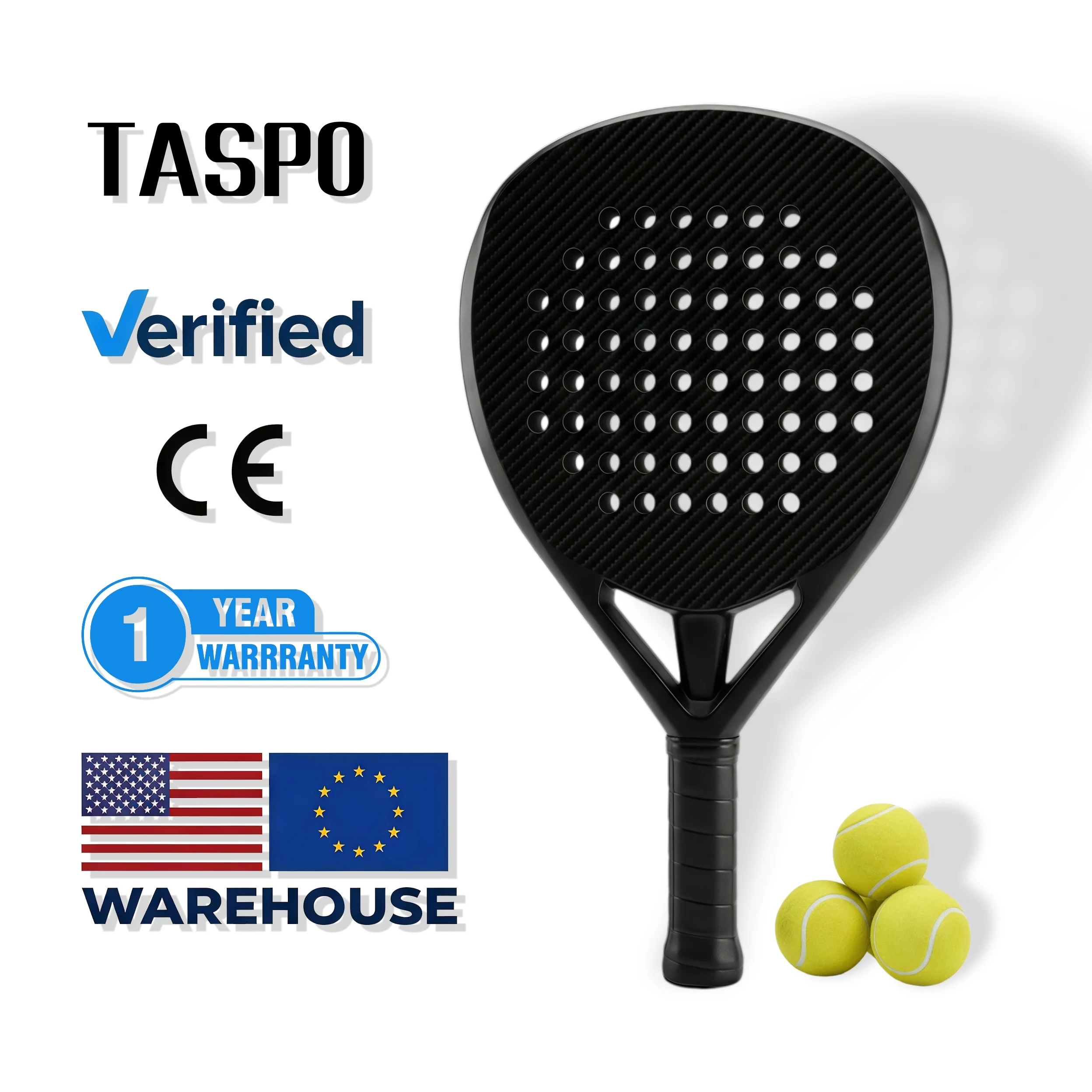
Every structural specification of a tournament padel racket is governed by the official rulebook of the International Padel Federation. Under strict FIP dimensional standards, the overall length of the frame—combining the head and the octagonal handle—cannot surpass forty-five point five centimeters, while the maximum width across the face is capped at twenty-six centimeters and profile thickness must never exceed thirty-eight millimeters. Furthermore, the handle itself cannot be longer than twenty centimeters or wider than fifty millimeters in thickness. Inside the hitting surface, padel racket standards mandate a flat, uniform zone perforated by cylindrical holes measuring between nine and thirteen millimeters in diameter throughout the central region. Outside of a four-centimeter peripheral border surrounding the outer frame tube, designers can vary hole spacing to optimize aerodynamics, provided no structural anomalies alter the natural flight path of the ball. Keeping every custom padel racket strictly within these geometric tolerances ensures seamless approval at national and international check-in tables.
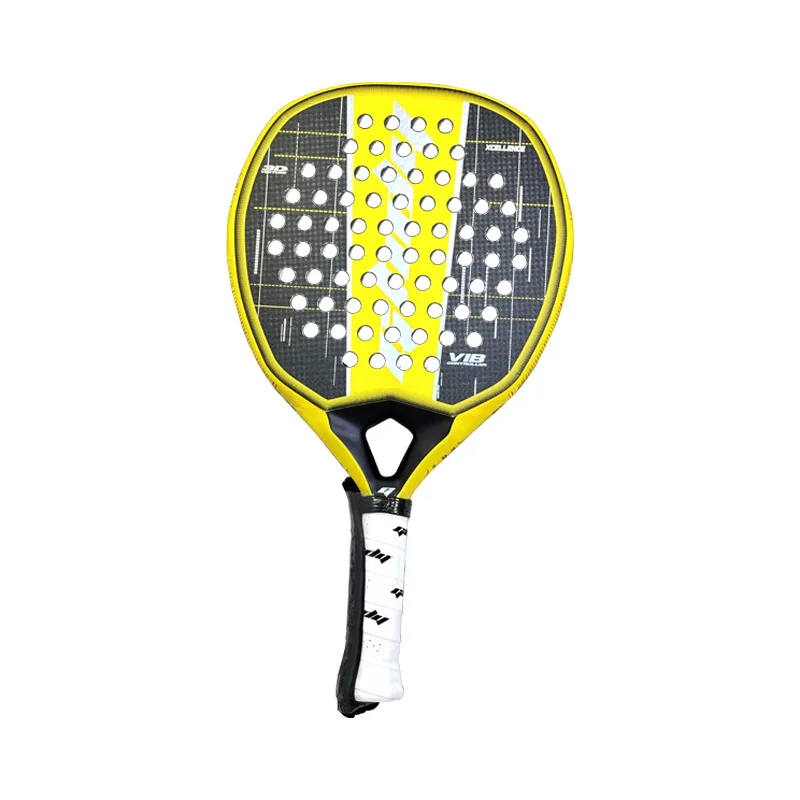
Within those fixed dimensional boundaries, materials engineering determines how a professional padel racket performs under the extreme pace of modern tournament play. Recreational bats rely on flexible fiberglass skins over soft polyethylene foam, which absorb too much kinetic energy when blocking back hundred-kilometer-per-hour volleys. By contrast, a tournament padel racket utilizes twin-tube high-modulus carbon perimeter frames paired with multi-axial 12K or 18K woven carbon fiber padel racket faces cured inside high-pressure autoclaves. Beneath that rigid carbon skin sits a cross-linked ethylene-vinyl acetate core—typically a high-recovery Black EVA or a dual-density sandwich core that combines firm outer layers with a responsive inner memory foam. When a player strikes a slow defensive chiquita at the net, the inner foam pockets the sphere cleanly; when they unleash a full-power overhead smash, the stiff 18K carbon fiber padel racket surface and outer EVA layers engage simultaneously to prevent energy loss and launch the ball over the four-meter perimeter fence.
Real-world equipment telemetry from sanctioned European circuits demonstrates why strict factory tolerances are considered non-negotiable padel racket standards among touring pros. During a pre-season equipment audit across forty-four first-category tournament players in Spain and Italy, technicians measured static weight, balance point, and surface roughness across two batches of three-hundred-and-sixty-five-gram diamond and teardrop frames. Batch A consisted of uncalibrated retail frames where weight varied by up to nine grams between identical units, while Batch B featured a precision-sorted professional padel racket line holding static weight within plus or minus one point five grams and balance within two millimeters. On-court radar tracking revealed that athletes competing with the tightly calibrated Batch B frames reduced their unforced volley errors by twenty-one percent during third-set tiebreaks. Moreover, when players switched to a backup custom padel racket from Batch B during humid evening matches, their overhead timing required zero adjustment rallies.
Two additional regulatory benchmarks separate a certified tournament padel racket from an unverified replica: surface spin protrusion limits and mandatory safety wrist cord engineering. Under FIP rules, the hitting face may incorporate rough quartz-sand grit or 3D molded reliefs to enhance topspin and slice bite, but any surface texture must remain integral to the epoxy matrix and cannot exceed strict millimeter height limits or flake off onto the ball. Down at the butt cap, every professional padel racket must feature a non-elastic safety cord—measuring a maximum of thirty-five centimeters in length—that wraps securely around the player's wrist to prevent accidental racquet throws during sweaty overheads. In certified testing laboratories, technicians subject the wrist tether anchor to a one-hundred-and-fifty-kilogram static pull test and fire pressurized balls at the carbon fiber padel racket face at one hundred and forty kilometers per hour for five thousand consecutive impacts to verify zero core delamination or bridge cracking.
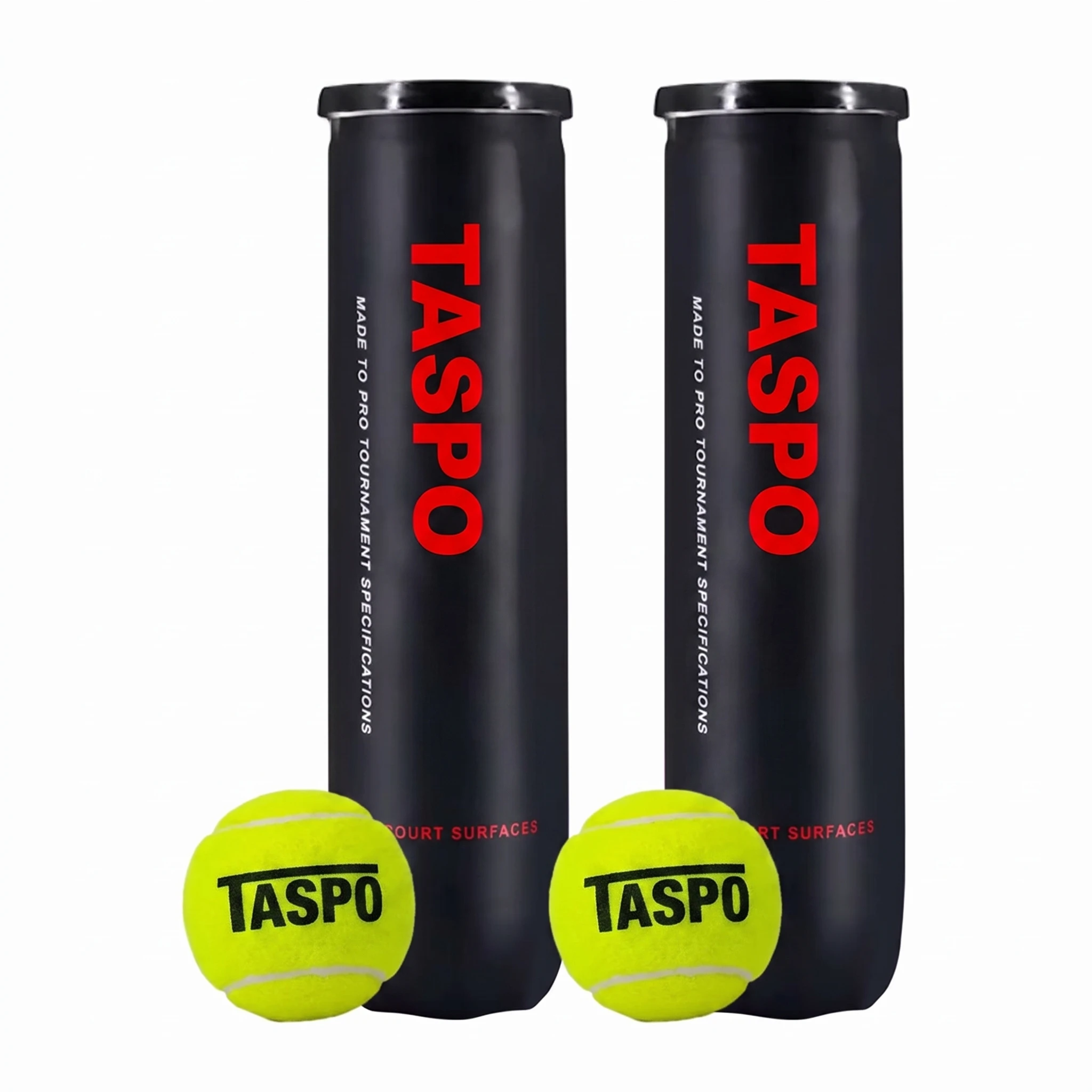
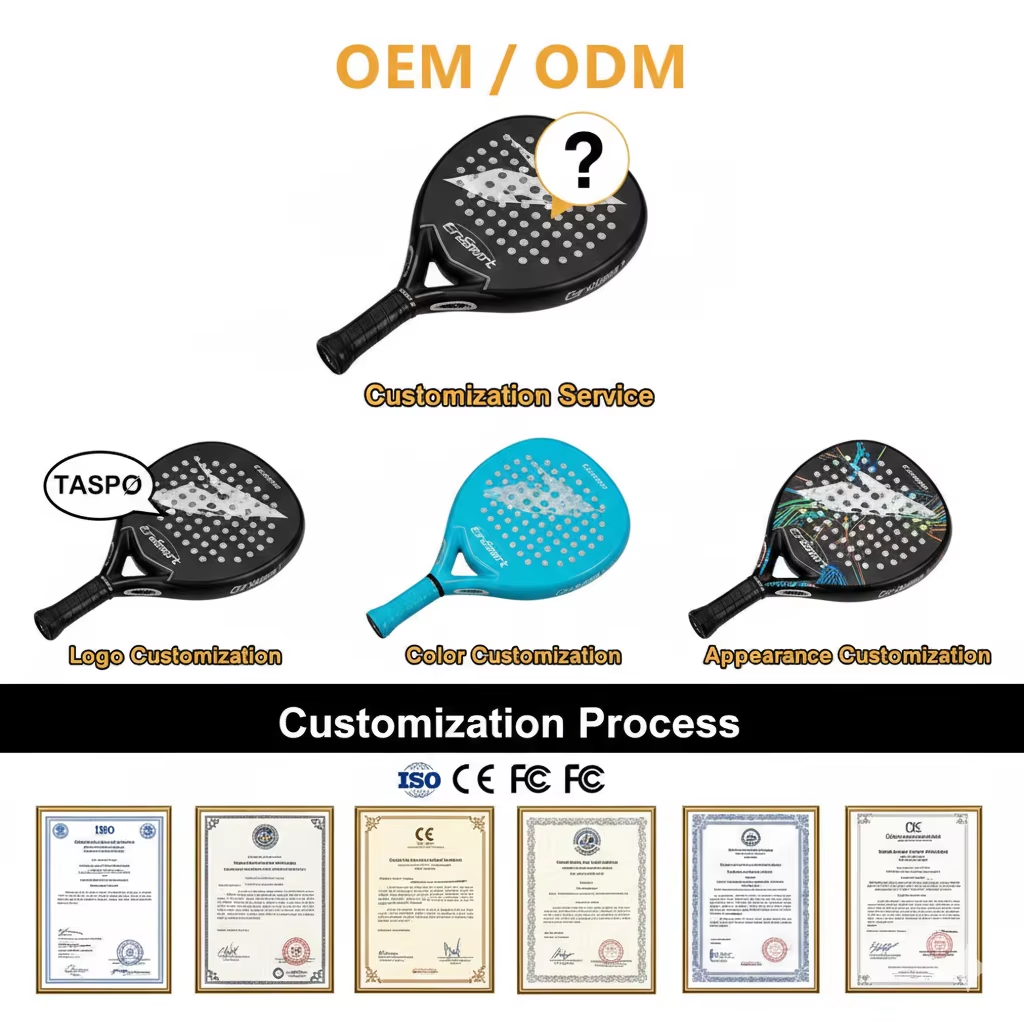
Developing a flagship racket collection that passes every federation inspection while delivering tour-caliber firepower requires partnering with an engineering-driven composite factory. Taspo operates as a premier B2B sports equipment manufacturer backed by over one hundred and thirty experienced engineers and self-owned standardized production bases. Specializing in aerospace-grade prepreg autoclave curing, resin transfer molding, and five-axis CNC hole drilling, Taspo engineers bespoke custom padel racket lines that adhere strictly to international padel racket standards. Brand partners can customize 3K, 12K, 18K, and 24K carbon fiber padel racket weaves, multi-density Black EVA cores, 3D molded spin textures, and replaceable high-tensile wrist cords, alongside matching pressurized tournament balls, tacky overgrips, sweatbands, and thermal court bags. Every frame leaving Taspo passes through seven rigorous quality inspection gates verifying dimensional legality, weight precision, and impact fatigue. With custom prototypes ready in seven to fifteen working days and twenty-four-hour technical support, Taspo empowers global brands to dominate tournament courts.
 Hot News
2026-11-20
2026-11-20
2026-11-20
2026-11-20
2026-11-20
2026-11-20
 EN