To casual spectators watching from outside the glass cage, the bright yellow sphere used in tournament rallies appears virtually identical to a standard lawn tennis ball. However, introducing a conventional tennis sphere onto an enclosed twenty-by-ten-meter court ruins tactical point construction immediately, as excessive rebound speed launches groundstrokes high off the back glass into the upper metallic mesh. Understanding the defining core features of a professional padel ball begins with the strict dimensional and kinetic tolerances enforced by the International Padel Federation (FIP). Under official tournament homologation rules, a sanctioned sphere must maintain an outer diameter between 6.35 and 6.77 centimeters and a static mass strictly between 56.0 and 59.4 grams. To verify vertical rebound accuracy, laboratory engineers condition test batches at twenty degrees Celsius for twenty-four hours before releasing them from an exact height of 254 centimeters onto a solid granite slab. A true professional padel ball must rebound within a tight vertical window of 135 to 145 centimeters. Holding every unit within this ten-centimeter corridor ensures that defensive lobs and overhead bandejas behave with mathematical predictability across every corner of the arena.
Beneath the fuzzy yellow exterior lies the pneumatic engine responsible for rebound liveliness and multi-set endurance: the pressurized rubber bladder. A primary mechanical differentiator separating a professional padel ball from recreational alternatives is the precision of its internal gas charge and elastomer barrier formulation. Whereas lawn tennis balls are inflated to roughly fourteen pounds per square inch (PSI) above ambient atmospheric pressure, tournament padel spheres are calibrated to a slightly lower internal gauge pressure hovering between ten and eleven PSI. Lowering internal pressure moderates horizontal court velocity slightly, giving defenders crucial split-seconds to read complex double-glass rebounds. However, keeping eleven PSI locked inside a thin rubber shell across three sets of violent overhead smashes is a major chemical challenge. Budget factories mold cores from reclaimed rubber scraps loaded with porous chalk fillers, allowing gas molecules to diffuse outward within forty minutes of opening the tube. Conversely, an authentic pressurized rubber core blends eighty percent virgin natural tree latex for explosive elastic snap with twenty percent halogenated butyl rubber and nano-clay platelets. Filling this impermeable shell with dry, anhydrous nitrogen gas slashes transmembrane diffusion by over forty percent, preserving crisp internal pressure from the opening serve to match point.
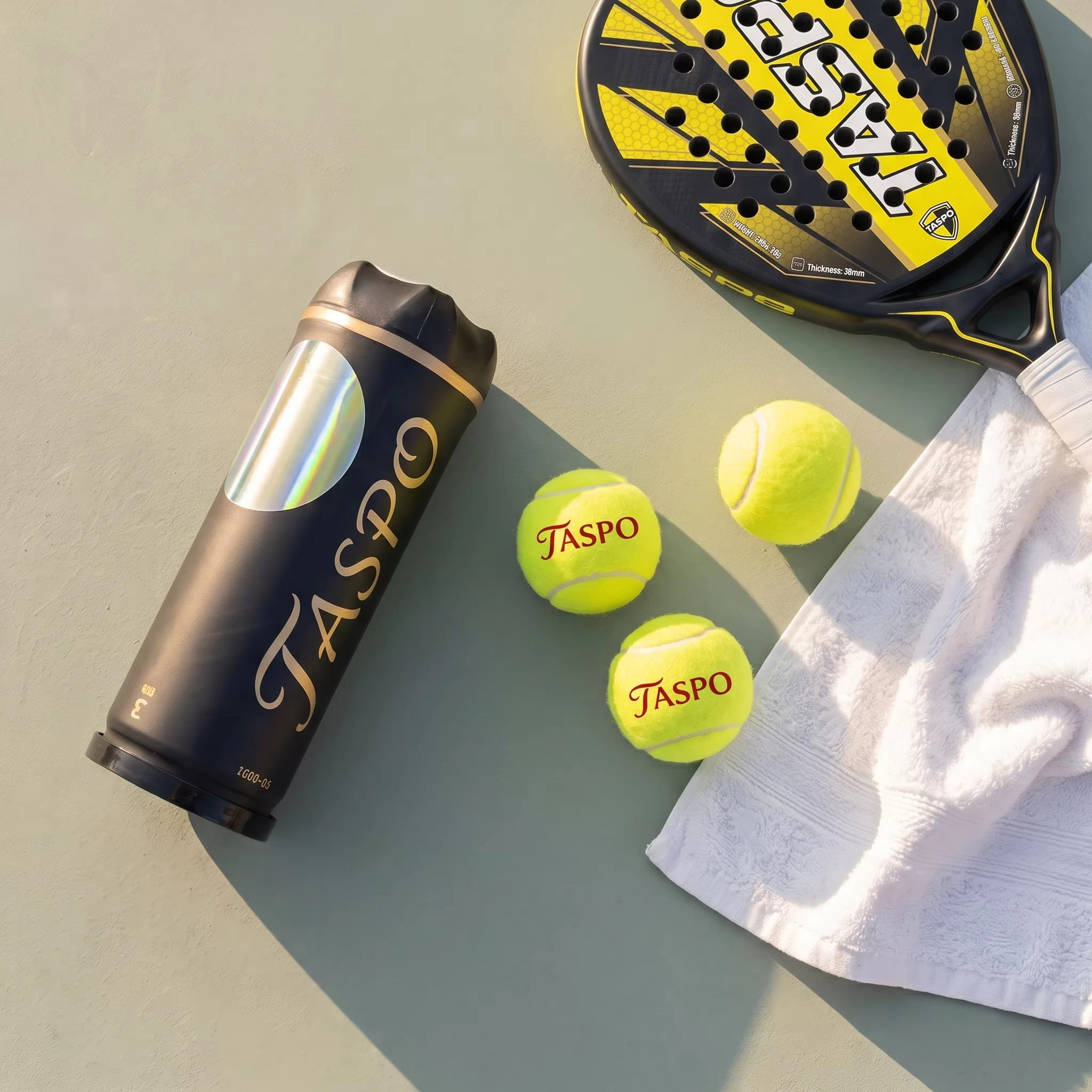
While the internal bladder governs vertical bounce height, the exterior textile covering dictates aerodynamic flight stability, spin bite, and abrasion lifespan. Enclosed courts subject spheres to relentless mechanical shearing because artificial turf carpets are heavily top-dressed with angular quartz silica sand, and athletes swing carbon paddles coated in coarse 3D grit. On entry-level spheres wrapped in needle-punched synthetic polyester cloth, loose staple fibers are merely tangled mechanically without a woven backing grid. Within half an hour of sandy baseline skids, quartz grains rip those synthetic fibers free, causing the sphere to puff up like a fluffy parachute before shedding bald, slippery patches. In contrast, a tournament padel ball utilizes high-density interlocking woven wool felt engineered on high-tension textile looms. By weaving fifty-five to sixty-five percent long-staple New Zealand sheep wool with forty percent high-tenacity polyamide nylon core yarns over a tight cotton warp backing, engineers create a dense melton mat. During high-speed collisions against abrasive turf and tempered glass walls, the nylon filaments resist cutting while the natural wool scales interlock tightly, maintaining uniform aerodynamic drag across three to four full matches.
Vertical granite drop height alone cannot measure how a sphere feels when flattening against a solid thirty-eight-millimeter composite paddle face. If a factory achieves a 140-centimeter bounce simply by molding an overly thick, unyielding rubber wall with low gas pressure, the sphere feels like a heavy rock upon impact, sending jarring shockwaves straight into the player's wrist and elbow tendons. Consequently, official homologation protocols evaluate dynamic stiffness using standardized Stevens compression testing machines. Subjected to a calibrated mechanical load of 8.165 kilograms, a professional padel ball must exhibit a forward compression deformation strictly between 0.56 and 0.74 centimeters, followed by a return recovery measurement between 0.80 and 1.08 centimeters. This controlled deformation profile guarantees a plush four-millisecond dwell window on the paddle face for surgical directional touch. Simultaneously, competing in outdoor coastal clubs or humid evening leagues requires defending the natural wool nap against moisture absorption. Treating the woven wool felt with fluorocarbon-free hydrophobic barrier polymers during dyeing prevents damp turf water from soaking into the seam, restricting wet-court weight gain to less than 1.2 grams and protecting athlete joints from waterlogged impacts.
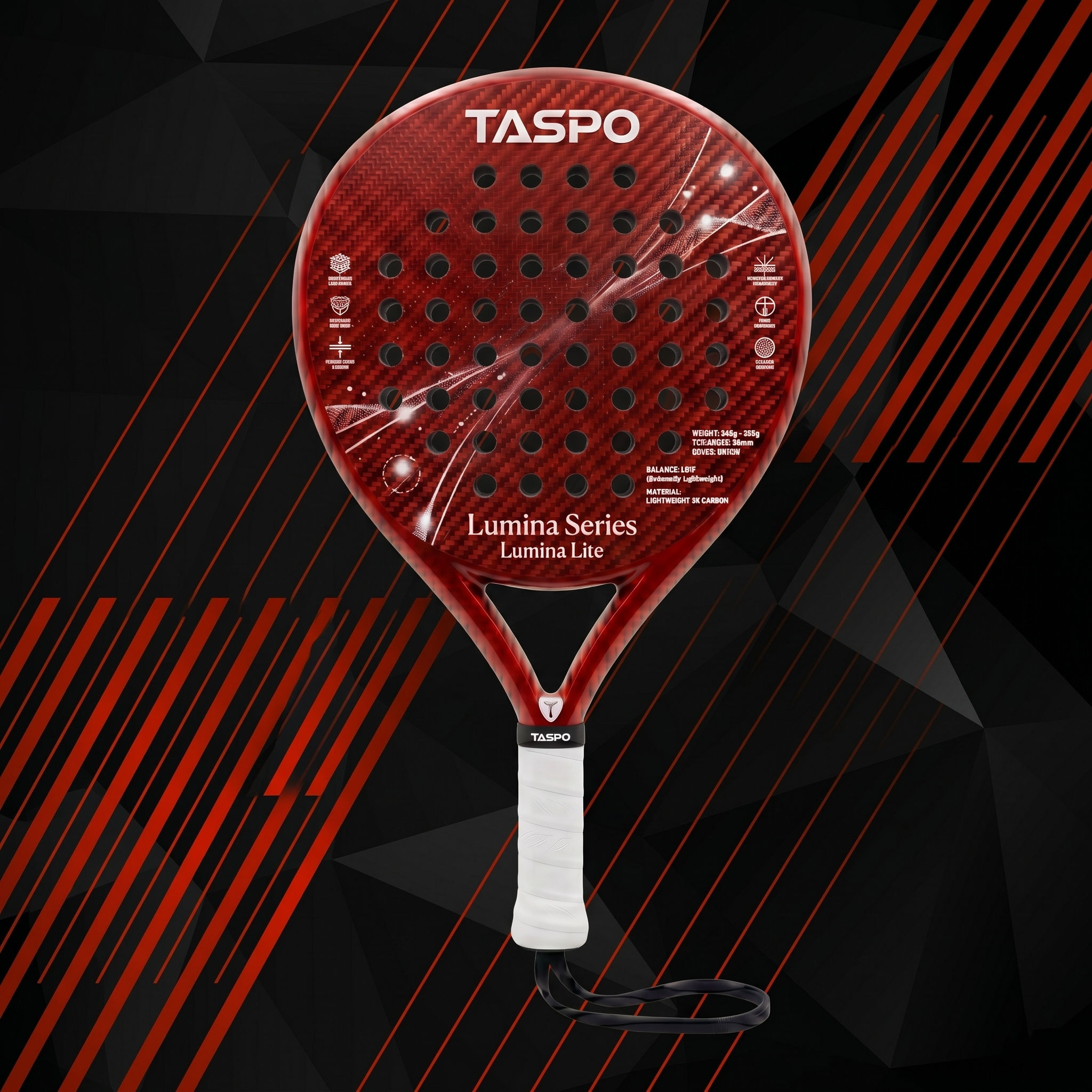
For international sporting goods brands, national federations, and commercial multi-court club chains, ball consistency is the ultimate driver of repeat consumable revenue and brand credibility. Club members immediately abandon brands whose spheres wobble in flight due to uneven equatorial glue seams or go flat while sitting in warehouse storage. Delivering a world-class tournament padel ball requires pairing isothermal hemisphere vulcanization with external over-pressure packaging. Immediately after the two rubber half-shells are cured inside oil-heated steel molds and wrapped in woven felt, finished spheres are sealed inside rigid PET cans flushed with pressurized nitrogen at fourteen PSI. This external over-pressure neutralizes internal diffusion gradients completely, locking in factory-fresh bounce for up to twenty-four months before the pull-ring is opened. In the global sporting goods manufacturing sector, Taspo Sports stands as an authoritative pioneer in precision pneumatic ball production and court weaponry. Operating automated Banbury rubber mixers, isothermal vulcanizing presses, laser diameter sorters, and automated fourteen-PSI nitrogen canning lines, Taspo Sports manufactures elite spheres for leading international brands. Partnering with an established padel ball manufacturer like Taspo Sports guarantees commercial brands certified FIP compliance, durable wool-felt craftsmanship, and bespoke OEM packaging worldwide.
 Hot News
2026-11-17
2026-11-17
2026-11-17
2026-11-17
2026-11-17
2026-11-17
 EN