Step inside a modern converted warehouse arena where twelve enclosed glass courts sit beneath ten-meter industrial ceilings and high-bay LED light strips, and a surprising visual hazard quickly emerges. When an opponent fires a fast cross-court drive or a high lob that passes directly through the reflection of overhead floodlights on the tempered glass panels, a dull, dusty sphere seems to vanish for a split second against the background walls. In a sport where net volley exchanges happen twenty centimeters apart at ninety kilometers per hour, losing visual lock on the ball for even fifty milliseconds turns a clean put-away volley into a framed mishit. Understanding what defines a high visibility padel ball for indoor courts helps club operators, tournament directors, and equipment brands eliminate this tracking lag, keeping rallies sharp for both competing athletes and overhead livestream cameras.
Engineering a truly high visibility padel ball begins with retinal photobiology and spectral wavelength tuning inside the textile dye house. Human cone photoreceptors exhibit peak sensitivity under artificial indoor lighting around a wavelength of five hundred and fifty-five nanometers—the exact intersection between vibrant yellow and electric chartreuse green. Standard budget balls use flat, low-purity yellow pigments that reflect less than sixty percent of incident arena light, causing the sphere to look muddy and gray whenever it travels into shadowed corners or against dark navy and emerald artificial turf. By contrast, a premium indoor padel ball utilizes high-chroma fluorescent optical dyes infused with specialized light-reactive brighteners. These optical compounds absorb invisible short-wavelength blue and ultraviolet light emitted by commercial LED fixtures and re-emit that energy as vivid yellow-green photons, increasing luminance contrast against tempered glass and steel mesh by more than thirty-five percent.
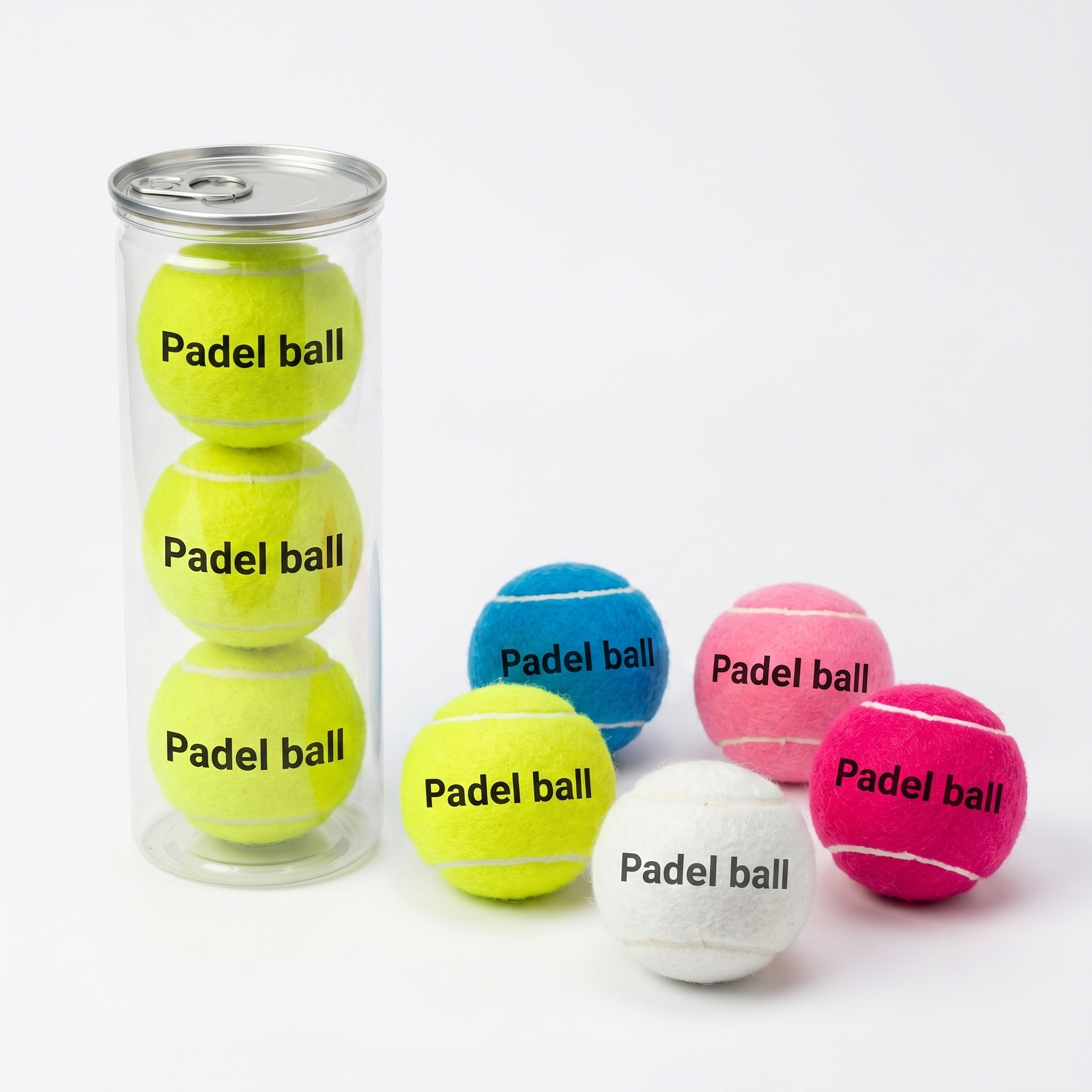
Initial out-of-the-can brightness means nothing if the exterior felt turns dark and grimy after four games of indoor play. Even inside climate-controlled arenas, court turf contains fine silica sand infill, rubber shoe dust, and airborne warehouse particulates. When a factory wraps a sphere in cheap, untreated hundred-percent synthetic polypropylene felt, static electricity and rough barbed fibers act like a magnet for dark court dust; within thirty minutes, the bright yellow sphere turns a dull brownish-gray that blends into the background. Defining a true high visibility padel ball requires pairing fifty-plus percent natural New Zealand wool with high-tenacity nylon filaments treated with a fluoro-free, stain-repellent silicone finish. That smooth, tightly interlocked wool weave resists electrostatic dust buildup and prevents silica grit from embedding into the nap, ensuring the tournament padel ball shines just as brightly in the third-set tiebreak as it did on the opening serve.
Empirical telemetry from indoor club circuits demonstrates how optical contrast directly improves athlete reaction speed and digital broadcast quality. During a six-week indoor winter league evaluation across eight multi-court warehouses in Sweden, the United Kingdom, and Spain, sixty advanced players competed on dark blue and black panoramic courts using two blind-tested canister batches. Batch A featured standard retail yellow felt, while Batch B featured a high visibility padel ball dyed with optical neon chartreuse pigments and treated with anti-soiling wool coatings. High-speed eye-tracking glasses and net-exchange video analysis revealed that players competing with Batch B initiated their split-step and volley racket preparation thirty-five milliseconds earlier on balls rebounding off the back glass, reducing unforced net errors by twenty-two percent. Furthermore, automated AI court camera systems used by the clubs for match livestreaming recorded a forty-five percent reduction in lost-ball tracking frames.
While maximizing optical brightness is essential, a reputable manufacturer never sacrifices chemical safety or mechanical playability to achieve a louder color. Cheap fluorescent coatings applied carelessly over finished felt often clog the wool pores—making the sphere feel slick and erratic off textured carbon racket faces—or rub off onto white court apparel and raw carbon skins during heavy smashes. A certified pressurized padel ball integrates OEKO-TEX compliant, azo-free reactive optical dyes directly into the yarn-dyeing stage before the felt panels are woven and steam-cured onto the core. Colorfastness audits using digital spectrophotometers verify that every production batch stays within a tight Delta-E color tolerance below one point zero while maintaining full International Padel Federation compliance: fifty-six to fifty-nine point four grams in weight, ten to eleven pounds per square inch of butyl-retained internal pressure, and a consistent one-hundred-and-thirty-five to one-hundred-and-forty-seven-centimeter granite drop bounce.
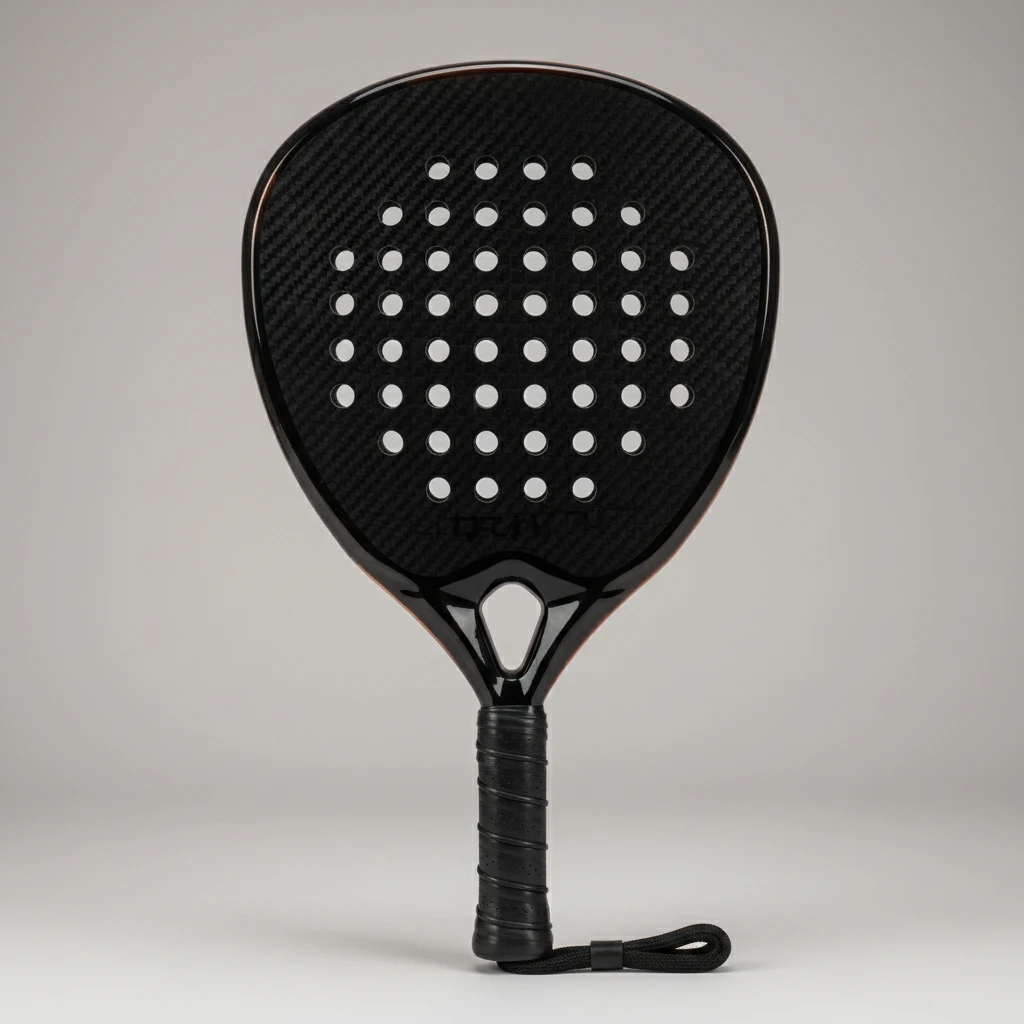
Equipping indoor club chains, televised tournaments, and retail pro shops with spheres that pop visually under any arena lighting setup requires partnering with a manufacturer that masters textile dyeing science and precision elastomer molding. Taspo operates as a premier B2B sports equipment manufacturer backed by over one hundred and thirty experienced engineers and self-owned standardized production bases. Alongside crafting flagship 3K, 12K, and 18K carbon fiber padel rackets through high-pressure autoclave curing and resin transfer molding, Taspo provides comprehensive one-stop OEM and ODM solutions for custom high visibility padel ball lines, pressurized PET canisters, tacky overgrips, protective frame tapes, moisture-wicking sweatbands, and thermal court bags. Brand partners can customize optic neon yellow, chartreuse, or high-contrast two-tone felt colorways, stain-repellent wool weaves, custom pad-printed logos, and branded canister packaging. Every indoor padel ball produced at Taspo passes through seven strict quality inspection gates verifying spectrophotometer luminance, Martindale abrasion resistance, and three-axis compression uniformity. With custom prototypes ready in seven to fifteen working days and twenty-four-hour technical support, Taspo brings crystal-clear visibility to indoor courts worldwide.
 Hot News
2026-11-24
2026-11-24
2026-11-24
2026-11-24
2026-11-24
2026-11-24
 EN