 EN



What Determines Tennis Ball Pressure Retention Quality
A tennis ball can feel lively when a can is opened and noticeably different later. For a club or distributor, the useful question is not simply whether the first bounce is high: it is how consistently a tennis ball retains its playing characteristics over the storage and use conditions that matter to the buyer.
Pressure retention is shaped by the core, the integrity of its join, the packaging and the conditions after opening. Bounce is a useful signal, but it is not a direct measurement of pressure. Here is how to separate those factors and request evidence that allows a fair comparison.
What pressure retention means for a tennis ball
In a pressurized tennis ball, gas inside the hollow rubber core contributes to the way the ball deforms and rebounds. Over time gas can migrate through the core, reducing the pressure difference between its interior and the surrounding air. The rate depends on the material and construction as well as the conditions surrounding the ball.
A lower bounce does not identify a single cause. Temperature affects gas pressure and material response; repeated impacts, surface wear and moisture may also change the playing feel. A tennis ball that bounces lower in cold weather is not necessarily losing gas at that moment. Compare samples at the same temperature before drawing a conclusion about retention.
Pressureless designs rely differently on the core for their response. Do not apply a pressurized-ball retention claim to a pressureless tennis ball without a relevant test method. In either case, ask which measurable property the supplier is describing: internal pressure, rebound height, deformation or playable life.
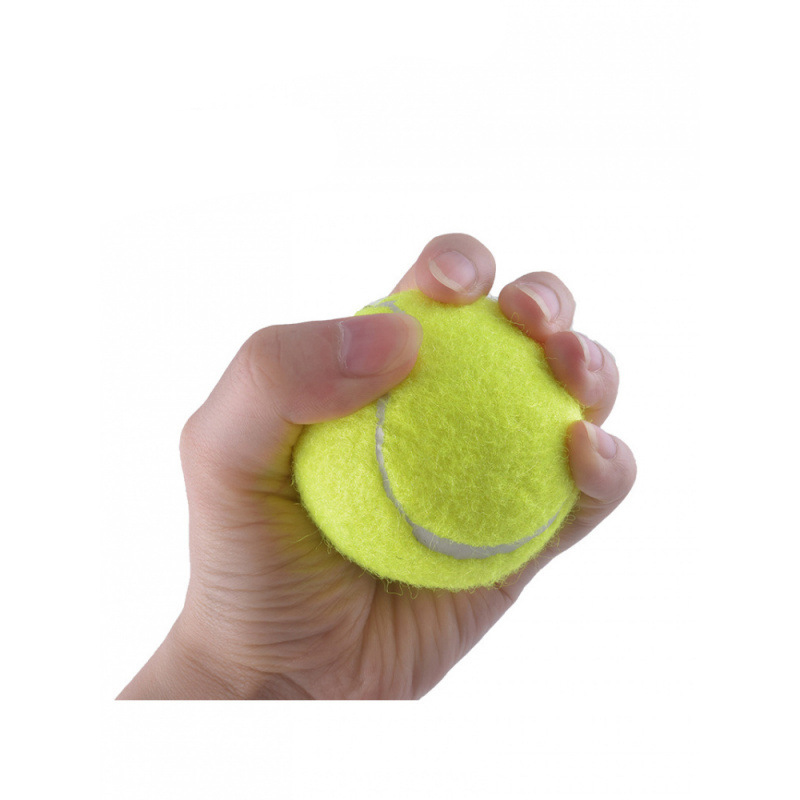
Core construction and the join
Rubber formulation and consistency
The core is a barrier as well as a spring. Its composition, thickness and uniformity can affect gas transmission and mechanical response. A thicker wall or a named ingredient alone does not prove better retention: formulation, manufacturing and the whole design work together. Ask for comparative results for the actual tennis ball model rather than treating a material label as a performance guarantee.
Consistency matters across a production lot. If two balls start at similar bounce heights but one changes much more during storage, an average alone can hide that variation. Request the sampling method and the range of results, along with the average, when evaluating lots.
Core join and manufacturing control
The joined core must remain intact during handling and repeated impact. Defects around the join can affect the behavior of an individual tennis ball. A visual inspection may reveal an obvious fault, but it cannot establish how well an intact core retains gas. Ask how the supplier checks joins, manages process variation and investigates unusually low results. Those questions are more useful than assuming every visible seam is defective.
Packaging, storage and transport
A sealed pressurized container helps limit the pressure difference between the tennis ball and its surroundings before opening. Container integrity matters: a damaged or leaking package may not provide the same storage conditions as an intact one. Ask about package checks, lot identification and the supplier's recommended storage conditions. Do not infer a fixed shelf life from a sealed can alone.
Heat and cold can change the immediate feel of a tennis ball. Store samples out of prolonged heat and direct sun, and allow comparison samples to reach the same room conditions before checking them. Record shipping and warehouse conditions when available. A bounce reading taken immediately after a cold delivery may say more about temperature than long-term gas loss.
Once the package is opened, the storage environment changes. Keep the opening time consistent between samples, and avoid mixing newly opened balls with older ones in the same evaluation. A resealable pressure container may be an option, but its effect depends on its design and use; ask for supporting test data rather than assuming it restores an already worn tennis ball.
How to compare retention without confusing it with bounce
Begin with the same model and lot identification, then agree on a test schedule before opening any packaging. A simple internal comparison can reveal differences, but it is not a substitute for an accredited laboratory assessment or proof of approval for competition.
- Choose samples from multiple unopened containers and label each tennis ball and lot. Set beforehand a sample size appropriate to the purchasing decision.
- Condition all samples in the same environment. Record temperature, package condition and time since opening.
- Measure baseline rebound using the same flat, hard surface, drop height and measurement method for every sample. Avoid imparting spin; repeat readings consistently.
- Store or use comparison groups under the same agreed conditions. Recheck at defined intervals, recording individual results and any visible wear.
- Compare both the change from baseline and the spread across balls. Repeat with another lot if a purchasing decision depends on consistency.
For context, the 2026 International Tennis Federation technical booklet specifies a drop of 254 ± 0.3 cm, measured from the bottom of the ball, in its test equipment requirements. Formal testing also specifies equipment and conditions. A casual drop test using that height alone does not establish compliance, nor does a single rebound reading measure pressure retention over time.
Questions to ask before placing an order
For tournament grade tennis balls, ask which competition specification applies, whether the exact model appears on the relevant current approval list, and for the corresponding test documentation. A description such as “tournament grade” is not itself evidence of approval. Check the required ball type and competition rules rather than assuming all events use the same requirements.
For wholesale custom logo tennis balls, separate the artwork discussion from the performance specification. Confirm the base model, packaging, sample approval process and whether the logo treatment changes the item or its approval status. Request written confirmation instead of assuming that a customized version shares every test result of an unmarked ball.
Useful documents include a model specification, the age and lot of the samples, the test method and dates, plus results after a defined storage period. Ask whether readings refer to unopened or opened packaging and whether they describe rebound, pressure or both. If two suppliers used different temperatures or intervals, their figures are not directly comparable.
Practical takeaways
A reliable tennis ball comparison starts with an agreed purpose: event play, training or retail stock. Match the test to that purpose, document the conditions and look at variation as well as the initial result. Core design and package integrity are important, but neither can replace measurements on the actual model and lot.
Before ordering, prepare the intended use, expected storage period, quantity, target market and any branding requirements. Then ask the supplier for samples and supporting documentation. That gives both sides a concrete basis for deciding which tennis ball is appropriate, without treating an attractive label as proof of retention quality.
 Hot News



