Pick up two teardrop-shaped padel rackets pulled from the exact same steel mold, painted in the exact same matte black finish, and balanced at an identical three hundred and sixty-five grams. Take them onto the court for five minutes of volleying and one frame might feel like a plush, forgiving pillow that floats defensive lobs effortlessly to the back glass, while the other feels like a stiff cannon that demands explosive wrist acceleration. New procurement managers entering the racket sports sector often make the mistake of obsessing solely over exterior carbon fiber weaves while treating the thirty-eight-millimeter internal foam slab as generic filler. In reality, biomechanical impact testing proves that roughly sixty-five percent of a paddle’s outgoing ball exit speed, vibration dampening, and sweet-spot forgiveness is governed directly by the cellular architecture buried beneath the carbon skin. Understanding what influences custom padel racket core density empowers brand directors and wholesale buyers to engineer frames that match the exact physical needs of their target player base.
Inside a composite racket factory, core density is measured in kilograms per cubic meter alongside Shore C or Shore A durometer hardness scales. The vast majority of modern hardware relies on crosslinked Ethylene Vinyl Acetate—commonly known as EVA foam—or closed-cell Polyethylene foam. When specifying a custom padel racket core, buyers navigate four primary durometer tiers. Ultra-soft EVA cores measuring ten to thirteen degrees on the Shore scale feature larger, gas-filled microscopic cells that compress deeply upon slow-speed contact, creating a gentle trampoline effect ideal for juniors, seniors, and players prone to lateral epicondylitis. Moving up the ladder, medium-density fifteen-to-seventeen-degree Black EVA cores utilize tighter cellular crosslinking with higher rubber elastomer ratios. A high-memory Black EVA padel racket core snaps back to its original thirty-eight-millimeter thickness within three milliseconds of impact, delivering eighteen percent faster energy return and forty percent longer resistance to core crushing than basic white foam. At the top end, compact eighteen-to-twenty-two-degree Pro Hard EVA cores resist compression during low-speed dinks but unleash massive kinetic power when tournament strikers swing at full velocity.
Selecting the right foam density is never an isolated decision; engineers must calculate how the internal core interacts with both exterior ambient weather and the stiffness of the outer carbon fiber layup. Closed-cell EVA is a thermoplastic elastomer whose molecular stiffness shifts noticeably with court temperature. When an athlete plays outdoors in Seville or Dubai during a thirty-five-degree Celsius summer afternoon, thermal expansion softens the internal foam by two to three Shore degrees, making a soft core feel overly mushy and imprecise on overhead smashes. Conversely, inside an unheated Scandinavian or British court hall at eight degrees Celsius in January, that same foam contracts and stiffens like a wooden board, shrinking the sweet spot and jarring the player’s wrist. Smart product developers counteract climate drift and balance frame feel by pairing opposing material densities—or by engineering multi-density laminated sandwich cores. For instance, wrapping a stiff, high-modulus 18K carbon padel racket skin over a medium-soft fifteen-degree EVA core gives advanced players crisp volley direction without sacrificing defensive comfort, whereas sandwiching a hard outer EVA layer around a soft inner EVA center adapts dynamically to both slow touch shots and violent smashes.
Examining commercial product lines from successful European racket brands illustrates how strategic core density calibration drives regional market share. Consider a fast-growing padel equipment brand distributing across both southern Spain and northern Sweden. During their inaugural year, the founders ordered three thousand units of a single flagship model built with a rigid nineteen-degree hard EVA core and a 12K carbon face. While advanced tournament players in warm Spanish summer leagues loved the crisp smash power, club players in cooler Swedish indoor facilities complained bitterly of dead bounce, sore elbows, and cracked faces caused by cold-stiffened resin and foam. Ahead of their second-year rollout, the brand collaborated with an experienced OEM padel racket manufacturer to split their signature mold into two climate-and-skill-calibrated editions: a "Pro Tour Summer" edition retaining the eighteen-degree high-density Black EVA core, and a "Club Control Comfort" edition engineered with a dual-density fourteen-and-six-degree laminated memory EVA core. Backed by clear durometer icons printed on the frame throat, regional retail reorders surged by sixty-three percent across six months while cold-weather warranty claims fell below zero point four percent.
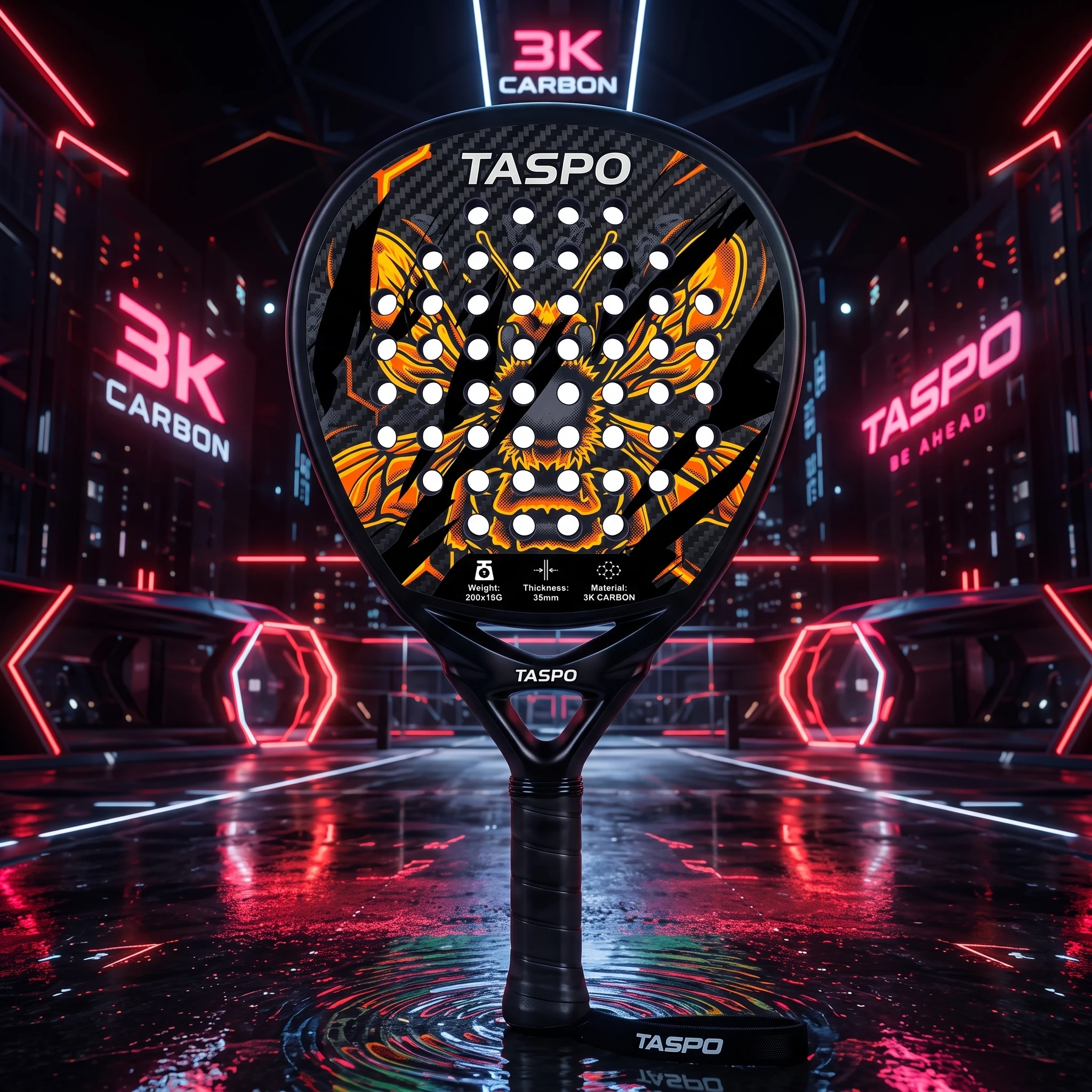
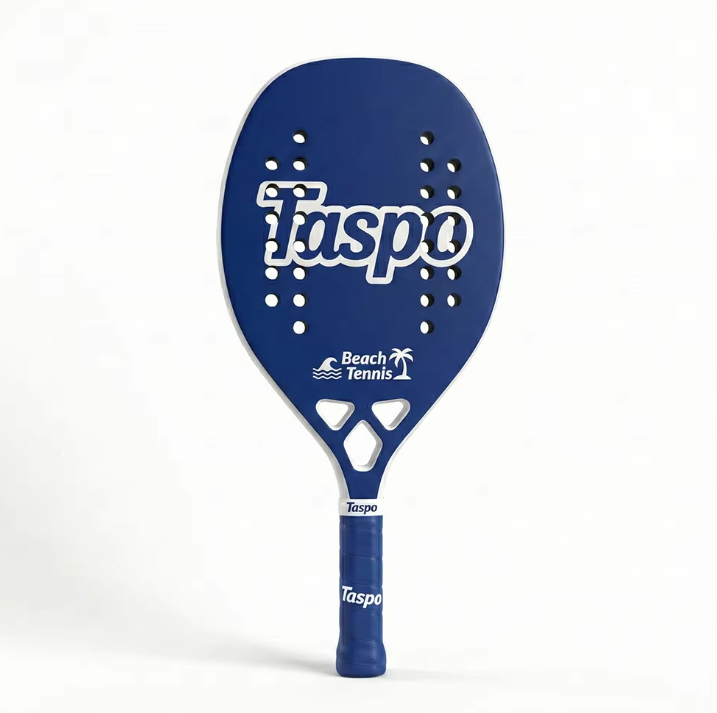
Turning New Zealand foam density specifications into thousands of mass-produced rackets that play identically requires partnering directly with a manufacturer that audits every single foam sheet before molding. When buyers source through third-party trading brokers, low-end workshops frequently grab leftover EVA blocks from different chemical batches whose hardness varies by four or five degrees from edge to center—resulting in a container of rackets where no two frames feel the same on court. Partnering directly with a vertically integrated composite factory eliminates that inconsistency completely. This is where Taspo stands out as the premier engineering partner for global padel brands, club networks, and wholesale distributors. Operating modern ISO-certified composite molding lines, Taspo subjects every incoming EVA and polyethylene foam slab to five-point digital Shore durometer mapping, precision water-jet cutting, and gram-accurate weight pairing before carbon layup begins. Whether a brand needs ultra-soft arm-friendly cores, tour-grade high-memory Black EVA, or custom three-layer multi-density sandwich cores paired with 3K, 12K, or 18K carbon faces, Taspo delivers uncompromising thermal molding precision—alongside one-stop sourcing for tournament padel balls, overgrips, and bags.
 Hot News
2026-11-20
2026-11-20
2026-11-20
2026-11-20
2026-11-20
2026-11-20
 EN