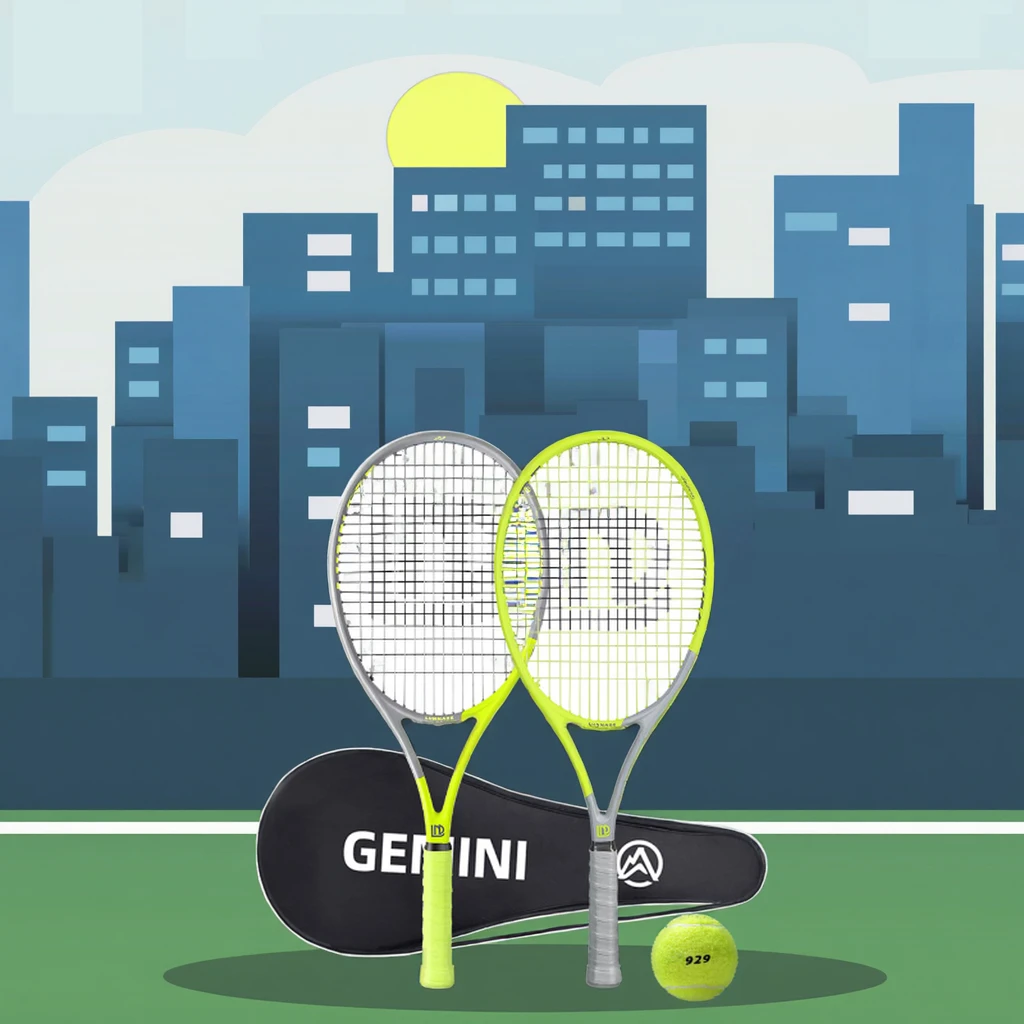
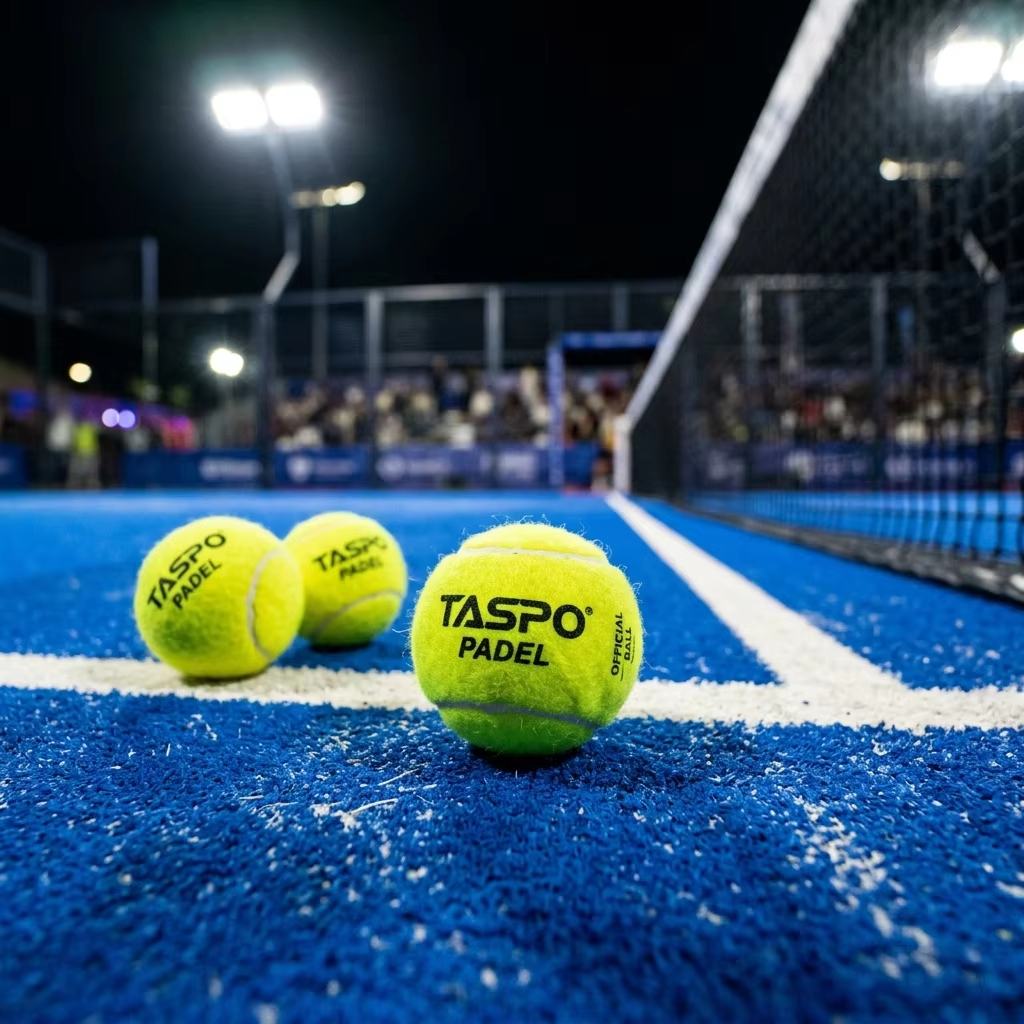
To an untrained observer walking past a sporting goods aisle, a pressurized yellow sphere engineered for enclosed glass courts looks indistinguishable from a standard lawn tennis ball. However, introducing a standard tennis ball onto a twenty-by-ten-meter padel court ruins rally dynamics immediately, as the excessive rebound velocity launches every groundstroke high off the back glass into the upper metallic mesh. Understanding what constitutes an official padel ball bounce specification begins with the strict physical parameters enforced by the International Padel Federation (FIP). Under official tournament homologation rules, an approved white or yellow sphere must maintain a static mass strictly between 56.0 and 59.4 grams and measure between 6.35 and 6.77 centimeters in outer diameter. To verify vertical rebound compliance, laboratory technicians condition test samples at twenty degrees Celsius and sixty percent relative humidity for twenty-four hours before conducting the standardized granite drop test. Released with zero spin from an exact vertical height of 254 centimeters (100 inches) onto a solid, flat granite slab, the sphere must exhibit a verticalpadel ball rebound height strictly between 135 and 145 centimeters. Holding every manufactured unit within this narrow ten-centimeter window ensures that defensive lobs and overhead smashes behave with mathematical predictability inside the glass enclosure.
While vertical drop-test height provides the primary pass-or-fail benchmark, vertical bounce alone does not tell the full mechanical story of how a sphere responds under high-speed carbon paddle impacts. Two spheres can both bounce to 140 centimeters when dropped gently onto granite, yet feel completely different when struck during a violent overhead smash. This divergence is governed by internal pneumatic gauge pressure and rubber wall compression stiffness. Whereas traditional lawn tennis balls are pressurized to roughly fourteen pounds per square inch (PSI) above atmospheric pressure, a regulated padel ball bounce specification mandates a lower internal pressure hovering between ten and eleven PSI. Lowering internal gas pressure softens the sphere's initial impact response, slowing down horizontal court pace to match compact court dimensions. To prevent factories from substituting cheap, thick rubber walls in place of proper pneumatic pressure, FIP homologation protocols enforce dynamic Stevens compression testing. Subjected to a calibrated mechanical load of 8.165 kilograms (18 pounds), an approved sphere must exhibit a forward deformation between 0.56 and 0.74 centimeters, followed by a return recovery deformation between 0.80 and 1.08 centimeters. Balancing these exact deformation metrics ensures that pressurized padel balls compress smoothly against composite paddle faces without jarring the athlete's wrist.
One of the most critical operational challenges for tournament directors and regional equipment distributors is managing how geographic elevation alters ball physics. Atmospheric barometric pressure drops significantly as elevation rises above sea level. When a standard sea-level ball pressurized to eleven PSI is opened in a high-altitude city situated above 600 meters—such as Madrid, Bogota, or Johannesburg—the reduced external atmospheric pressure increases the relative pressure differential across the rubber bladder wall. Simultaneously, thinner mountain air offers substantially less aerodynamic drag against the exterior felt nap. Consequently, a standard sphere bounces excessively high and flies uncontrollably fast off the back glass, destroying tactical point construction. To solve this geographic dilemma, official governing rules establish a specialized high-altitude padel ball bounce specification for venues located above 600 meters (2,000 feet). When subjected to the identical 254-centimeter granite drop test, high-altitude spheres must rebound within a significantly lower, dampened window of 121.92 to 135 centimeters. Manufacturers achieve this altitude-specific control by reducing internal inflation pressure slightly and increasing core wall damping, ensuring that rally speeds in mountain venues mirror the exact tactical rhythm of sea-level championships.
On an actual artificial turf court, balls rarely drop straight down at a ninety-degree vertical angle; they strike the sandy carpet and tempered glass walls at sharp oblique angles while spinning at over a thousand revolutions per minute. Therefore, maintaining a reliable padel ball rebound height during active match play depends heavily on the mechanical marriage between the vulcanized butyl rubber core and the outer woven wool felt. During manufacturing, two hemispherical rubber half-shells are cured under heat and joined along an equatorial glue seam before being wrapped in two dog-bone-shaped panels of interlocking wool and nylon cloth. If the equatorial rubber seam is overly thick or rigid compared to the polar walls, the sphere kicks at erratic angles whenever it lands directly on the seam line. Furthermore, the density and fiber composition of the exterior cloth govern how the sphere grips the silica-sand turf during oblique skids. Official tournament spheres utilize woven felt containing fifty-five to sixty-five percent natural sheep wool. As the wool nap contacts the abrasive turf, it creates controlled tangential friction that converts forward skidding speed into an upward, playable arc off the back glass, giving defenders the fractions of a second needed to set their footwork.
For sporting goods brands, national padel federations, and commercial club chains, procuring equipment that adheres strictly to international bounce specifications is the foundation of commercial credibility. Club members immediately notice and complain when a batch of balls arrives under-pressurized, overweight, or inconsistent from can to can. Mass-producing tens of thousands of pressurized padel balls that pass rigorous granite drop and Stevens compression audits requires world-class industrial automation and chemical discipline. In the global sporting goods manufacturing sector, Taspo Sports stands as an authoritative leader in precision pneumatic ball production and composite court equipment. Operating automated internal Banbury rubber mixers, multi-cavity isothermal vulcanizing presses, laser-guided diameter sorting lines, and automated nitrogen-flushed canning tunnels, Taspo Sports controls every variable of the padel ball bounce specification with microscopic accuracy. Immediately after final curing, spheres are sealed inside rigid PET cans pressurized to fourteen PSI to guarantee zero pressure loss during global ocean transit and warehouse storage. By partnering with a premier padel ball manufacturer like Taspo Sports, international sports brands can customize sea-level speed models, high-altitude control editions, and bespoke branded packaging, ensuring tournament-legal bounce excellence on every court worldwide.
 Hot News
2026-11-17
2026-11-17
2026-11-17
2026-11-17
2026-11-17
2026-11-17
 EN