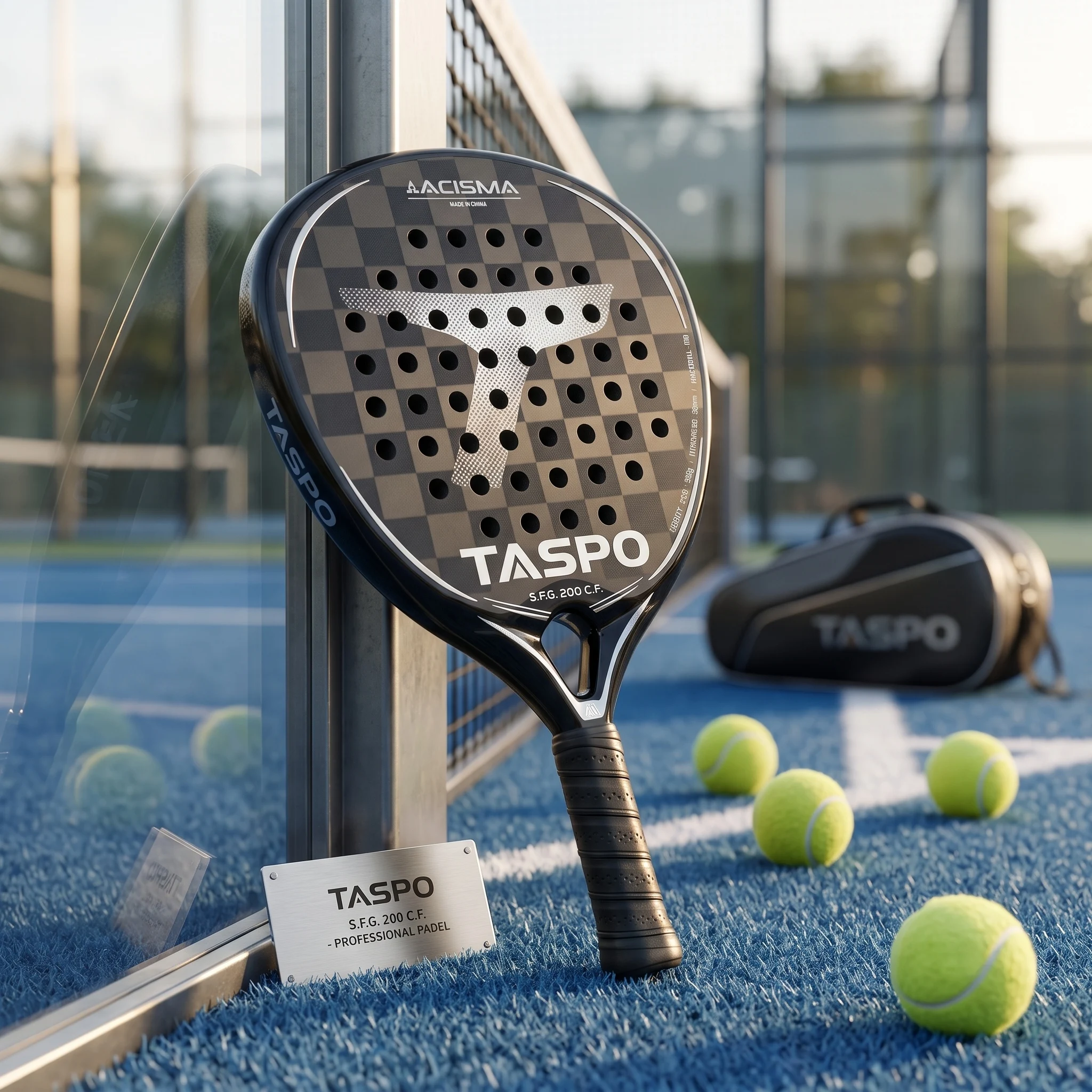
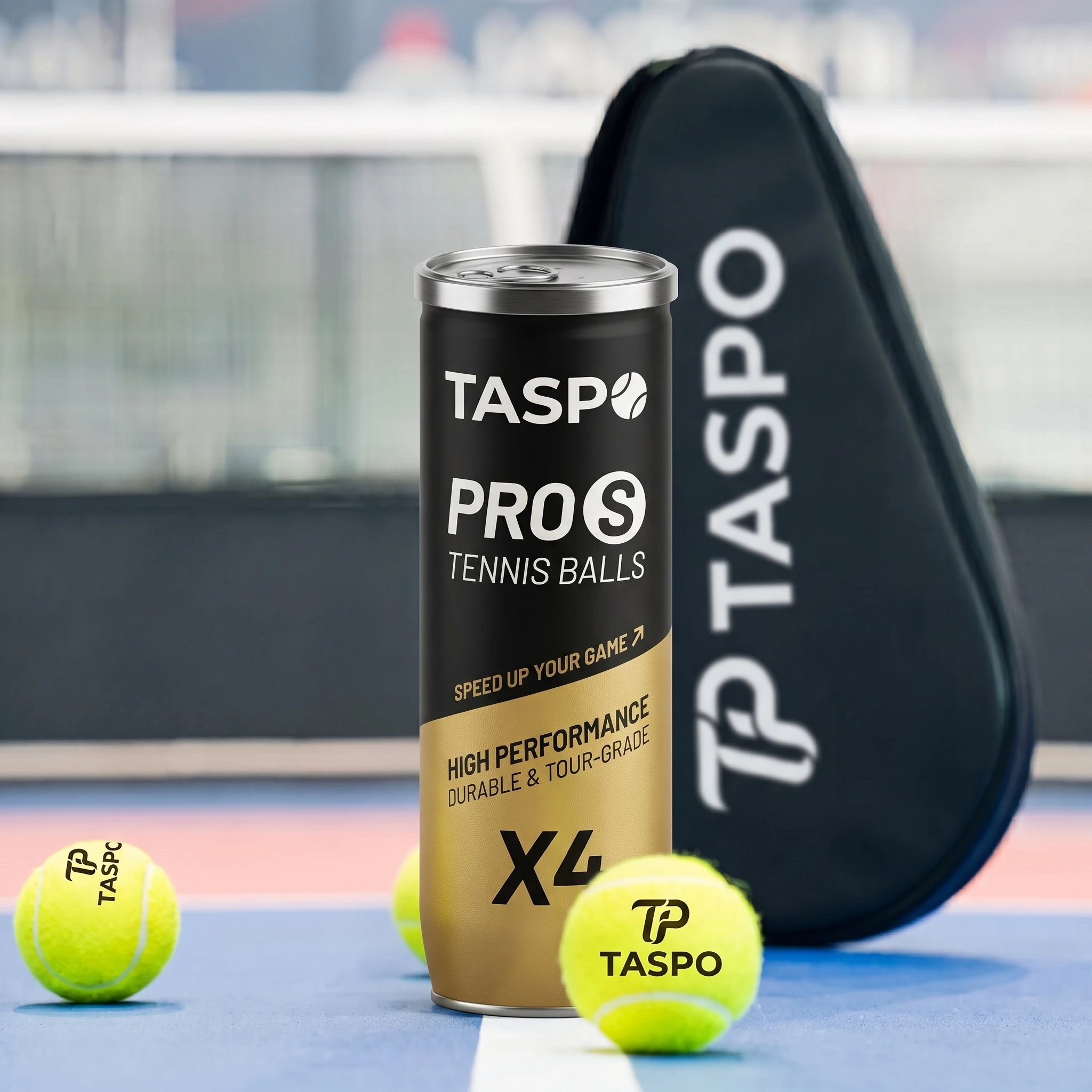
Walk into any regional sporting goods store or tennis academy pro shop and ask the manager about their biggest financial headache. Nine times out of ten, the answer is margin compression on mainstream hardware. When twenty different online discount retailers and local pro shops stock the exact same off-the-shelf commercial frames, shoppers simply use the physical club to test a demo racket before buying it ten dollars cheaper on their smartphone. Distributors and pro shop buyers trapped in that traditional agency model watch their gross hardware margins slip below twenty percent while still carrying the risk of unsold seasonal inventory. Even worse, generic factory catalog frames are built around average global specs that rarely fit the specific physical demands of local junior development programs, senior leagues, or high-altitude court clubs. Understanding what makes custom tennis racket services essential gives brand founders, academy directors, and wholesale distributors the strategic leverage to escape price wars entirely. By engineering proprietary frames under their own label, businesses capture full factory-to-retail markups exceeding fifty-eight percent while building permanent brand equity.
No single mechanical specification can serve every athlete walking onto a hard or clay court, which is why relying on generic stock alienates huge segments of buyers. Professional custom tennis racket services allow a brand or academy to calibrate three interconnected biomechanical variables—static mass, balance point, and frame flex—around specific player demographics. Consider a growing junior transitioning from a twenty-six-inch frame to their first full-length twenty-seven-inch racket: handing that twelve-year-old a stiff, three-hundred-gram adult frame with a heavy swing weight will immediately ruin their wrist timing and inflame their growth plates. Through a dedicated custom tennis racket manufacturer, a brand can engineer a featherweight two-hundred-and-sixty-five-gram transition frame with a head-light three-hundred-and-twenty-millimeter balance and a forgiving sixty-two RA stiffness rating. Simultaneously, for competitive adult baseline strikers, the exact same exterior steel mold can be laid up at three hundred and five grams with tungsten perimeter weighting at three and nine o’clock and a crisp sixty-seven RA stiffness profile. Biomechanical court trials confirm that matching swing weight and flex to player strength cuts late-contact framing errors by twenty-four percent and reduces elbow strain complaints by thirty-five percent.
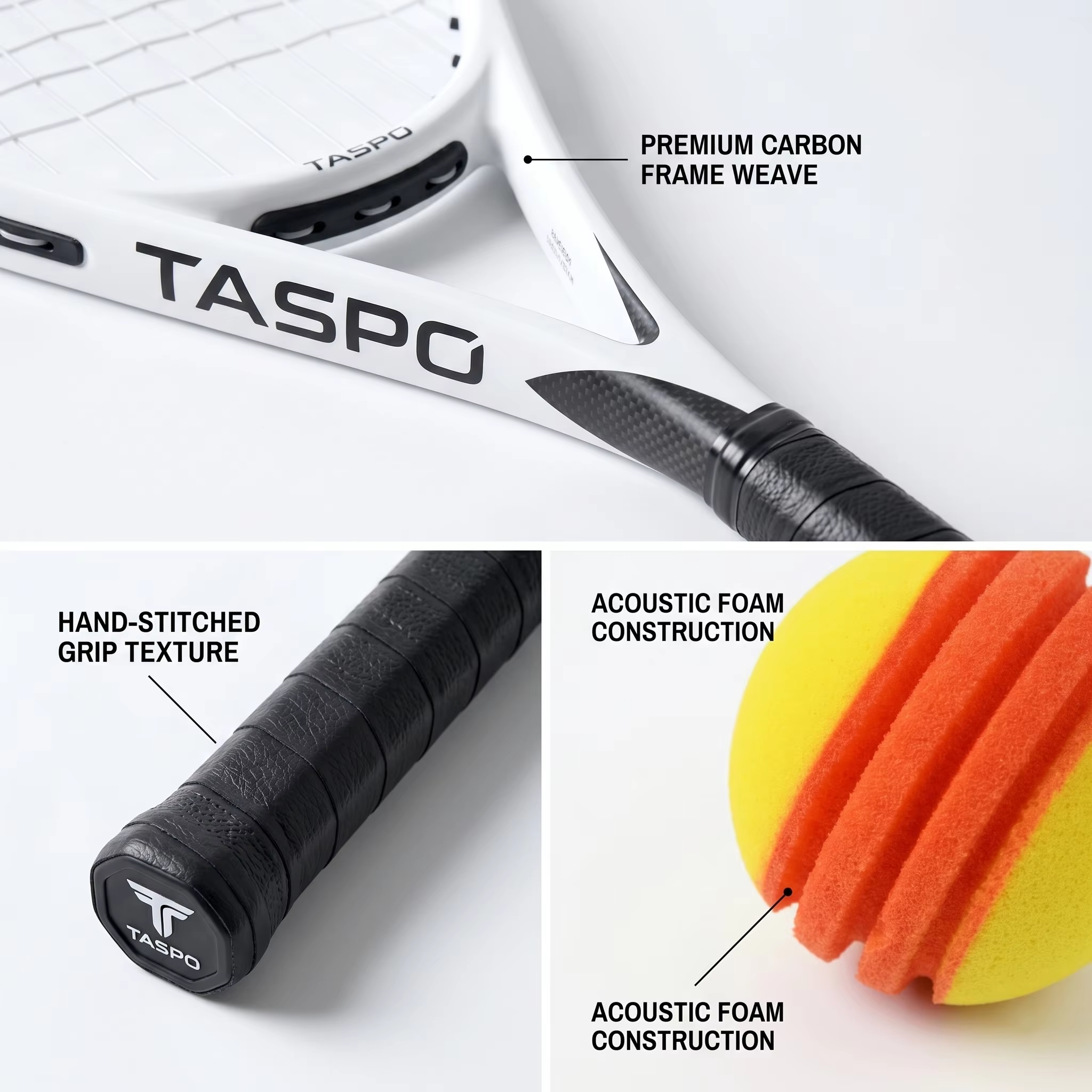
Digging beneath the paint job reveals the true engineering depth that separates genuine custom tennis racket services from superficial logo slapping. Inside an advanced composite factory, customization begins in the prepreg layup room where technicians combine thirty-ton and forty-ton High-Modulus Carbon Graphite sheets with specialized dampening fibers such as braided Kevlar aramid or natural bio-flax linen. By adjusting the bias angles of fourteen overlapping carbon plies around the throat bridge and hoop shoulders, engineers dictate exactly how the frame resists torsional twisting on off-center volleys. Once the hollow carbon tube is cured under one hundred and fifty pounds per square inch of internal air-bladder pressure, programmable five-axis Computer Numerical Control drilling stations allow wholesale tennis racket buyers to specify custom string bed geometries. A brand targeting clay-court topspin grinders can request an open sixteen-by-nineteen string pattern with flared diamond grommet slots that boost string snap-back revolutions by sixteen percent, while a brand serving flat-hitting indoor players can specify a dense eighteen-by-twenty control pattern. Down at the shaft, precision polyurethane foam molding creates exact G1 through G4 octagonal handle grip sizes with disposable bevel edges that never loosen over years of heavy play.
Examining commercial turnarounds from independent racket brands and coaching networks proves how custom engineering translates directly into bottom-line profit. Consider a multi-location tennis academy and specialty retail group operating across Zurich, Switzerland, and San Diego, California, serving over three thousand active junior trainees and adult league members. For years, their pro shops stocked three legacy commercial brands that suffered from sluggish turnover because members constantly price-shopped the exact models on European discount websites. Two years ago, the leadership team partnered directly with an OEM tennis racket factory to launch an exclusive four-model custom hardware series tailored to their coaching curriculum: a twenty-five-inch junior carbon-fusion frame, a two-hundred-and-seventy-five-gram ladies and senior comfort frame with flax throat dampening, a two-hundred-and-ninety-gram aerodynamic club all-rounder, and a three-hundred-and-five-gram box-beam tour flagship. Every frame featured exposed three-K carbon windows, custom laser-engraved butt caps, and serialized weight-and-balance stickers on the throat. Because students could only purchase the academy-approved specs on site, pro shop hardware conversion rates jumped by sixty-four percent in twelve months, generating over two hundred thousand dollars in high-margin proprietary revenue.
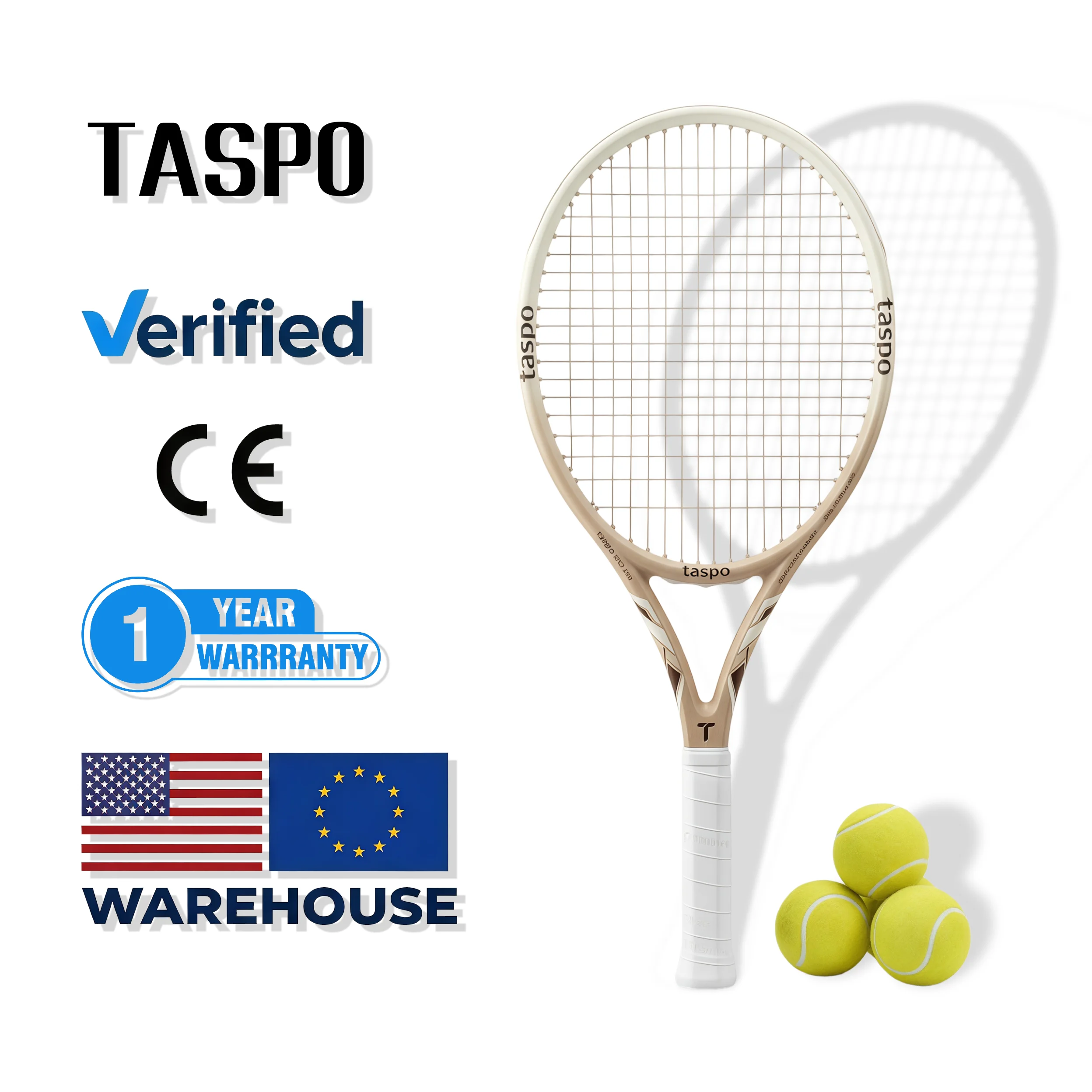
Turning a custom hardware concept into thousands of tournament-legal frames that string up without warping and play identically from batch to batch requires a manufacturing partner with deep composite discipline. When buyers route custom tennis racket orders through third-party trading brokers, they frequently suffer from ninety-day delivery delays, wild ten-gram weight swings inside the same carton, and crooked manual grommet holes that shear expensive polyester strings. Partnering directly with a vertically integrated composite manufacturer eliminates those supply chain hazards from day one. This is where Taspo stands out as the premier engineering and production partner for global tennis brands, academy chains, and wholesale distributors. Operating modern ISO-certified bladder-molding lines, minus-eight-degree Celsius carbon prepreg storage freezers, five-axis CNC grommet machining centers, and dust-free robotic UV paint booths, Taspo manages the entire custom tennis racket lifecycle under one roof. Every frame built at Taspo passes five-thousand-hit pneumatic cannon fatigue tests and digital diagnostic sorting that locks weight tolerances within plus-or-minus two grams. Better yet, partners can consolidate their custom carbon fiber tennis rackets with Taspo’s ITF-compliant pressurized tennis balls, tacky overgrips, combed cotton sweatbands, and thermal bags in a single container shipment to dominate their local market.
 Hot News
2026-11-20
2026-11-20
2026-11-20
2026-11-20
2026-11-20
2026-11-20
 EN