Stand courtside during a competitive men's or mixed doubles match today, and the mid-court flat exchanges move faster than the human eye can comfortably track. With shuttlecocks rocketing across the net at over three hundred and fifty kilometers per hour during drive battles, players have less than two hundred and fifty milliseconds to flip their grip from forehand to backhand and block the birdie back. Athletes still swinging traditional, heavy frames weighing ninety grams or more quickly find their racket head lagging behind the shuttle, resulting in late blocks that pop straight up for an opponent's net kill. Even worse, muscling a heavy bat through three back-to-back tournament matches leaves the deltoid and wrist extensors completely exhausted. Understanding why lightweight badminton racket models gain popularity across both professional circuits and recreational clubs comes down to a simple tactical truth: hand speed now rules the modern court.
Two decades ago, conventional coaching wisdom dictated that serious competitors had to use a 2U (ninety to ninety-four grams) or 3U (eighty-five to eighty-nine grams) frame to generate enough momentum for deep backcourt clears and heavy smashes. Lighter models were dismissed as fragile beginner toys. Today, sales telemetry from specialty pro shops and equipment audits across Badminton World Federation tour stops show a dramatic industry reversal: the 4U badminton racket (weighing eighty to eighty-four grams unstrung) has become the undisputed global standard for doubles and all-around singles play, while 5U ultralight badminton racket builds (seventy-five to seventy-nine grams) are surging in popularity among front-court mixed doubles specialists, junior competitors, and senior club players. Shaving just six to ten grams off the static mass of the frame reduces rotational inertia at the wrist joint, allowing athletes to execute lightning-fast pronation snaps and deceptive late flicks without telegraphing their shot direction.
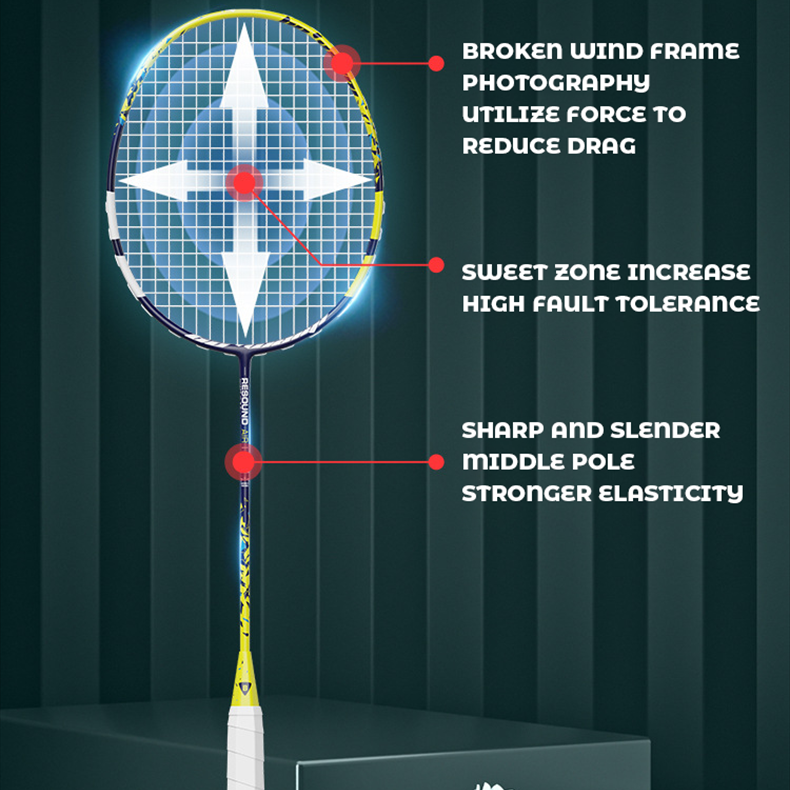
The main reason early lightweight frames felt weak and hollow was material limitation: to reduce weight using standard low-grade graphite, factories simply used fewer carbon layers, resulting in thin, floppy walls that vibrated on impact and lacked repulsive punch. Modern composite engineering solved that physics problem by replacing bulk mass with ultra-high-modulus tensile stiffness. Today, a premium lightweight badminton racket is constructed from aerospace-grade T700, T800, and M40J carbon fiber prepreg sheets infused with nano-epoxy resin matrices and cured inside high-pressure autoclaves. Because high-modulus carbon filaments possess nearly double the tensile strength-to-weight ratio of conventional graphite, engineers can mold a razor-slim aerodynamic sword or box-hybrid frame that weighs just eighty-one grams yet stores and releases explosive strain energy on overhead swings. Furthermore, by shifting three grams of mass from the handle throat up to the twelve o'clock tip, designers create a head-heavy 4U carbon fiber badminton racket that swings like a feather on defense while hitting like a sledgehammer on jump smashes.
Empirical court testing confirms how upgrading to a modern lightweight composite frame elevates defensive reflex speed without sacrificing rear-court firepower. During an eight-week performance study across four competitive badminton clubs in Southeast Asia and Northern Europe, fifty-six intermediate and advanced doubles players compared a traditional eighty-eight-gram 3U frame against an eighty-one-gram 4U lightweight badminton racket engineered with a slim six-point-eight-millimeter high-modulus shaft and a three-hundred-and-two-millimeter head-heavy balance point. High-speed optical motion capture and radar tracking revealed that players using the 4U carbon fiber badminton racket reduced their grip-transition and net-interception reaction time by fourteen percent during flat mid-court drive exchanges. Remarkably, average forehand smash velocities remained within one point two percent of the heavier 3U frame because the lighter aerodynamic profile allowed athletes to accelerate their wrist snap faster through the impact zone.
One valid concern savvy buyers raise when shopping for an ultralight badminton racket is stringing durability: can an eighty-gram or seventy-seven-gram frame survive the inward compressive crush of high-poundage stringing machines? In poorly built budget frames, pulling twenty-six pounds of tension on a 5U hoop causes the two o'clock and ten o'clock shoulders to cave inward. To prevent frame collapse, a tournament-grade custom badminton racket reinforces high-stress quadrants with continuous forty-five-degree braided carbon-kevlar filaments and high-density foaming cores injected inside the hollow upper hoop. Combining this internal wall reinforcement with recessed outer string channels and connected U-shaped nylon grommet strips distributes string load evenly across the oval head. As a result, modern 4U and 5U frames safely hold twenty-eight to thirty pounds of string tension across dozens of restringing cycles without losing structural roundness.
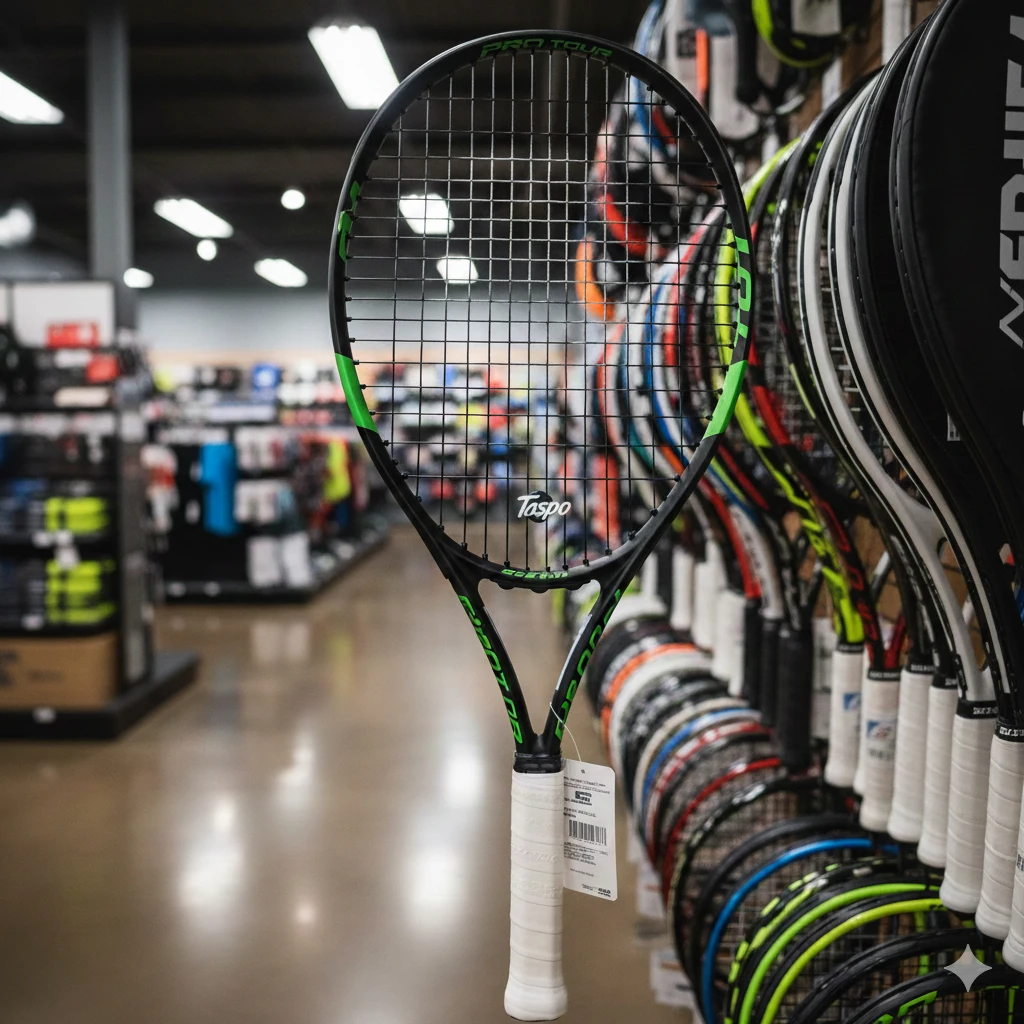
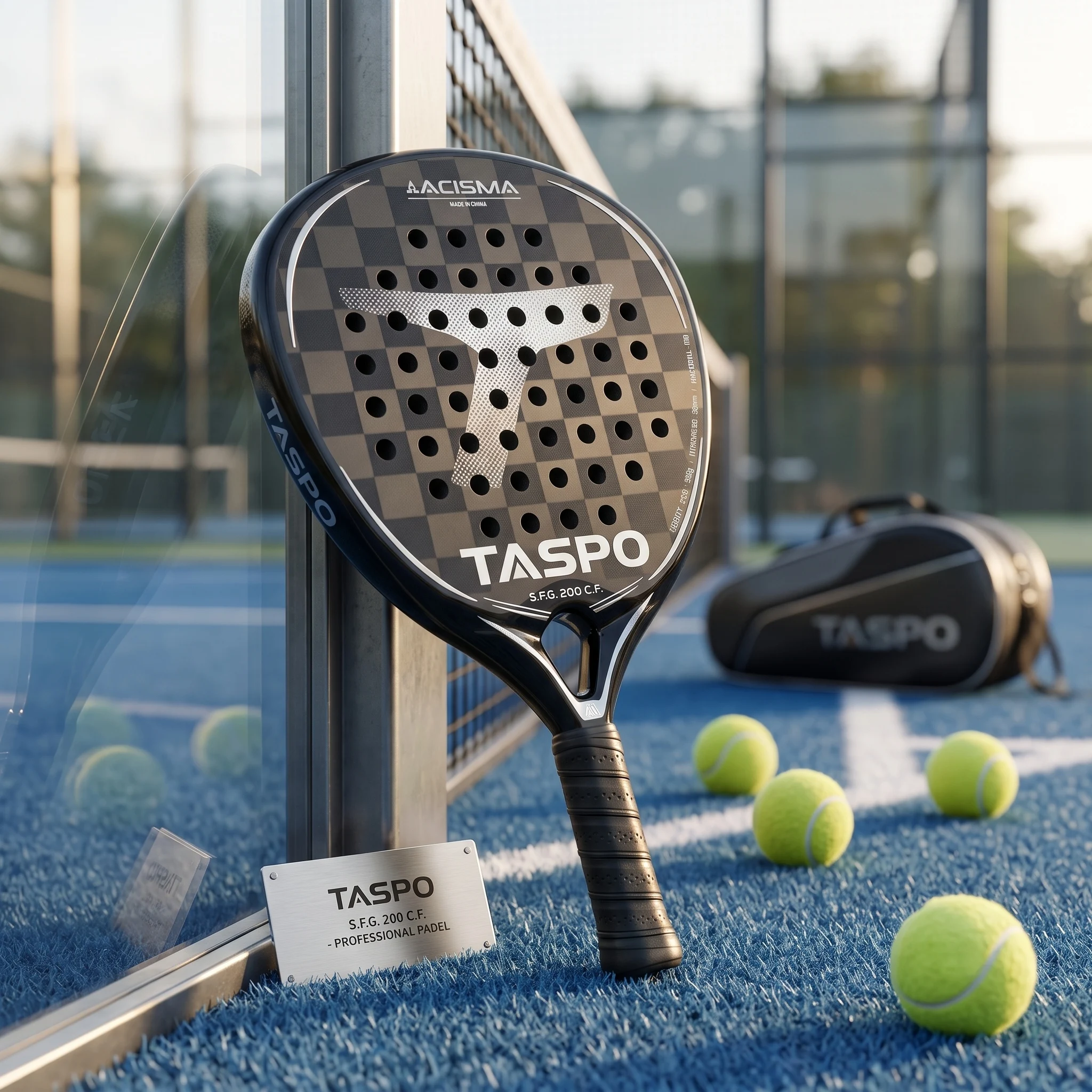
Developing a fast-selling lightweight racket collection that balances feathery hand speed with high-tension structural toughness requires partnering with a composite manufacturer that masters precision prepreg curing. Taspo operates as a premier B2B sports equipment manufacturer backed by over one hundred and thirty experienced engineers and self-owned standardized production bases. Utilizing aerospace-grade T700, T800, and M40J graphite prepregs, high-pressure autoclave molding, resin transfer molding, and five-axis CNC grommet drilling, Taspo engineers bespoke custom badminton racket lines across 3U, 4U, 5U, and ultralight 6U specifications. Brand partners can customize aerodynamic frame profiles, slim shaft flexibility ratings, precise head-heavy or head-light balance points, and high-poundage grommet systems, alongside matching tournament strings, tacky overgrips, moisture-wicking sweatbands, and thermal racket bags. Every lightweight badminton racket produced at Taspo passes through seven strict quality inspection gates verifying weight tolerance within plus or minus one point five grams, shaft torque resistance, and static stringing load capacity. With custom prototypes ready in seven to fifteen working days and twenty-four-hour technical support, Taspo helps global brands capture the modern speed game.
 Hot News
2026-11-20
2026-11-20
2026-11-20
2026-11-20
2026-11-20
2026-11-20
 EN