Walk along any sunny shoreline in Italy, Brazil, Spain, or Florida and you will see parents and kids setting up portable nets or drawing court lines in the sand. Beach tennis has exploded from a niche coastal pastime into one of the fastest-growing recreational family sports in the world. Yet many vacationers and casual shoppers still make the mistake of buying old-fashioned, solid plywood beach paddles sold in tourist souvenir shops. On the sand, those solid wooden boards quickly turn a fun afternoon into a painful chore. Weighing between three hundred and eighty and four hundred and twenty grams with zero internal shock absorption, heavy wooden paddles strain small junior wrists, tire out adult shoulders within ten minutes, and send jarring vibrations straight into the palm whenever a wet ball hits near the edge. Observational surveys across coastal beach clubs indicate that families using heavy wooden boards abandon their games in less than twelve minutes due to arm fatigue and erratic dead bounces. Understanding why lightweight tennis beach rackets appeal to families unlocks a massive, high-volume retail opportunity for sporting goods brands and resort merchandisers.
Replacing a dead wooden plank with a modern composite frame completely transforms how beginners and children rally across the sand. Instead of solid timber, a contemporary lightweight beach tennis racket utilizes hollow twin-tube perimeter molding paired with a cellular foam sandwich core—shaving total static weight down to an effortless three hundred and ten to three hundred and thirty grams for adults, and two hundred and fifty to two hundred and seventy grams for junior models. Across the striking face, composite engineers blend elastic woven fiberglass with 3K carbon fiber filaments over a twenty-to-twenty-two-millimeter-thick core of ultra-soft, ten-to-thirteen-degree Shore hardness Ethylene Vinyl Acetate foam. Because beach tennis is played purely with aerial volleys using depressurized orange Stage 2 spheres—without letting the ball bounce on the sand—players rely on quick wrist reflexes rather than long baseline windups. That soft EVA core and flexible fiberglass-carbon skin work together like a miniature trampoline, expanding the forgiving sweet spot by thirty-five percent so ten-year-old kids and grandparents alike can float effortless lobs back and forth without swinging hard.
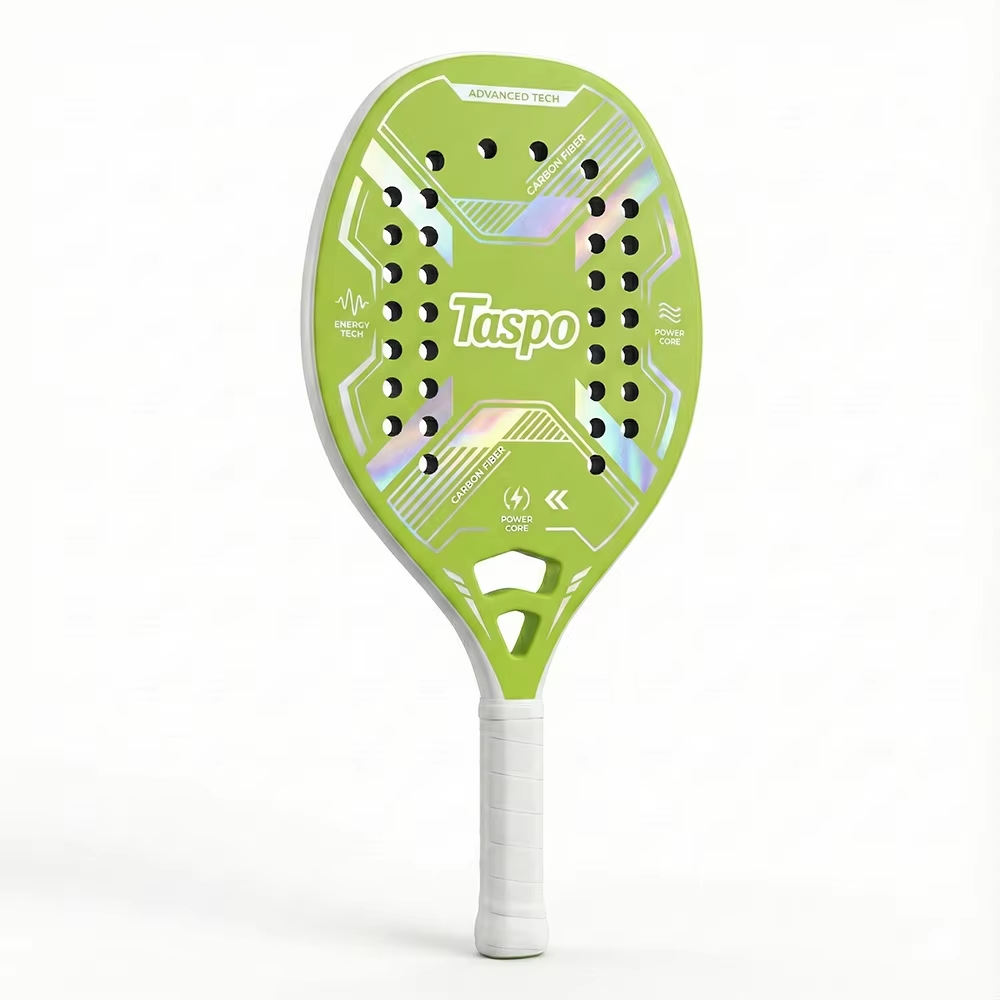
Designing athletic hardware for the oceanfront requires solving environmental hazards that indoor court rackets never face: saltwater spray, abrasive quartz sand, and blistering ultraviolet radiation. Cheap recreational paddles glued together with water-soluble adhesives delaminate rapidly when exposed to wet bathing suits and humid sea breezes, while unprotected inks fade into chalky pastels after two weeks under tropical sun. When engineering cosmetic beach tennis rackets for family retail lines, top manufacturers seal the entire carbon-and-fiberglass shell with marine-grade, hydrophobic epoxy resins and coat the exterior decals with automotive-spec UV400 protective clear coats. Because the internal EVA foam features a closed-cell molecular structure, water never seeps through the aerodynamic air holes to waterlog the core. Down at the handle, family-focused designs replace thick adult tennis pallets with slimmer, four-inch circumference ergonomic shafts wrapped in hydro-wicking, sand-repellent polyurethane overgrips and secured with soft neoprene wrist safety tethers—ensuring small hands never lose control during diving sand saves.
Examining seasonal sales figures from coastal sporting goods chains and beach resort boutiques proves how family-tailored lightweight sets dominate summer checkout counters. Consider a multi-store sporting goods retailer and beach club operator with locations across Rimini, Italy, and Miami Beach, Florida. Previously, their summer beach aisle stocked individual, heavy 360-gram tournament carbon paddles priced at one hundred and eighty dollars alongside ten-dollar wooden toys. Families walked right past both options—finding the wooden boards too clunky and the pro carbon frames too heavy and expensive for casual vacation play. Ahead of last summer’s peak travel season, the buying team partnered directly with a specialized factory to launch a private label "Family Beach Rally Kit." Each ventilated mesh carry tote contained one 315-gram adult lightweight fiberglass-carbon hybrid racket, one 265-gram junior compact racket, three low-pressure orange beach tennis balls, and two matching cotton wristbands in vibrant tropical sunset gradients. Priced as an accessible sixty-five-dollar family bundle, retail sell-through surged by seventy-four percent over two quarters, with resort rental desks reporting zero frame delamination despite daily saltwater exposure.
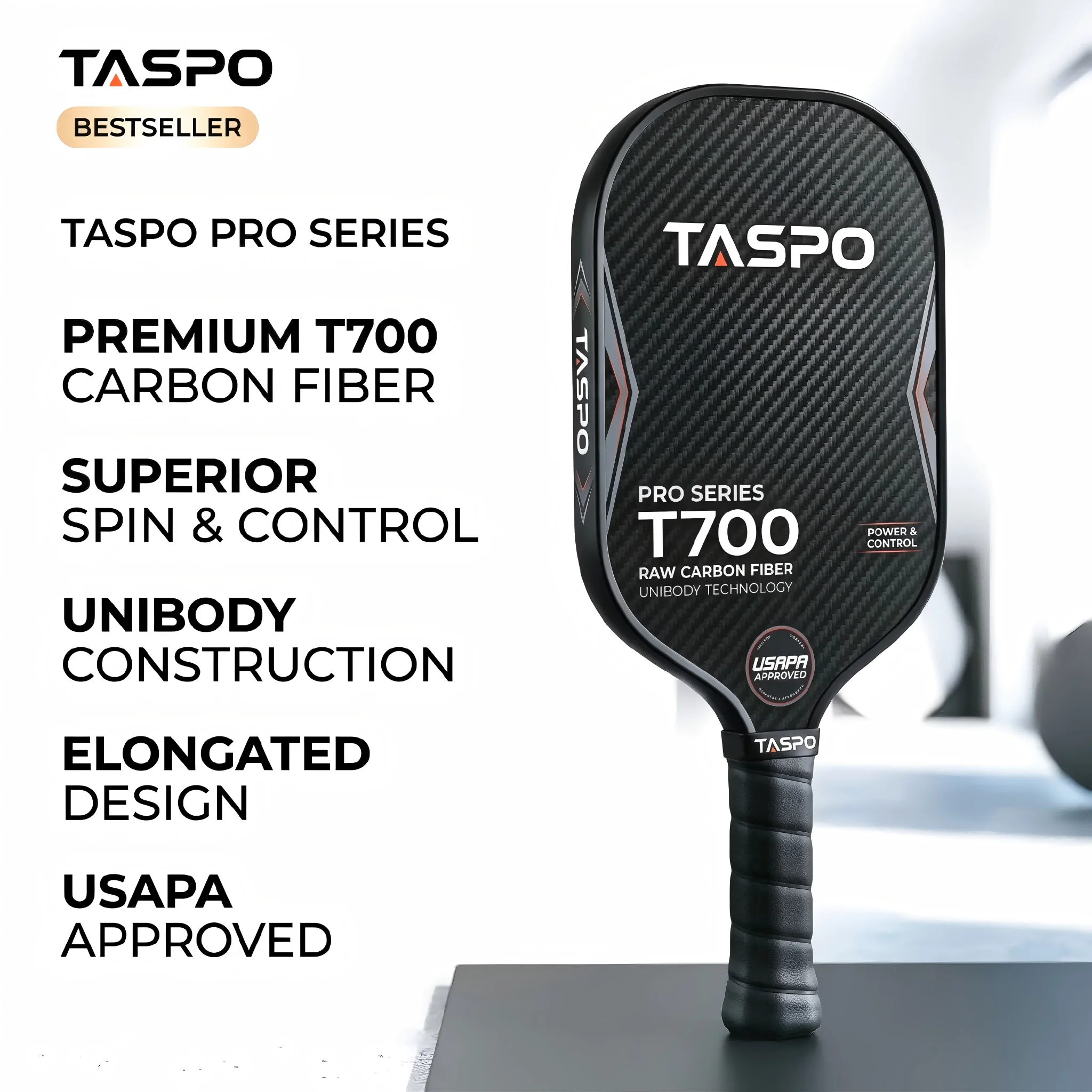
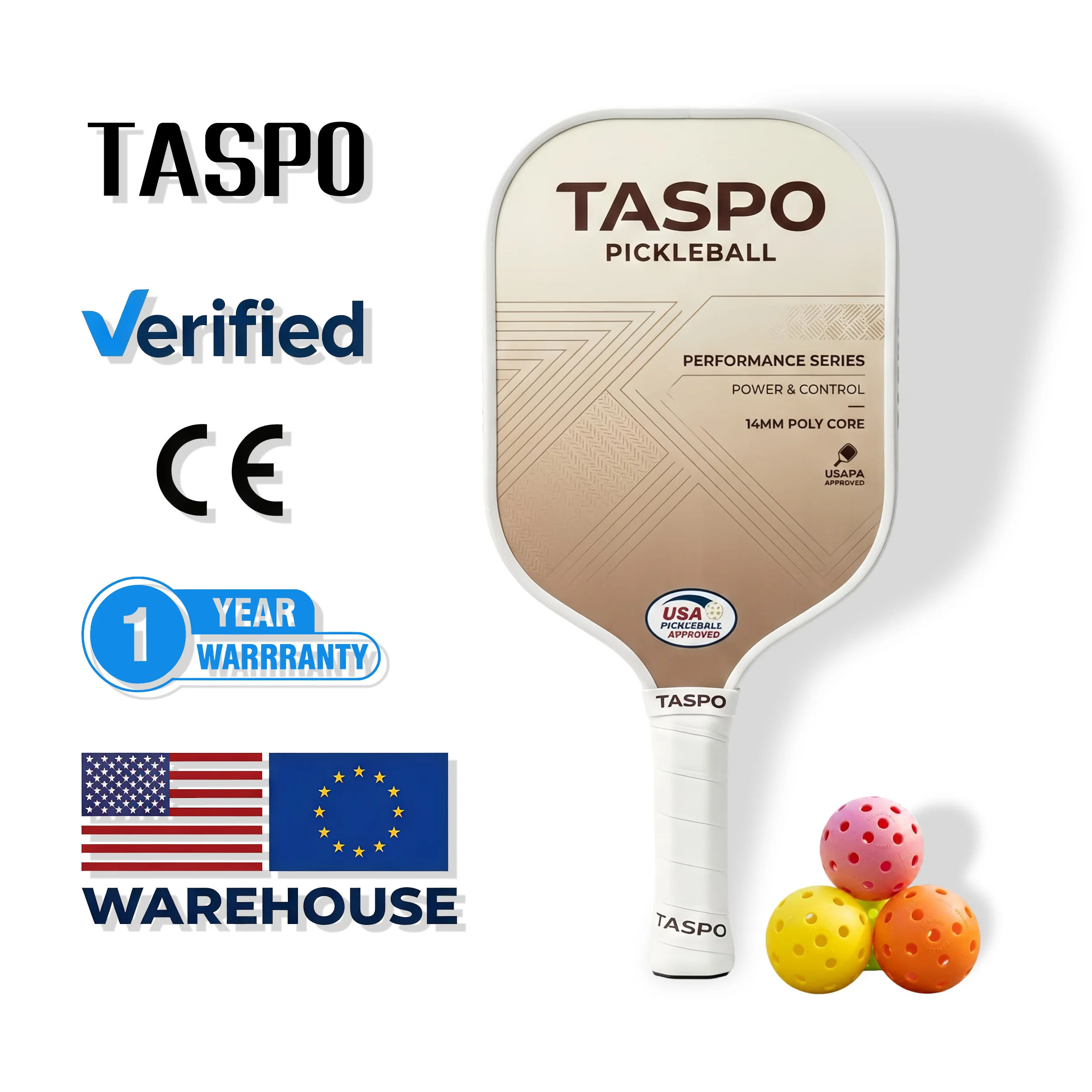
Turning the global beach recreation boom into a profitable private label product line requires partnering directly with a manufacturer capable of producing both lightweight composite frames and depressurized court balls under one roof. Sourcing through general promotional gift brokers often results in heavy, unbalanced paddles filled with brittle scrap foam, peeling water decals, and erratic rubber balls that ruin the family playing experience. Collaborating directly with a vertically integrated racket sports factory eliminates those quality risks completely. This is where Taspo delivers unmatched commercial value to global sporting goods brands, retail chains, and coastal resort operators. Operating advanced ISO-certified composite molding lines alongside dedicated rubber ball vulcanization plants, Taspo engineers lightweight tennis beach rackets across adult, ladies, and junior weight profiles using authentic fiberglass-carbon weaves, ultra-soft memory EVA cores, CNC-drilled wind holes, and UV-resistant tropical finishes. Better yet, Taspo packages complete retail-ready family bundles—combining custom rackets, ITF Stage 2 low-pressure beach tennis balls, sand-resistant overgrips, sweatbands, and mesh beach totes inside one consolidated shipment to maximize your seasonal retail margins.
 Hot News
2026-11-25
2026-11-25
2026-11-25
2026-11-25
2026-11-25
2026-11-25
 EN