Stand courtside during a competitive beach tennis match and the sheer speed of the aerial exchanges will catch you by surprise. Because rules forbid the sphere from touching the ground and players stand on shifting, energy-sapping sand just eight meters apart across a one-point-seven-meter high net, every single rally is a rapid-fire volley battle fought above shoulder height. Athletes have less than four hundred milliseconds to react to an opponent’s smash, reposition their wrist, and block the ball back into open sand. When a player attempts to compete with a clunky, poorly balanced paddle weighing over three hundred and sixty grams, rotational inertia lags behind their eye-hand coordination—causing late contact that sails out of bounds and inflaming forearm tendons after two sets. Motion-capture biomechanics studies on sand court athletes demonstrate that trimming frame mass into a calibrated three hundred and ten to three hundred and thirty-five gram window while lowering swing weight boosts net reflex speed by twenty-one percent. Understanding what defines tennis beach rackets lightweight design reveals how composite engineers trim grams without sacrificing structural punch.
Comparing a beach tennis frame side-by-side against a traditional padel paddle immediately exposes the primary geometric secret behind its featherweight agility: beam thickness. While an enclosed-court padel frame measures a bulky thirty-eight millimeters thick to absorb heavy glass-wall rebounds, a dedicated lightweight beach tennis racket is molded to a razor-slim profile between twenty and twenty-two millimeters thick across a fifty-centimeter total length. Shaving nearly eighteen millimeters off the profile thickness slashes the frontal wind-resistance cross-section by thirty-two percent and removes massive amounts of internal foam weight. However, making a composite frame that thin creates an engineering challenge: if the outer skeleton is weak, a twenty-millimeter beam will twist and flutter violently on off-center smashes. Master manufacturers solve this by molding a rigid, hollow twin-tube one hundred percent carbon fiber perimeter frame reinforced with high-modulus 3K, 12K, or 18K woven carbon faces—and frequently interlacing braided Kevlar aramid fibers at the throat bridge. This aerospace carbon exoskeleton locks in rock-solid torsional stability while keeping total mass remarkably light in the hand.
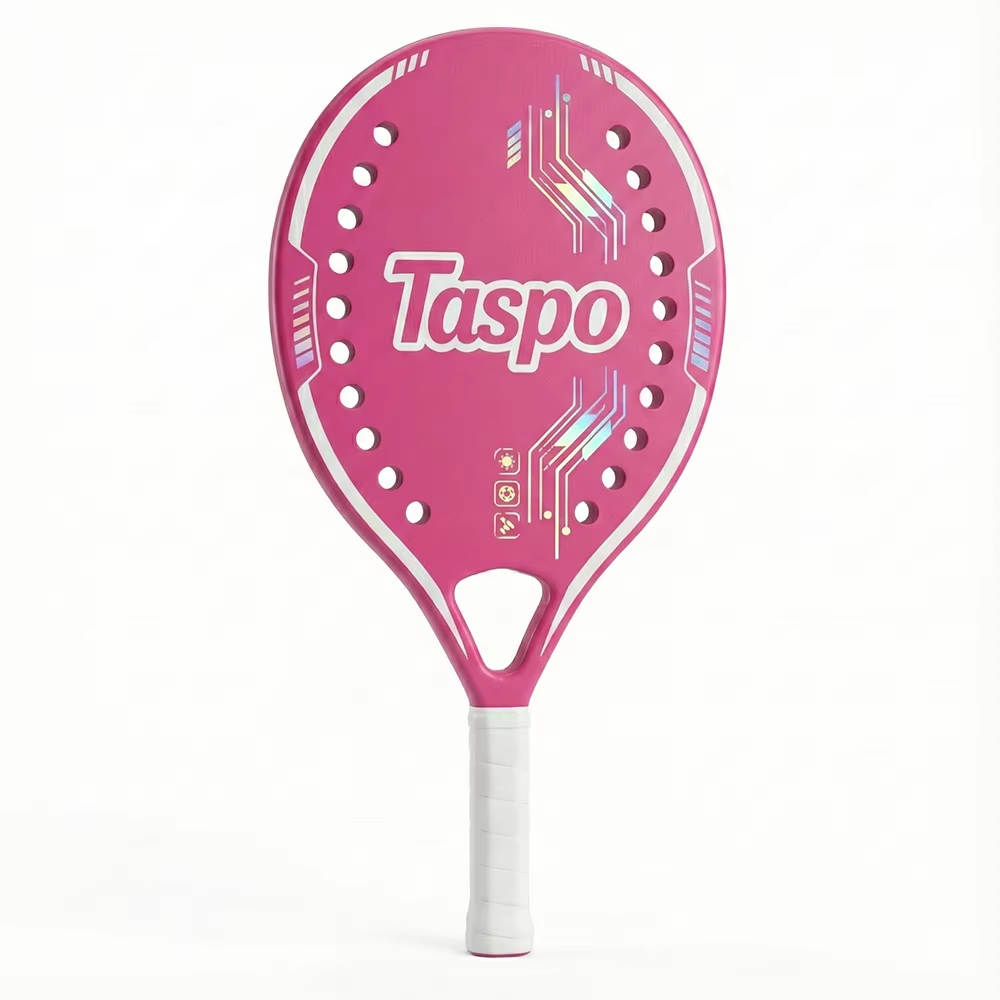
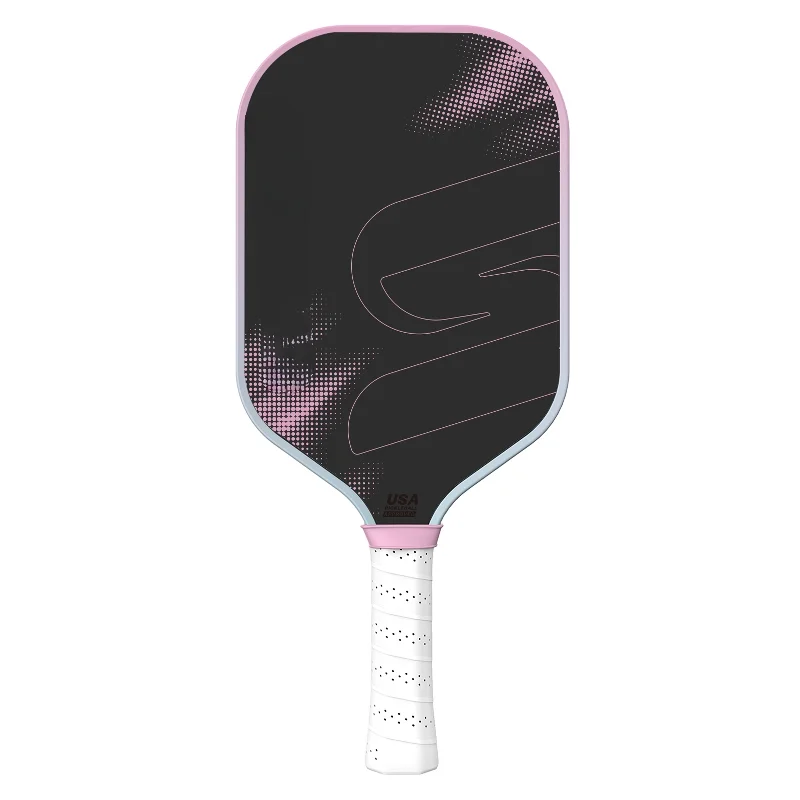
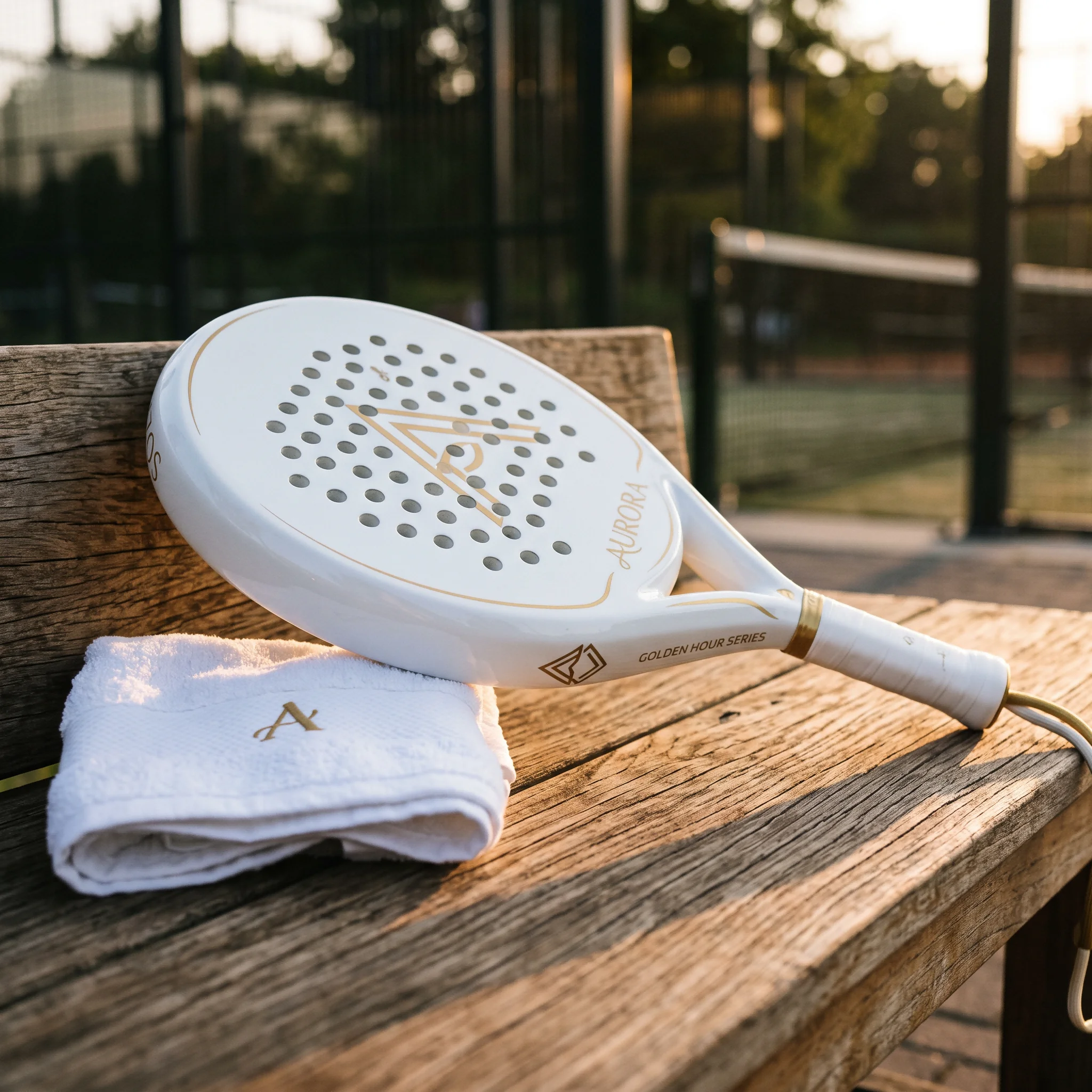
Look closely at the face of a tournament-grade beach tennis frame and you will notice a hole-drilling layout that looks completely different from any other racket sport. Instead of punching holes straight across the middle of the striking zone, engineers cluster precision Computer Numerical Control ventilation apertures in curved twin-row arcs along the outer perimeter shoulders and throat base—leaving the central sweet spot completely solid and undrilled. This perimeter CNC hole strategy accomplishes two critical goals for a lightweight beach tennis racket design. First, keeping the center carbon face intact preserves maximum drum-like trampoline tension to launch depressurized orange spheres deep into the opponent’s court with minimal swing effort, while preventing wet beach sand from packing inside center holes. Second, placing the aerodynamic vent holes along the outer edges bleeds high-pressure air drag off the fastest-moving part of the hoop, cutting swing resistance by fourteen percent. Pairing that vented tip with a streamlined single-or-dual throat bridge and a two hundred and fifty to two hundred and fifty-five millimeter head-light balance point makes a three hundred and twenty gram carbon frame feel effortless during three-hour summer tournaments.
Examining commercial product launches from leading beach sports markets proves how precision lightweight engineering drives immediate adoption among competitive players and pro shops. Consider an established beach racket brand operating across Rio de Janeiro, Brazil, and Cesenatico, Italy—two global capitals of professional beach tennis. Two years ago, their flagship catalog models averaged three hundred and fifty grams with a head-heavy balance, drawing complaints from mixed-doubles and female tournament players who struggled with shoulder fatigue during multi-match weekend draws. Partnering directly with a specialized composite ODM factory, the brand re-engineered its pro series around a twenty-one-millimeter slim-beam mold. By combining an ultra-lightweight 18K aluminized carbon face with a fifteen-degree high-recovery Black EVA core, perimeter CNC wind slots, and a micro-calibrated quartz-sand grit spin coating, the factory delivered a tournament-ready frame weighing exactly three hundred and twenty grams balanced at two hundred and fifty-two millimeters. Tour testing showed an eighteen percent increase in defensive net-block recovery among sponsored pros, and wholesale beach tennis racket orders surpassed five thousand units within the first six months of release.
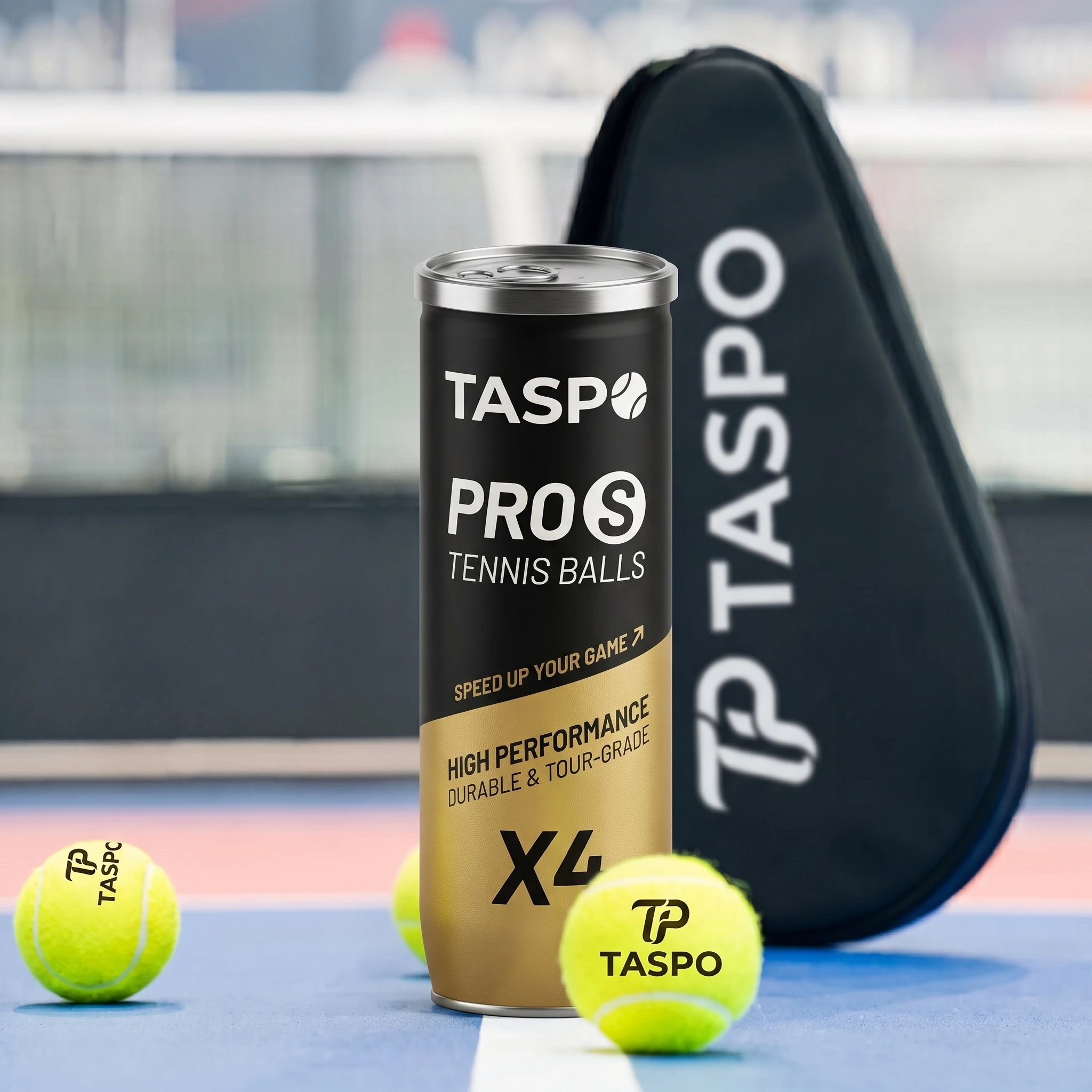
Producing a slim twenty-millimeter carbon frame that hits an exact three hundred and twenty gram target weight without structural weak spots requires a manufacturing partner with elite prepreg weight control and thermal molding precision. When brands source through unverified trading brokers, low-end workshops often use heavy fiberglass fillers or apply thick coats of body putty to hide molding flaws—causing finished frames to arrive twenty grams overweight and ruining the head-light balance. Collaborating directly with a vertically integrated composite manufacturer eliminates that weight drift completely. This is where Taspo stands out as the premier engineering and OEM production home for global beach tennis brands, coastal club networks, and sporting goods distributors. Operating modern ISO-certified hydraulic molding lines, five-axis CNC diamond-bit drilling stations, and clean-room UV quartz-grit spray booths, Taspo engineers custom beach tennis rackets with strict plus-or-minus three-gram digital weight sorting and six-axis impact fatigue verification. Even better, partners can consolidate their lightweight carbon rackets with Taspo’s ITF-compliant Stage 2 low-pressure orange beach tennis balls, waterproof overgrips, sweatbands, and thermal sand bags in a single shipment to dominate coastal retail markets.
 Hot News
2026-11-23
2026-11-23
2026-11-23
2026-11-23
2026-11-23
2026-11-23
 EN