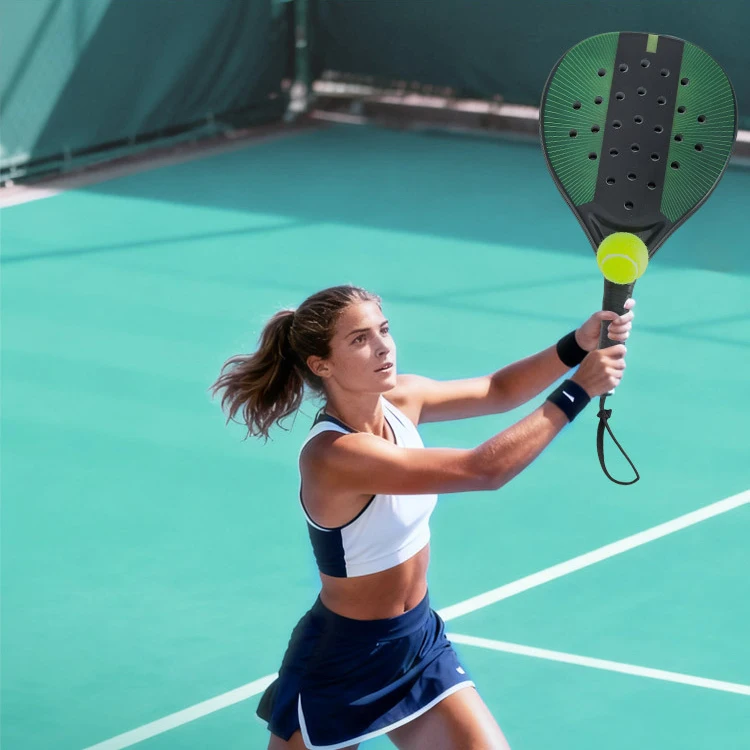
Every aggressive left-side player knows the frustration of setting up camp under a high defensive lob, arching their back, and swinging with maximum effort—only to watch the sphere bounce weakly off the back glass and sit right in the opponent's strike zone for an easy counter-winner. Many intermediate competitors assume their lack of finishing punch stems from poor upper-body strength, so they swing even harder and end up straining their rotator cuff or lateral forearm tendons. Understanding why padel racket balance shift delivers power reveals that raw muscle rarely decides overhead dominance; instead, mass distribution along the forty-five-point-five-centimeter longitudinal axis dictates how much momentum transfers into the ball. When a player competes with a handle-biased frame whose center of gravity sits too close to the wrist, the top of the head lacks the rotational mass needed to crush the rubber core against the turf. Shifting that balance point just ten to fifteen millimeters toward the twelve o'clock tip transforms a defensive wand into an explosive sledgehammer.
To see how a padel racket balance shift multiplies ball exit velocity without adding a single gram of static weight, sports engineers look at rotational moment of inertia—defined in classical mechanics as mass multiplied by the square of its distance from the axis of rotation. Consider two frames that both weigh exactly three hundred and sixty-five grams on a digital scale. The first frame carries its composite mass low near the throat bridge at two hundred and fifty-five millimeters from the butt cap, while the second head heavy padel racket shifts carbon reinforcement toward the upper hoop, raising the balance point to two hundred and seventy-two millimeters. Because distance is squared in the inertia equation, moving just fifteen grams of carbon fiber from the handle throat up to the top crown increases rotational swing weight by nearly eighteen percent. When the athlete's wrist snaps through the contact zone during a flat smash or kick smash, that elevated head mass acts like the weighted head of a golf driver, resisting backward deflection upon ball impact and plowing straight through the sphere with ferocious linear momentum.
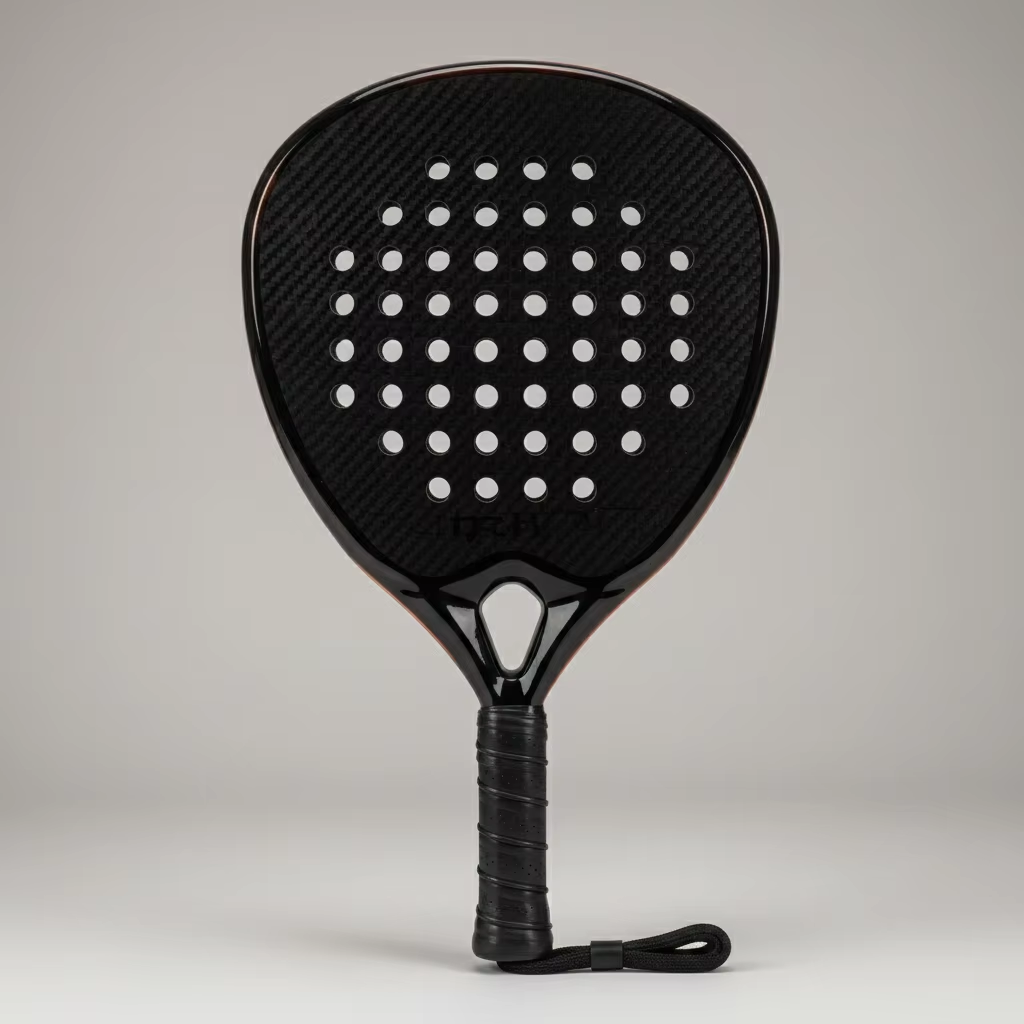
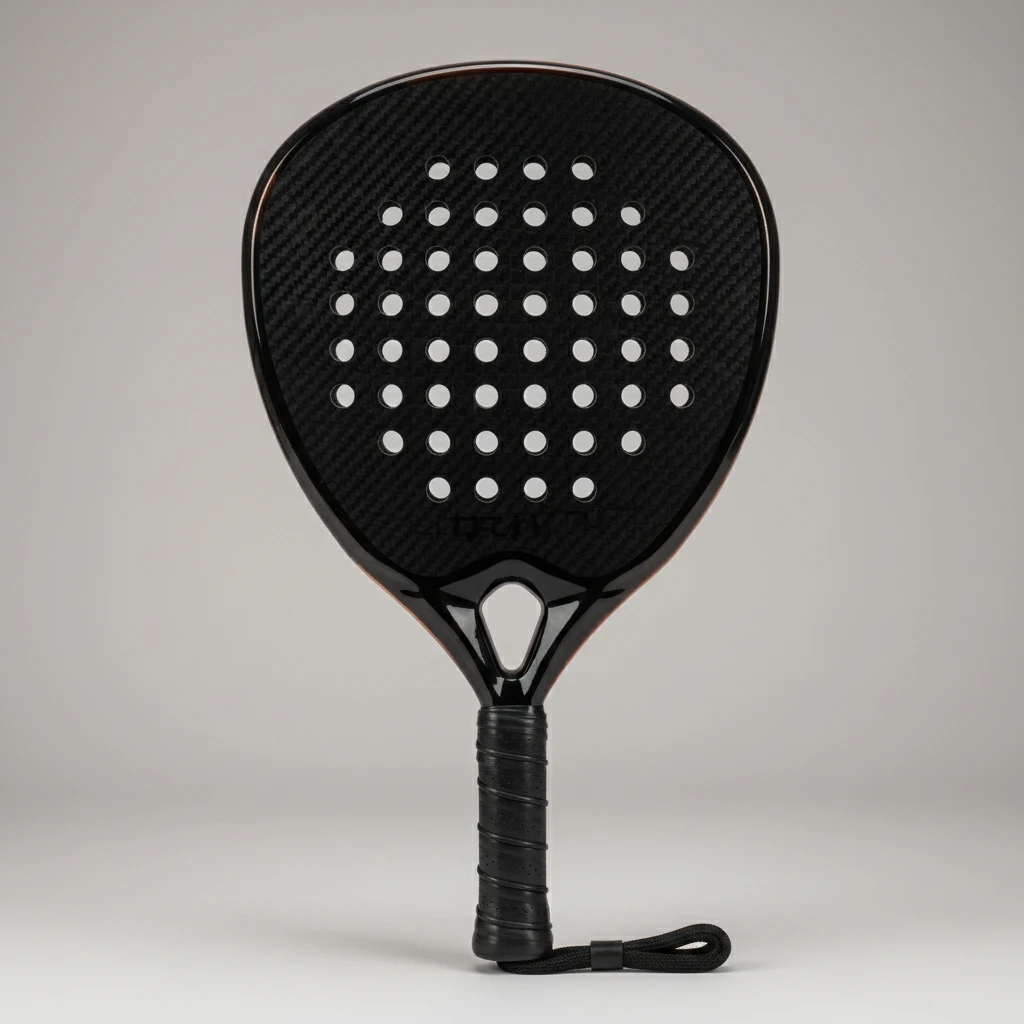
Matching a specific padel racket balance to the right internal foam density and exterior carbon weave is where professional frame design separates itself from budget assembly. Low-balance round frames—calibrated between two hundred and fifty and two hundred and fifty-eight millimeters—prioritize rapid wrist reload speeds at the net and pair naturally with softer EVA cores for effortless defensive blocks. Medium-balance teardrop frames sit between two hundred and六十 and two hundred and sixty-five—specifically two hundred and sixty and two hundred and sixty-five—millimeters, offering versatile all-court transition stability. At the offensive apex, a high-balance power padel racket places its equilibrium between two hundred and sixty-eight and two hundred and seventy-five millimeters inside a diamond silhouette. Because the sweet spot on a high-balance frame migrates upward toward the top third of the face, engineers laminate stiff 12K or 18K woven carbon fiber padel racket sheets over a high-density Black EVA core. That firm composite marriage prevents the upper hoop from flexing excessively on high-velocity contact, converting every ounce of top-heavy leverage directly into ball speed.
Empirical court telemetry confirms just how dramatically a calculated padel racket balance shift alters overhead finishing percentages during live match play. During a six-week biomechanical study conducted across three indoor clubs in Madrid and Buenos Aires, thirty-two advanced left-side tournament players hit sixty flat overheads and sixty topspin kick smashes using two identically weighted three-hundred-and-sixty-six-gram 18K carbon frames. Model A featured an even balance at two hundred and六十 millimeters—specifically two hundred and sixty millimeters—while Model B featured a head heavy padel racket calibration at two hundred and seventy-two millimeters. Doppler radar guns and high-speed cameras tracked every strike. Players swinging the high-balance Model B recorded an average ball exit velocity increase of nine point four kilometers per hour on flat smashes, while their success rate on "por tres" kick smashes—bouncing the ball off the back glass and out over the three-meter side fence—jumped from forty-eight percent to seventy-three percent.
While shifting balance toward the head unlocks undeniable firepower, pushing swing weight too far without proper vibration dampening can fatigue the brachioradialis muscle and slow down defensive volley reactions. Modern custom padel racket engineering solves this trade-off through modular perimeter weighting and reinforced bridge geometry. Many tournament-grade frames now incorporate removable alloy weight plates or recessed top-bumper channels that allow athletes to shift the padel racket balance upward by four to six millimeters on slow, humid sea-level courts—where extra power is needed to move heavy balls—and strip that mass back off when competing on fast, high-altitude indoor turf. Simultaneously, integrating diagonal carbon-kevlar struts into the throat bridge and molding high-density polyurethane foam handles ensures that when a player strikes a high-balance smash near the twelve o'clock edge, harsh off-center vibrations are filtered out before reaching the elbow joint.
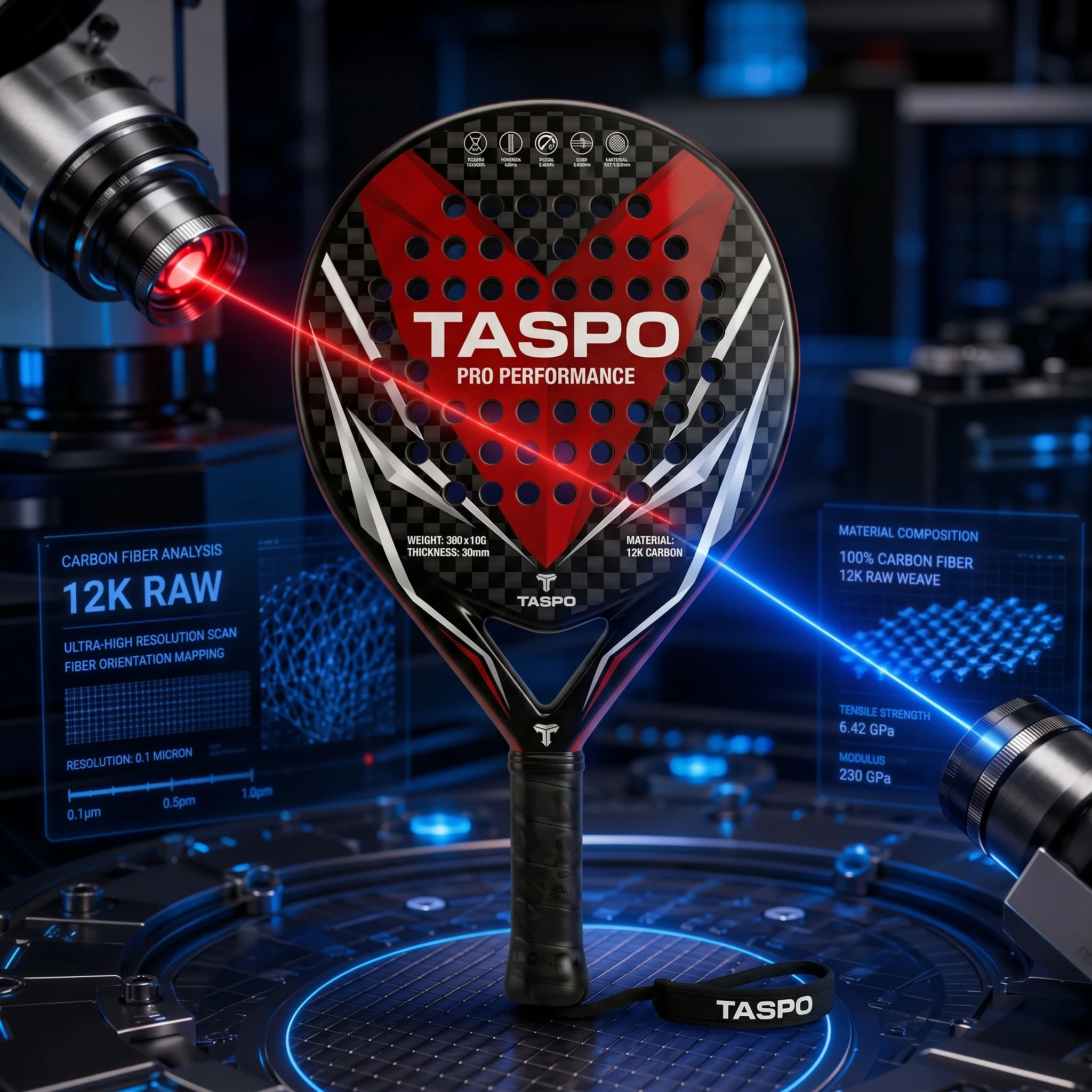
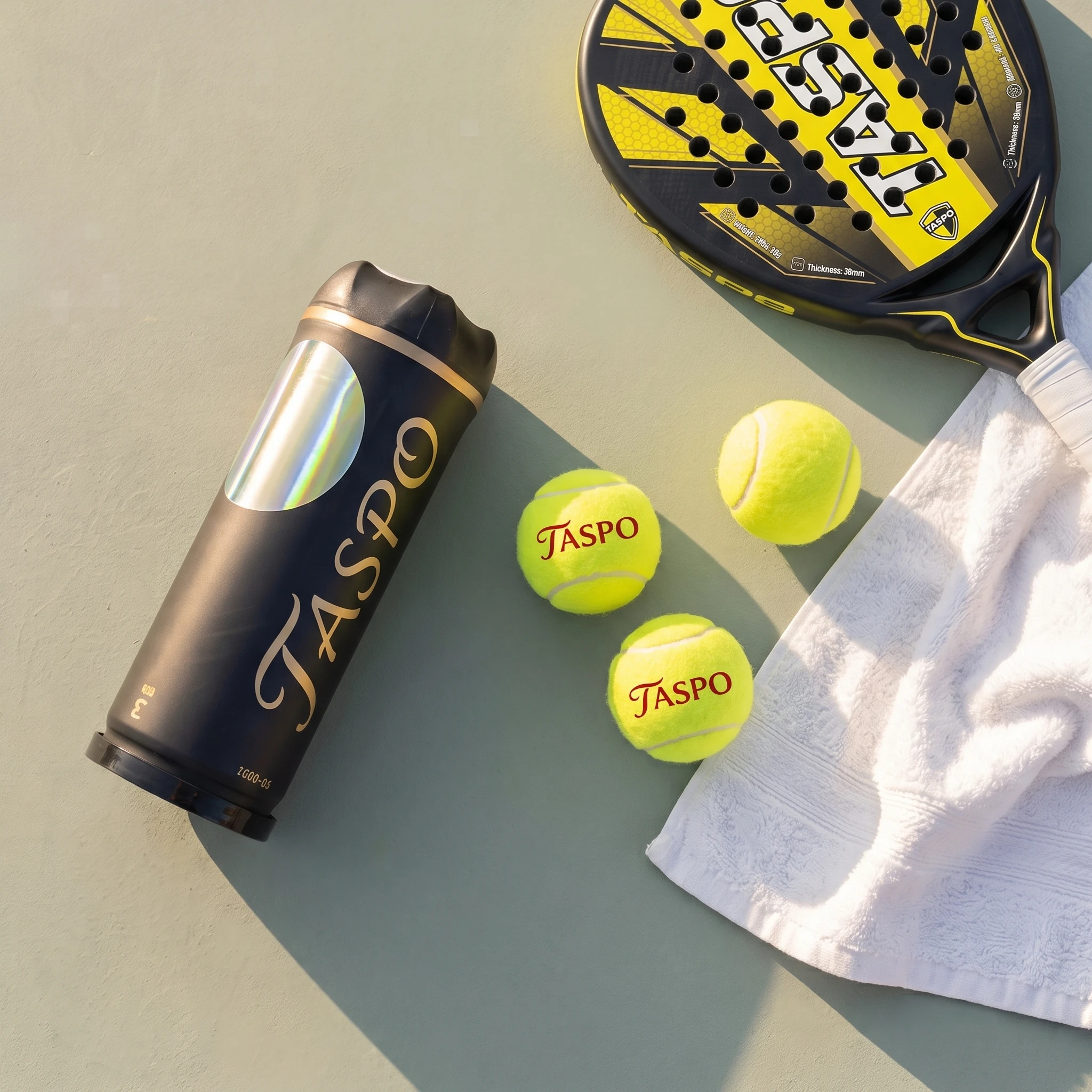
Developing a high-performance racket collection where balance points are calibrated to the exact millimeter requires partnering with a composite manufacturer governed by strict metrological discipline. Taspo operates as a premier B2B sports equipment manufacturer backed by over one hundred and thirty experienced engineers and self-owned standardized production bases. Utilizing advanced high-pressure autoclave prepreg curing, resin transfer molding, and precision 3D CNC machining, Taspo engineers bespoke custom padel racket lines across diamond, teardrop, and round silhouettes. Brand partners can specify exact padel racket balance targets from two hundred and fifty to two hundred and seventy-five millimeters—held within a tight plus or minus two-millimeter factory tolerance—alongside 3K, 12K, and 18K carbon weaves, multi-density EVA cores, 3D spin textures, and modular weight systems. Complete one-stop sourcing also covers pressurized padel balls, tacky overgrips, sweatbands, and thermal court bags. Every power padel racket produced at Taspo passes through seven rigorous quality inspection gates before shipment, supported by seven-to-fifteen-day rapid prototyping and twenty-four-hour client support.
 Hot News
2026-11-20
2026-11-20
2026-11-20
2026-11-20
2026-11-20
2026-11-20
 EN