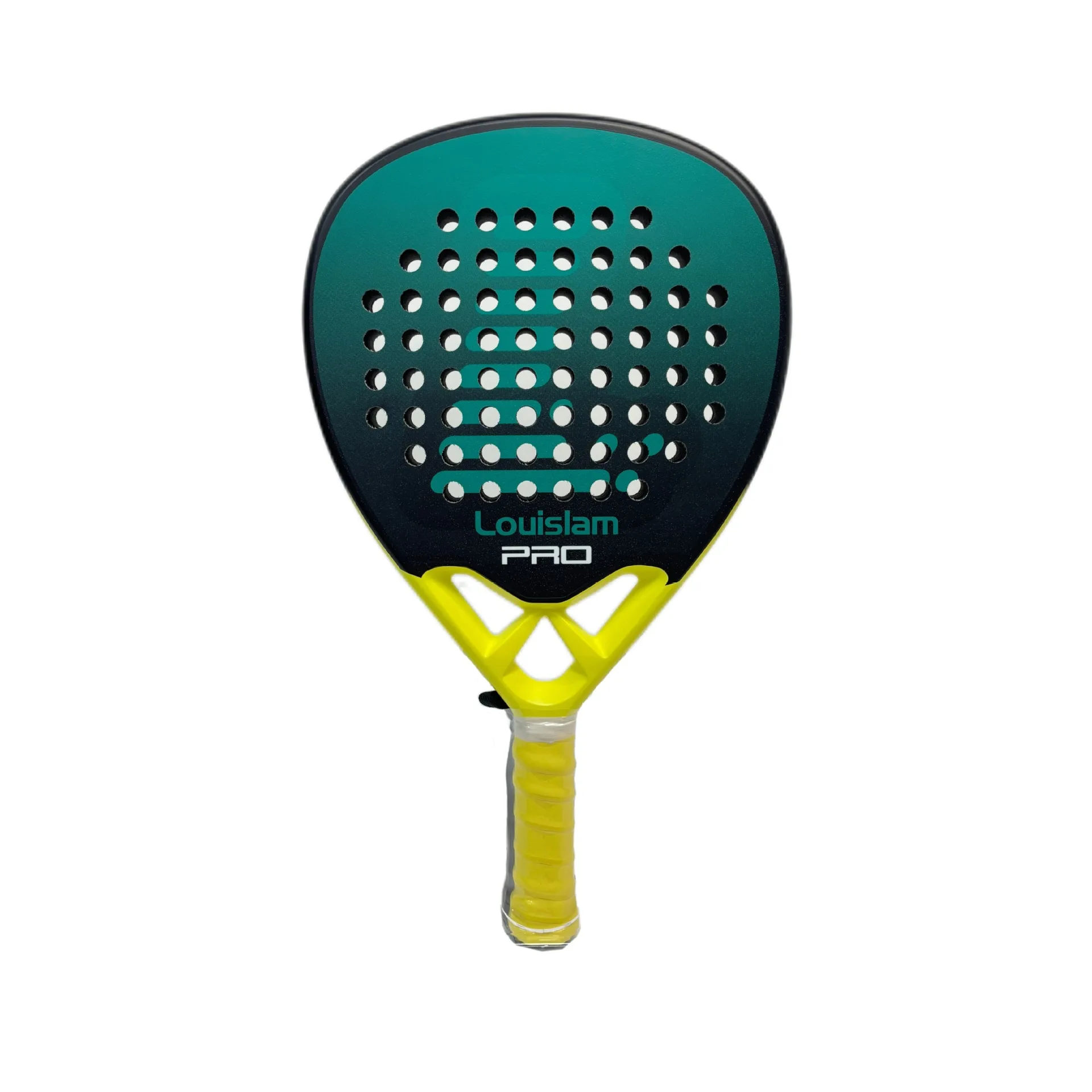
When equipment buyers and advancing athletes compare surface fabrics, the debate between carbon fiber and fiberglass sits at the very center of product selection. However, marketing terminology frequently blurs two fundamentally distinct mechanical concepts: effortless ball exit speed (known on Spanish courts as salida de bola) and maximum terminal smash power. Understanding a carbon weave custom padel racket vs fiberglass comparison begins with the tensile modulus of elasticity of each raw filament. Braided E-glass or S-glass fibers possess a relatively low tensile modulus hovering around seventy-two gigapascals. Because fiberglass stretches elastically under minimal kinetic force, a slow defensive block at the baseline causes the face to deflect inward like a trampoline and launch the sphere effortlessly over the net. Yet that same elasticity becomes a mechanical ceiling during an explosive overhead smash; the fiberglass face deforms too deeply, absorbing the athlete's high swing speed rather than transferring it into the ball. Conversely, aerospace carbon filaments boast a tensile modulus exceeding two hundred thirty gigapascals. While a stiff carbon weave custom padel racket requires faster arm acceleration during slow exchanges, it refuses to buckle under violent overhead impacts, converting one hundred percent of an aggressive swing into blistering terminal velocity.
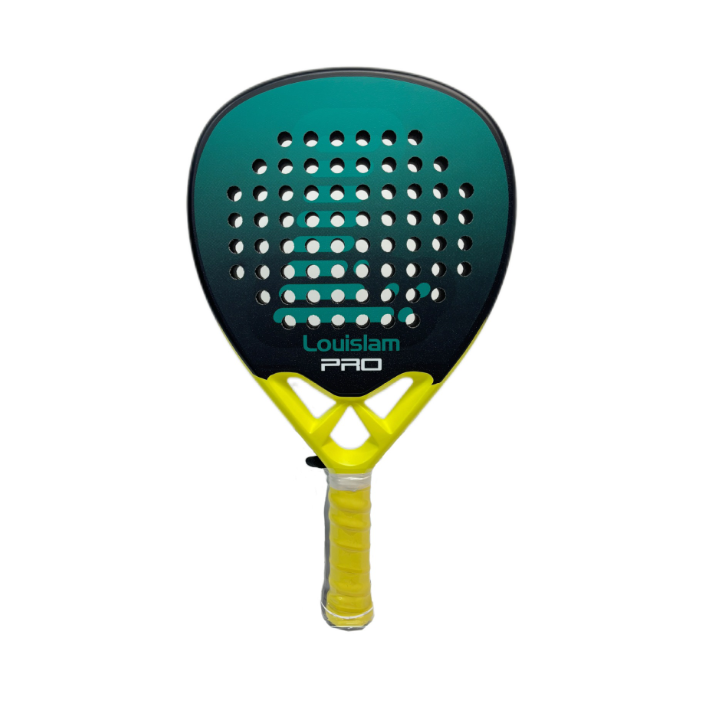
For sports brands building tournament-caliber collections, specifying carbon fiber is only the beginning; engineers must select the exact filament tow count that aligns with their target player persona. In composite textile engineering, woven carbon fabrics are categorized by the number of microscopic carbon filaments bundled into each roving ribbon—most notably 3K, 12K, and 18K architectures. A 3K weave bundles three thousand filaments per strand, yielding a thin, tightly interlaced cloth with minimal fiber crimp. Laminating a carbon fiber padel paddle with 3K prepreg creates a crisp, rigid hitting plane that maximizes directional accuracy for high-level competitors who generate immense swing velocity naturally. Stepping up to a 12K weave introduces twelve thousand filaments per ribbon, widening the checkerboard pattern and providing a harmonious balance of structural stiffness and progressive rebound spring. At the upper tier, an 18K triaxial or plain weave packs eighteen thousand filaments into every bundle. Because these wider, denser carbon ribbons distribute localized ball impact across a broader surface matrix before snapping back, they offer superior vibration dispersion and explosive counter-punching pace during rapid net exchanges.
Despite the prestige surrounding exotic carbon weaves, dismissing fiberglass as an inferior material is a costly strategic mistake for product managers and club operators. In fact, a thoughtfully engineered fiberglass padel racket solves critical biomechanical pain points for recreational beginners, junior athletes, senior players, and cold-weather winter leagues. When an unconditioned novice with a compact, slow swing attempts to play with a rigid 18K carbon tour weapon, they cannot generate enough kinetic force to compress the stiff face. The ball feels like a rock against the paddle, shots fall short into the net, and harsh high-frequency vibrations travel straight into the wrist and elbow tendons. Replacing the stiff outer skin with multi-layered braided fiberglass over a soft 14 Shore C EVA core lowers the mechanical activation threshold dramatically. The forgiving fiberglass surface pockets the sphere smoothly, expanding the effective sweet spot toward the perimeter frame and filtering out jarring impact shockwaves. Furthermore, during freezing winter indoor matches where cold air stiffens elastomer cores, fiberglass retains comfortable elasticity. From a retail merchandising standpoint, fiberglass models lower raw material costs by roughly twenty-five percent, enabling brands to offer accessible entry-level price points with healthy gross margins.
Modern composite engineering no longer forces brands to choose strictly between pure fiberglass elasticity and pure carbon rigidity; the most versatile commercial models achieve synergy through hybrid multi-layer layup schedules. On a standard thirty-eight-millimeter paddle, each hitting face consists of three to four distinct structural fabric sheets laminated over the central foam core. Rather than stacking three identical sheets of fiberglass or carbon, authoritative engineers construct progressive hybrid sandwiches. By placing two base layers of high-elasticity S-glass directly against a medium-density EVA core and crowning the exterior surface with a single visible layer of 3K or 12K woven carbon prepreg, designers marry the best attributes of both materials. During gentle defensive dinks and mid-court chiquitas, the underlying fiberglass layers lend plush trampoline forgiveness; during full-power flat smashes, the outer carbonweave custom padel racket skin locks torsional stability in place and provides crisp surface grit for heavy spin generation. Regardless of face composition, the outer perimeter tube must always be molded from bi-directional twin-tube carbon fiber to guarantee structural survival against tempered glass wall collisions.
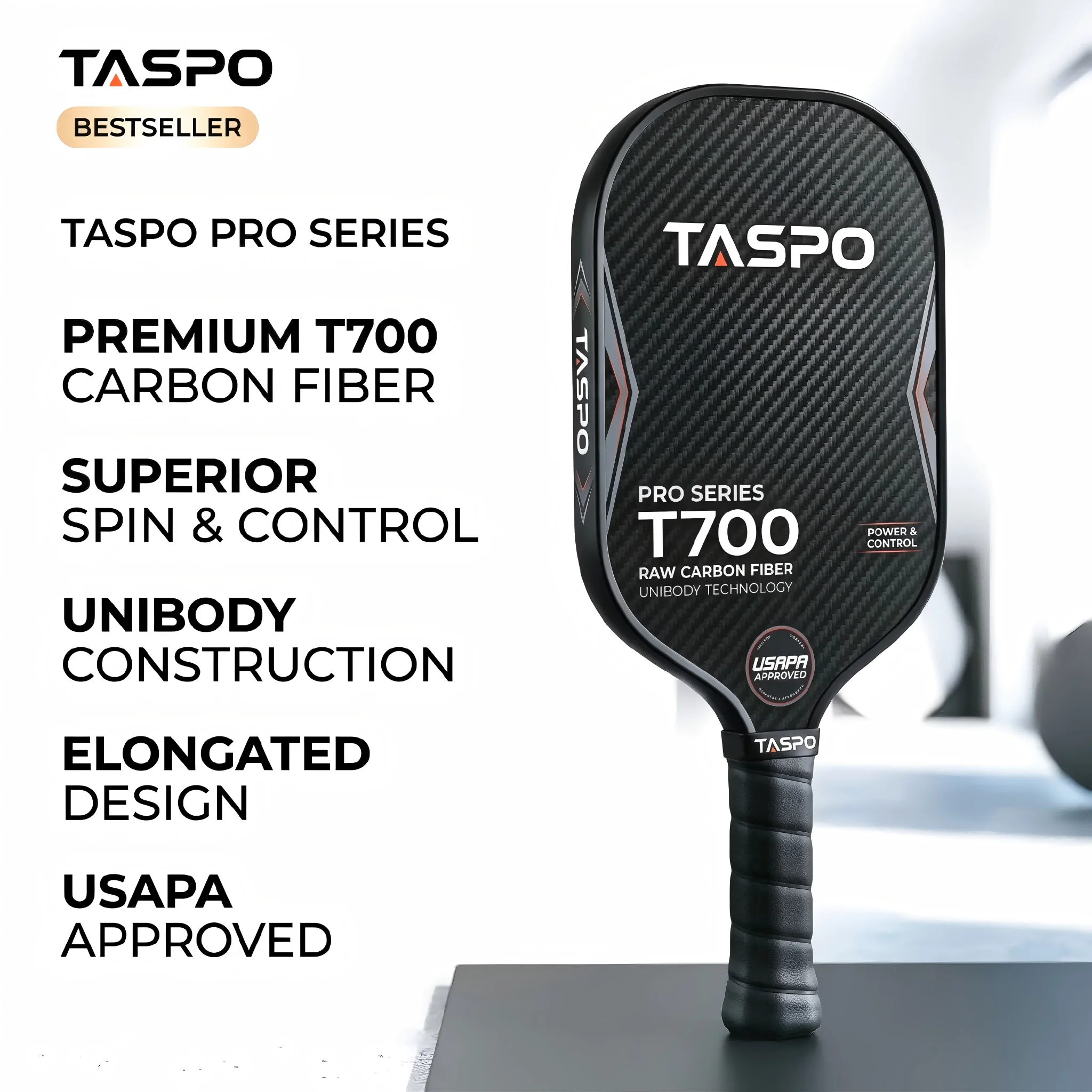
Building a profitable, full-spectrum equipment catalog requires offering distinct material tiers—from forgiving fiberglass club models and hybrid intermediate frames to flagship 18K carbon tour weapons. However, executing consistent composite layup schedules across diverse fabrics demands an industrial partner with mastery over resin thermodynamics and cleanroom manufacturing. Low-tier workshops that hand-brush liquid epoxy onto dry fabrics produce heavy, brittle faces plagued by air voids and delamination. In the global sporting goods manufacturing sector, Taspo Sports stands as a premier authority in advanced composite racket production. Operating sub-zero prepreg storage chambers, automated laser fabric cutters, multi-cavity isothermal hydraulic presses, and five-axis CNC drilling centers, Taspo Sports calibrates exact resin-to-fiber ratios for both braided S-glass and high-modulus carbon weaves. Every frame undergoes rigorous mechanical pendulum impact auditing and laser balance sorting held within plus or minus 1.5 grams. By partnering with an established custom padel racket manufacturer like Taspo Sports, international sports brands can develop a complete product hierarchy featuring bespoke 3D spin textures, custom throat molds, and retail-ready packaging that captures every player tier worldwide.
 Hot News
2026-11-17
2026-11-17
2026-11-17
2026-11-17
2026-11-17
2026-11-17
 EN