Playing inside a climate-controlled indoor arena is gentle on athletic equipment, but stepping onto an open-air outdoor court subjects a sphere to brutal mechanical punishment. Outdoor court surfaces are almost universally constructed from fibrillated polypropylene turf heavily top-dressed with angular quartz silica sand to prevent turf matting and drain rainwater. Every time a spinning sphere skids across this sandy carpet at eighty kilometers per hour, or slams obliquely into sun-baked tempered glass walls and galvanized steel mesh fences, the exterior cloth covering undergoes intense abrasive shear stress. On budget spheres wrapped in loose, low-density synthetic fabric, outdoor silica sand acts like coarse industrial sandpaper. Within a single forty-minute set, the sand rips individual fibers out of the backing, causing the sphere to puff up into a fuzzy, slow-moving dandelion before shedding bald patches that make bounces erratic. Understanding why a high density felt padel ball is mandatory for outdoor competition begins with conquering this tribological wear cycle. By increasing the thread count and fiber compaction of the exterior textile skin, engineers create an abrasion-resistant shield that survives three to four full outdoor matches without losing its aerodynamic profile.
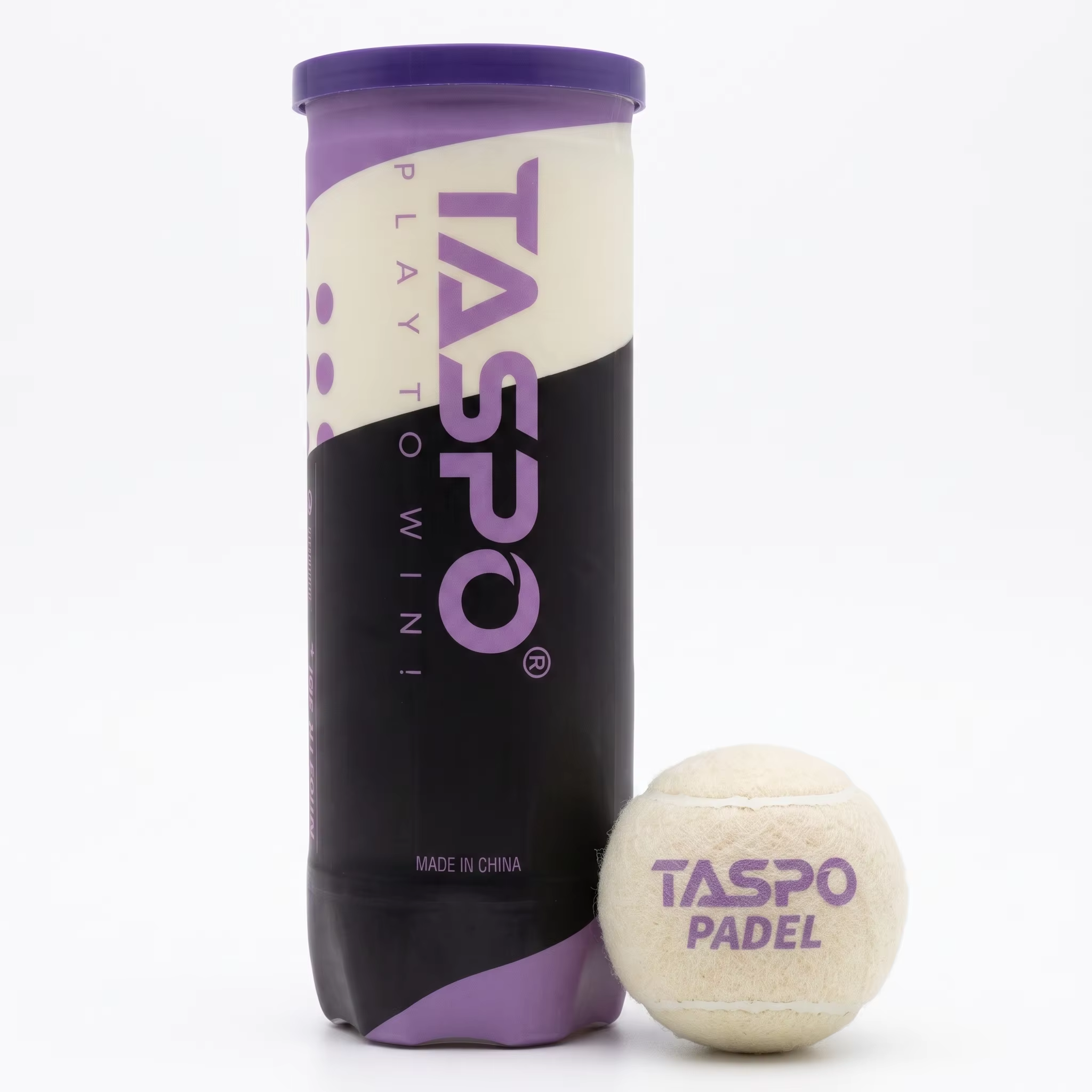
The structural distinction between a recreational sphere that shreds in one set and a tour-grade outdoor weapon lies in the textile manufacturing process: needle-punched non-wovens versus interlocking woven fabrics. Low-cost factories stamp their dog-bone felt panels from needle-punched polyester sheets, where staple fibers are simply tangled together mechanically by barbed needles without an underlying structural grid. When struck repeatedly by rough, 3D-textured carbon paddles on sandy outdoor courts, those unanchored fibers pull free effortlessly. Conversely, a genuine high density felt padel ball utilizes a tightly woven melton cloth engineered on high-tension textile looms. This woven architecture interlaces a strong cotton-and-nylon warp structural backing with a dense weft pile composed of sixty percent long-staple New Zealand sheep wool and forty percent high-tenacity polyamide nylon filaments. After weaving, the cloth undergoes controlled wet fulling and thermal shearing, shrinking the microscopic gaps between wool scales to create a dense, compact felt mat. During high-velocity outdoor skids, the high-tenacity nylon resists abrasive cutting from quartz sand, while the natural elasticity of dense wool maintains plush impact cushioning against the paddle face.
Beyond mechanical wear resistance, exterior felt compaction governs flight stability when competing under open skies. Unlike indoor halls where ambient air sits completely still, outdoor coastal clubs and park venues contend with unpredictable crosswinds, thermal updrafts, and shifting barometric density. In fluid dynamics, the fuzzy nap of a court sphere creates a microscopic turbulent boundary layer that dictates aerodynamic drag and Magnus-effect spin trajectories. When an inferior low-density felt frays and fluffs up excessively during the first set, its effective aerodynamic diameter expands, catching gusts of wind like a parachute and causing deep defensive lobs to hang short in the mid-court. Conversely, if cheap synthetic fibers shear off completely, the smooth bald rubber core rockets through the air with zero drag and dives uncontrollably into the back glass. Engineering an outdoor padel ball with high-density, closely cropped woven wool locks the boundary layer into a stable, predictable drag coefficient from the opening serve to the final tiebreak. Whether slicing a low bandeja into a fifteen-knot headwind or kicking a topspin smash out of the court cage, players enjoy consistent flight deceleration across every set.
Open-air venues expose equipment to two additional environmental hazards that indoor spheres never face: surface moisture and intense solar ultraviolet radiation. Morning dew settling on artificial grass, passing coastal mist, or damp evening humidity quickly saturates untreated wool fibers. Because natural wool is inherently hygroscopic, an unprotected sphere rolling across damp outdoor turf absorbs three to four grams of water within minutes. A waterlogged sphere exceeds the official 59.4-gram weight limit, bounces dead off the ground, and transfers dangerous shockwaves straight into the athlete's wrist and shoulder joints. Furthermore, glaring midday sunlight quickly bleaches cheap fluorescent dyes into a dull, pale grey that is nearly impossible for players to track against bright blue skies. To guarantee all-weather durability, an authoritative high density felt padel ball integrates two chemical finishing treatments during textile processing. First, the woven wool is infused with a fluorocarbon-free hydrophobic polymer barrier that causes water droplets and wet sand to bead right off the surface, restricting moisture weight gain to under 1.2 grams. Second, UV-stabilized optic yellow pigments lock vibrant visual contrast into the wool fibers, ensuring instant visual tracking under direct summer sun.
Even the densest woven wool cloth will fail on an outdoor court if the adhesive seam holding the two dog-bone panels onto the pressurized rubber core delaminates under thermal expansion. Outdoor turf temperatures routinely exceed forty degrees Celsius under direct summer sun; cheap water-soluble glues soften in the heat, allowing the felt edges to peel open when scraping against the metallic mesh fence. Manufacturing a tournament-grade durable padel ball requires curing the woven wool panels onto a high-purity natural rubber core inside isothermal vulcanizing molds using heat-activated latex elastomer cement, creating a seamless equatorial bond that flexes identically with the bladder. In the global sporting goods industry, Taspo Sports stands as a premier authority in high-performance pneumatic ball engineering. Operating automated Banbury rubber mixers, precision woven-felt die-cutting lines, isothermal vulcanizing presses, and automated fourteen-PSI nitrogen canning tunnels, Taspo Sports manufactures world-class outdoor spheres for international brands. By partnering with an established padel ball manufacturer like Taspo Sports, commercial brands and club distributors can customize wool-felt densities, hydrophobic coatings, and private-label pressurized tubes that deliver unmatched longevity on outdoor courts worldwide.
 Hot News
2026-11-11
2026-11-11
2026-11-11
2026-11-11
2026-11-11
2026-11-11
 EN