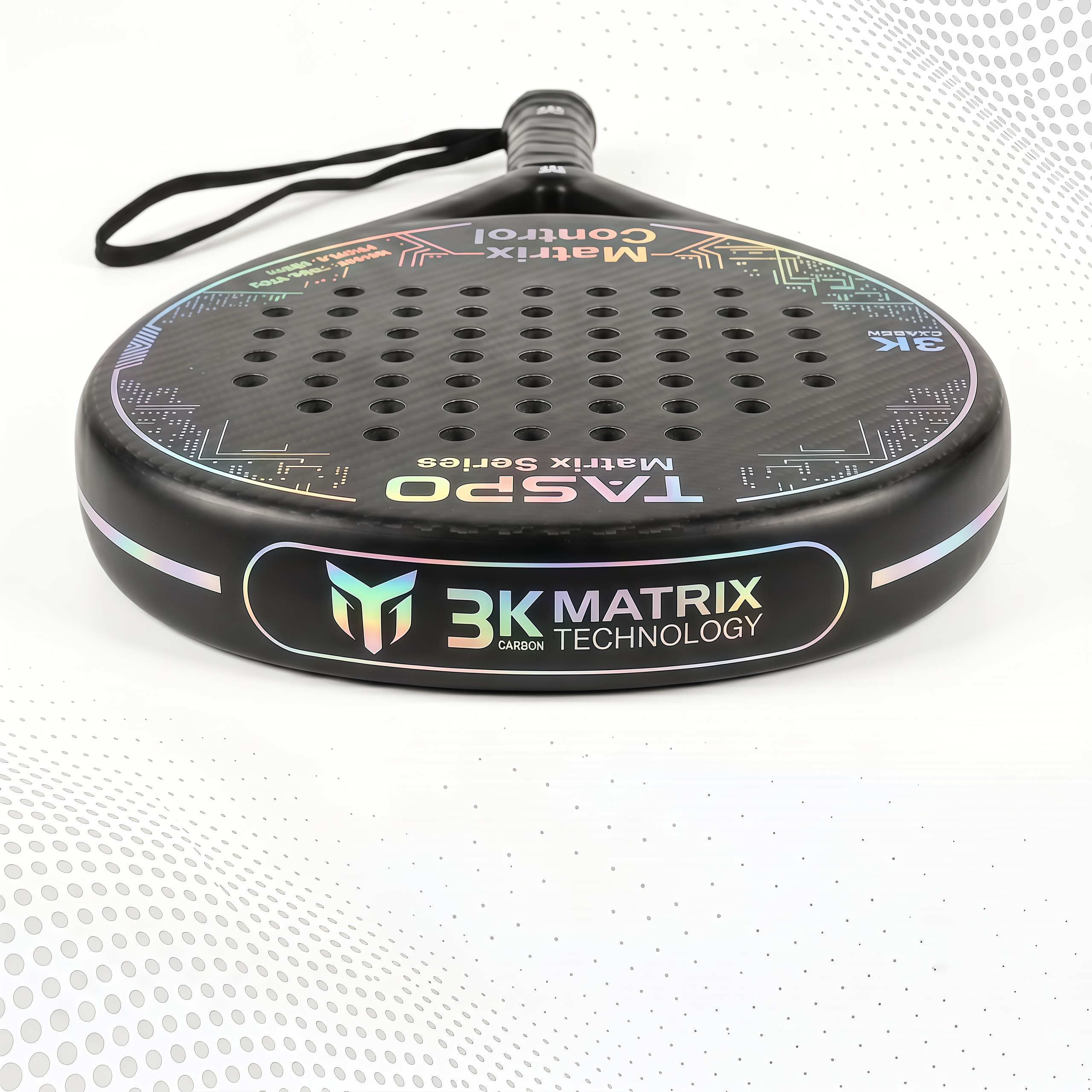
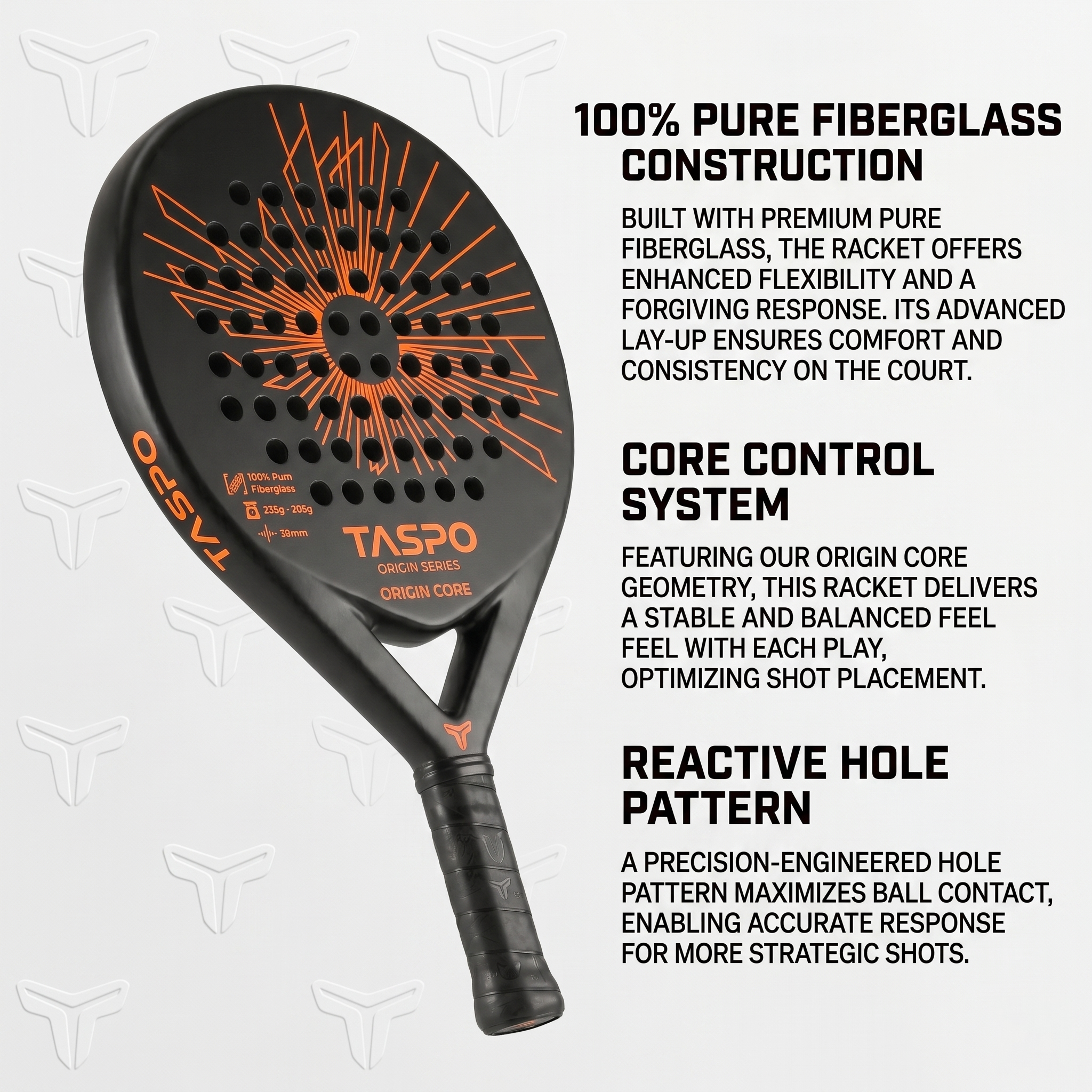
In the tactical ecosystem of competitive doubles, the left-side court specialist carries a singular offensive mandate: terminating points from the air whenever opponents float a defensive lob short. Executing a flat smash that rebounds four meters high over the back fence, or a kick smash that spins out over the three-meter side cage, is fundamentally an exercise in classical collision physics. According to the law of conservation of linear momentum, the terminal velocity transferred to a fifty-eight-gram sphere is directly proportional to the effective mass of the striking object multiplied by swing velocity. While recreational players favor featherlight frames around 350 grams for easy swinging, an elite power hitter with fully developed shoulder and core strength quickly hits a velocity ceiling with light gear. Understanding why an offensive player gravitates toward a heavy weight padel racket—typically calibrated between 370 and 385 grams—begins with maximizing kinetic plow-through. When an explosive athlete accelerates a 375-gram diamond-shaped frame featuring a high balance point above 272 millimeters, the concentrated rotational inertia acts like a heavy blacksmith's hammer at the apex of the swing arc, crushing the rubber ball core deeply and launching it off the turf with unreturnable speed.
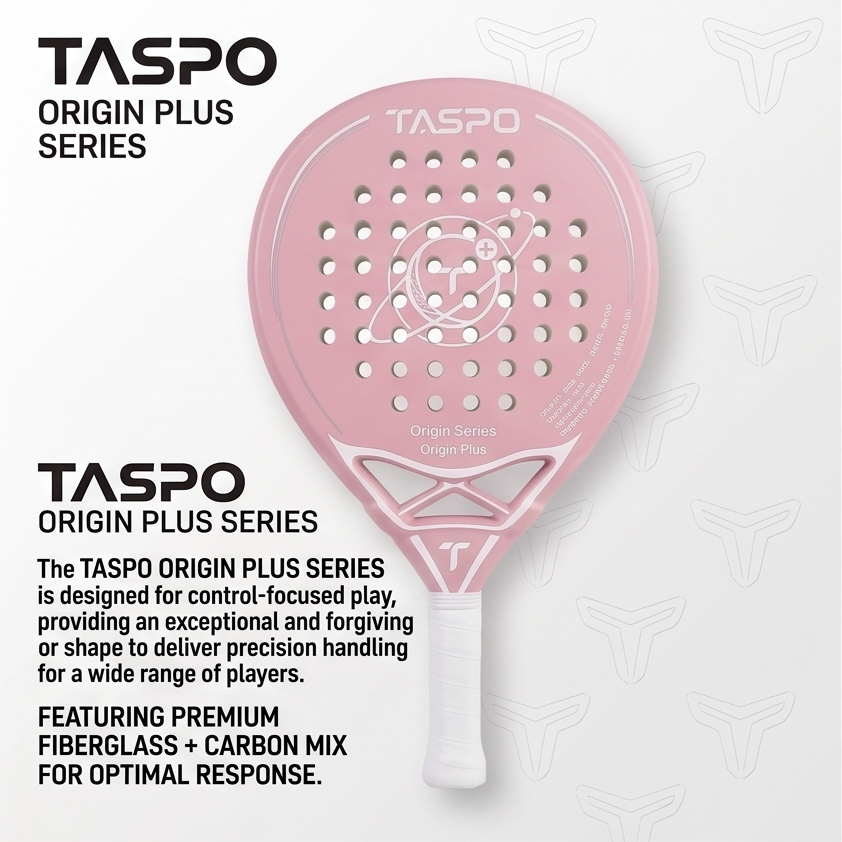
While overhead point finishing captures the highlight reels, the hidden mechanical advantage of a heavy weight padel racket manifests right at the net during high-velocity volley exchanges. In modern professional rallies, opponents frequently blast flat drives directly at the net player's body from less than six meters away. When an athlete attempts to block a 110-kilometer-per-hour drive using a lightweight 350-gram paddle, the incoming momentum of the sphere overpowers the light frame, pushing the paddle head backward upon contact and twisting the handle in the palm. The defender is forced to swing harder just to get the ball back over the net, sacrificing directional accuracy. Conversely, wielding a high-mass offensive padel paddle provides immense inertial stability, known in sports engineering as high twist weight and high polar moment of inertia. Because the heavy frame possesses superior stationary mass, it refuses to be bullied backward by incoming ball pace. Athletes at the net can execute compact, punchy blocking volleys with minimal backswing, letting the inherent structural mass of the paddle absorb and redirect the opponent's power deep into the back glass corners with effortless authority.
Engineering a tournament-grade power weapon requires far more than simply making a paddle heavy; the internal elastomeric core and exterior composite skin must be calibrated to handle the immense kinetic forces generated by that extra mass. If a manufacturer pairs a 380-gram frame with a soft, low-density 13 Shore C foam core and flexible fiberglass faces, the equipment suffers from catastrophic mechanical mismatch. Under the violent impact of a heavy-frame overhead smash, a soft core compresses completely to its structural limit—a phenomenon known as bottoming out—wasting kinetic energy in excessive foam deformation rather than returning it to the ball. Consequently, a true power padel racket pairs heavy static mass with a high-density black EVA core rated between 20 and 22 Shore C, laminated beneath stiff 3K or 12K high-modulus carbon fiber weaves. This rigid material architecture requires substantial kinetic input to activate, which the heavy frame mass naturally provides. Upon high-speed collision, the firm carbon face and dense EVA matrix compress minimally and recoil instantaneously, creating an explosive acoustic crack and translating every gram of frame momentum into blistering ball exit velocity.
Despite its undeniable lethality in the hands of a conditioned attacker, a heavy weight padel racket demands honest biomechanical self-assessment from the athlete. Swinging a head-heavy 380-gram weapon across a grueling ninety-minute, three-set encounter places substantial muscular torque on the anterior deltoid, brachial biceps, and forearm pronator tendons. If an intermediate player with underdeveloped wrist stability or slow footwork preparation switches prematurely to an ultra-heavy diamond frame, their swing timing will lag behind fast rallies. Striking the ball late behind the body line with a heavy, stiff frame sends jarring torsional shock straight into the triangular fibrocartilage complex of the wrist and the lateral epicondyle of the elbow. To harness an offensive padel paddle safely, athletes must pair physical strength conditioning with smart ergonomic adjustments. Building up the octagonal handle circumference with an extra cushioned replacement grip or two tacky overgrips prevents the heavy frame from rotating in sweaty fingers, reducing grip-clenching tension. Furthermore, selecting heavy frames engineered with multi-strut anti-torsion throat bridges and viscoelastic handle dampeners ensures that harsh off-center vibrations are filtered out before fatiguing the arm.
From an industrial manufacturing perspective, how a factory achieves a 375-gram target specification separates world-class composite weaponry from crude, unbalanced clubs. Low-tier workshops often use a single lightweight mold layout and artificially inflate static weight by injecting blobs of heavy epoxy putty or gluing hidden lead strips inside the top bumper tube. That crude shortcut creates a dead, disconnected balance profile that stresses the throat joint and ruins tactile hitting feel. Conversely, an authoritative custom padel racket manufacturer engineers heavy tour models from the ground up by adding structural layers of high-modulus carbon prepreg and utilizing denser twin-tube perimeter beams. In the global sporting goods industry, Taspo Sports stands as a premier leader in precision composite racket production. Operating sub-zero prepreg cleanrooms, isothermal hydraulic presses, five-axis CNC drilling centers, and laser-guided balance calibration stations, Taspo Sports manufactures tour-spec offensive lineups where every gram of mass contributes directly to structural strength and explosive power. By partnering with Taspo Sports as a dedicated custom padel racket manufacturer, international sports brands can offer high-balance diamond models held to strict plus-or-minus 1.5-gram tolerances, empowering offensive players to dominate competitive courts worldwide.
 Hot News
2026-11-20
2026-11-20
2026-11-20
2026-11-20
2026-11-20
2026-11-20
 EN