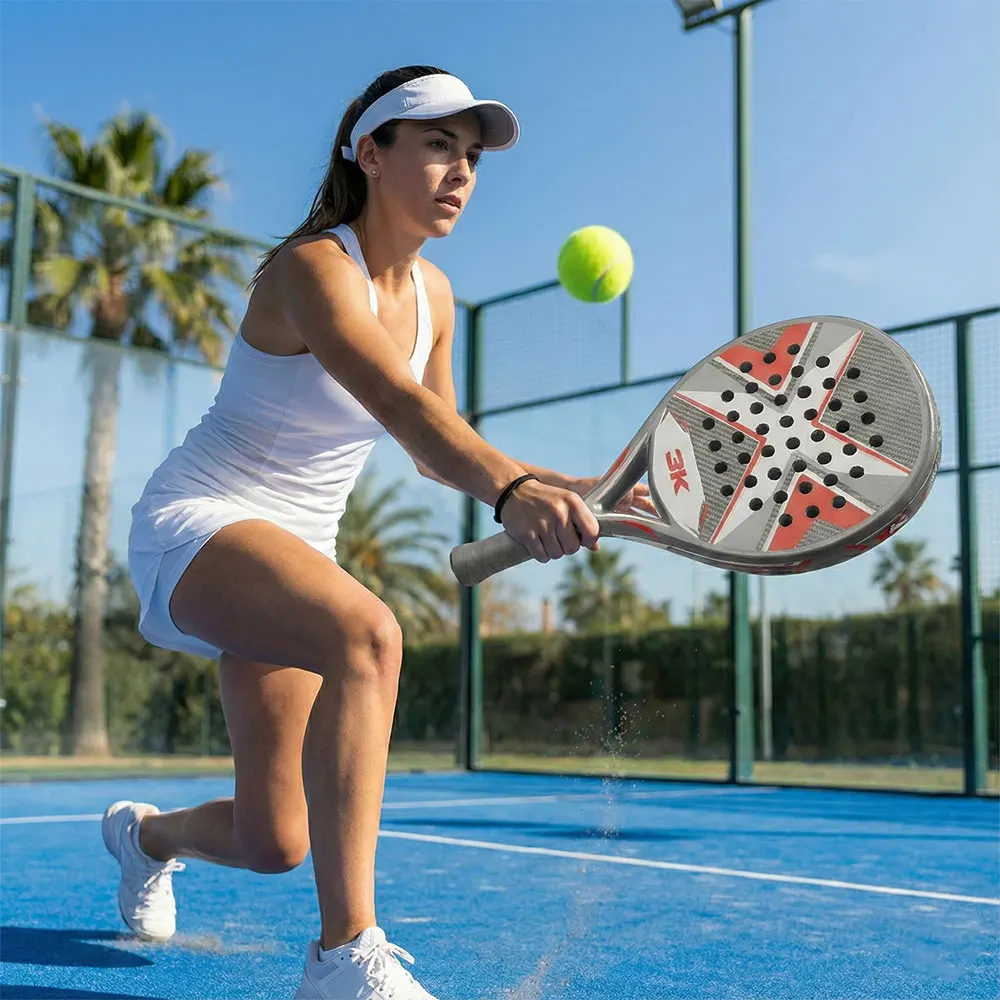
In high-speed enclosed court rallies, an athlete's eyes must remain locked entirely on the incoming yellow sphere and the positioning of the opposing pair; a player can never afford to look down at their hand to check the angle of their paddle face. Consequently, spatial awareness of the hitting surface depends entirely on proprioceptive nerve receptors across the palm and fingers interacting with the geometry of the handle. Understanding why handle ergonomics serve as a decisive engineering pillar in a custom padel racket begins with the precision of its eight geometric bevels. Cheaply manufactured frames often form their handles by taping two flat wooden or foam blocks over the central carbon tubes and wrapping them thickly with soft synthetic leather. That crude assembly rounds out the corners, leaving the grip feeling like a featureless cylindrical broomstick. When an athlete attempts to make a subtle micro-adjustment from a continental volley grip to a slight eastern angle for a topspin lob, a rounded handle provides zero tactile reference points. Conversely, an engineered ergonomic padel handle utilizes a high-density molded pallet with eight crisp, mathematically defined bevel edges. These distinct ridges nest directly into the proximal interphalangeal finger joints, allowing competitors to index the exact degree of face loft blindly during lightning-fast kitchen exchanges.
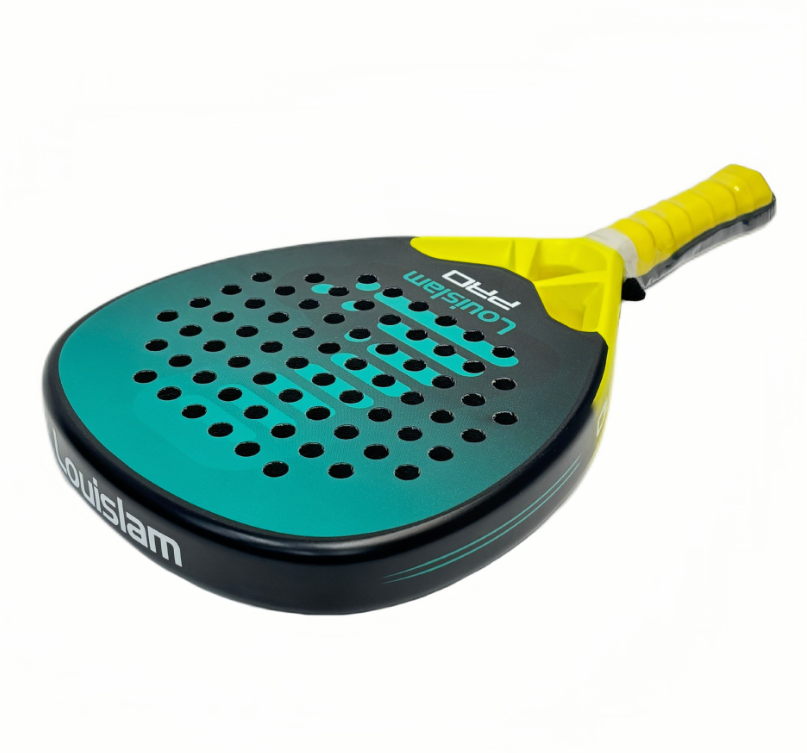
Over the past three seasons, the biomechanical profile of the global player base has evolved dramatically as millions of traditional lawn tennis players transition onto glass courts. With them, these athletes bring deeply ingrained stroke mechanics—most notably the two-handed backhand drive and the high-leverage overhead serve motion. Historically, standard paddles featured stubby handle shafts measuring between 110 and 120 millimeters in length, designed strictly for compact one-handed continental grips. When a former tennis athlete attempts to place both hands onto a short 115-millimeter grip, their top palm is forced uncomfortably onto the flared composite throat bridge, ruining swing fluidity. Forward-thinking product managers address this shift through padel racket grip customization by specifying elongated handle molds stretching between 135 and 145 millimeters. Extending the octagonal shaft provides ample ergonomic real estate for comfortable two-handed backhand returns and deceptive disguised drop shots. Furthermore, even for one-handed left-side attackers, a longer handle increases the physical distance between the bottom fulcrum of the wrist and the upper sweet spot, creating a longer mechanical lever arm that generates higher racket-head whip velocity during flat smashes.
Beneath the exterior wrap, the internal material composition of the handle shaft serves as the final defensive barrier protecting the athlete's wrist and elbow joints from harmonic impact shock. When a ball strikes outside the sweet spot on a stiff carbon face, transverse vibrations race down the twin carbon spine tubes toward the hand. If the handle pallet is molded from brittle, high-durometer plastic bonded directly onto raw carbon, those harmful frequencies pass straight into the forearm extensor tendons. Engineering a superior custom padel racket handle requires a multi-layered mechanical isolation architecture. First, during the composite curing phase, the hollow interior of the carbon handle tubes is injected with expandable closed-cell polyurethane foam to eliminate hollow acoustic ringing. Next, before molding the outer octagonal pallet, technicians wrap the carbon shaft in a thin viscoelastic membrane of vulcanized silicone rubber or shock-absorbing elastomer tape. Finally, a calibrated high-density polyurethane foam pallet is compression-molded over this isolation barrier. This floating pallet construction decouples the player's palm from raw frame vibrations, delivering a plush, muted impact sensation while preserving total torsional rigidity during heavy baseline blocks.
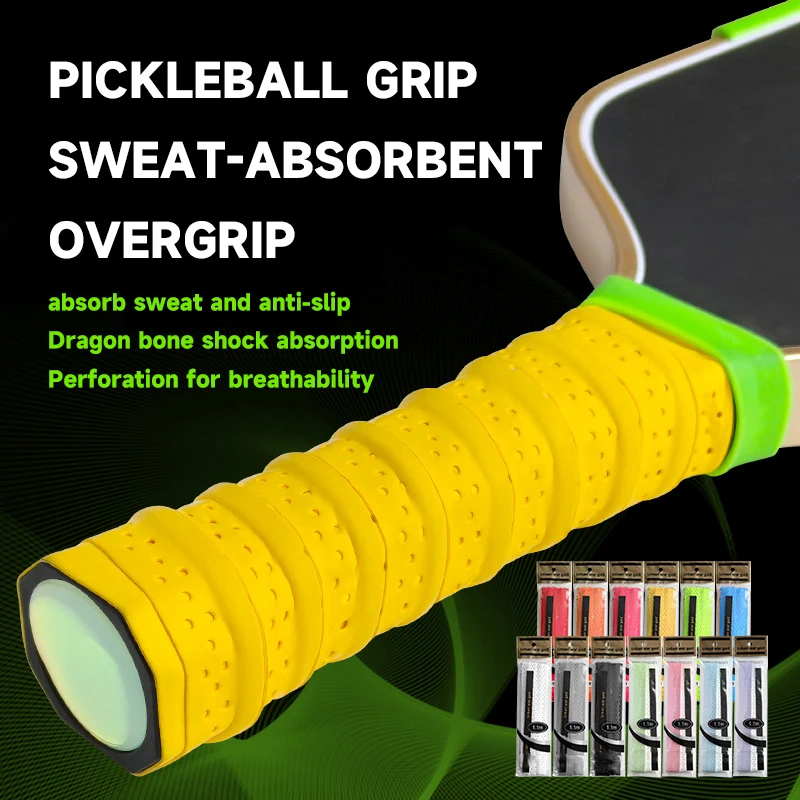
The immediate tactile impression a consumer experiences when pulling a weapon off a pro-shop display wall is governed by its exterior contact materials: the base replacement grip, the butt cap, and the safety wrist tether. Sweaty palms are the enemy of directional control; as moisture accumulates during humid summer sets, standard smooth vinyl wraps become dangerously slick, forcing the player to clench their fingers and inducing rapid forearm cramping. Comprehensive padel racket grip customization pairs an absorbent, cushion-backed polyurethane base grip with a micro-perforated, tacky overgrip debossed with subtle brand typography. The laser-punched perforations accelerate capillary moisture evaporation while providing mechanical friction edges against the skin. At the base of the shaft, a flared octagonal butt cap fitted with an internal polymer gel pod prevents the handle from slipping out of the little finger during full-power overheads while showcasing a 3D metallic brand medallion. Equally important is the safety wrist cord. Modern tournament regulations and hygiene standards favor sliding, replaceable wrist straps constructed from antimicrobial woven neoprene with plush embroidered brand logos, allowing athletes to detach, launder, or swap colorways effortlessly without unpinning the butt cap.
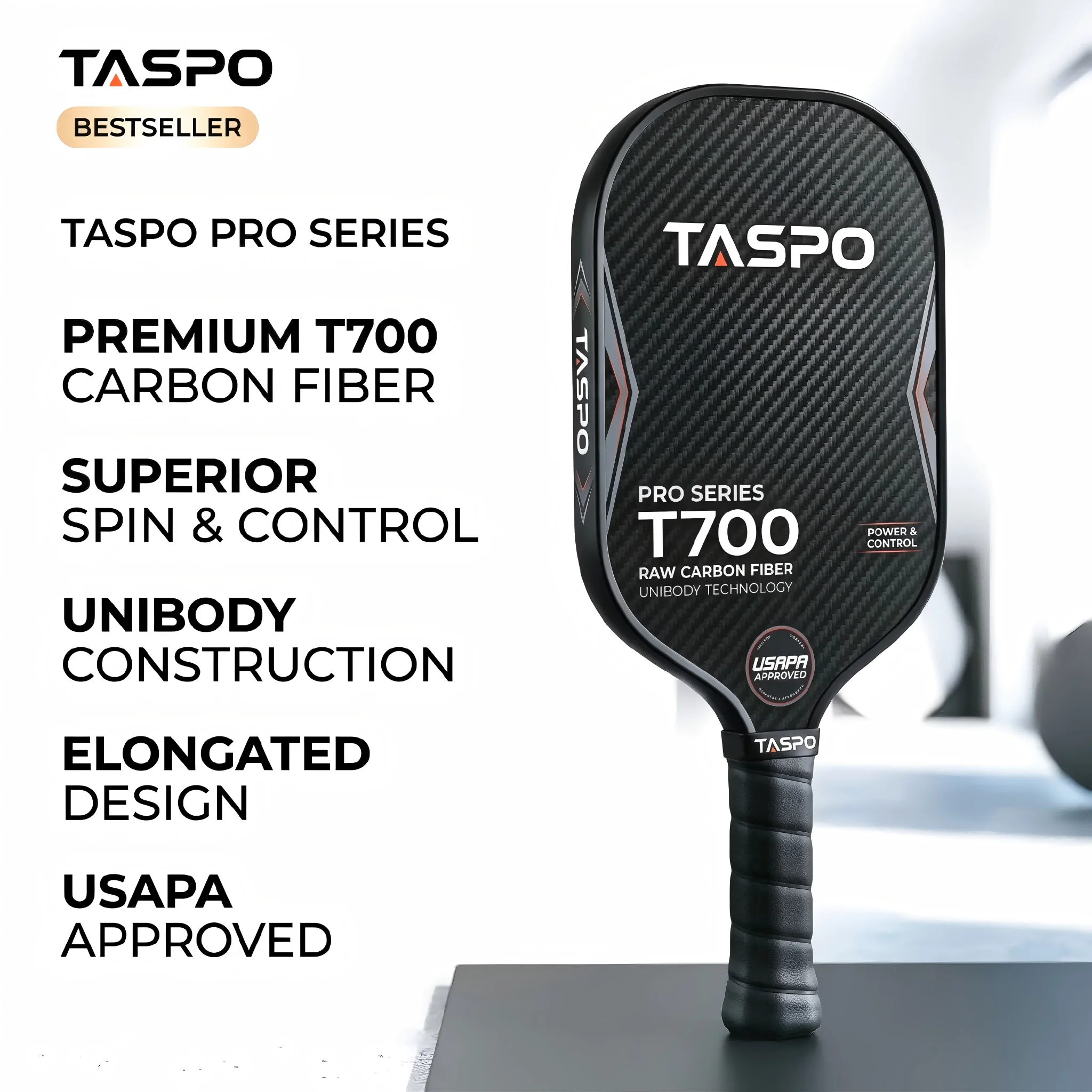
For sporting goods brands and retail distributors, investing in handle ergonomics yields one of the highest returns on engineering investment in the industry. While a customer in a brick-and-mortar store cannot hit balls in the aisle, they always wrap their hand around the grip and execute practice swings; an uncomfortable, boxy handle kills the sale instantly, whereas a contoured, balanced grip triggers immediate checkout conviction. Executing consistent handle craftsmanship across thousands of units requires a vertically integrated composite manufacturer equipped with precision pallet tooling. In the global sporting goods manufacturing sector, Taspo Sports stands as an authoritative leader in custom racket engineering and ergonomic handle fabrication. Operating in-house 3D CAD tooling studios, precision polyurethane foam injection lines, automated grip-wrapping stations, and custom embroidery departments, Taspo Sports empowers international brands to tailor every millimeter of their grip architecture. Whether a client needs to tool an elongated 140-millimeter shaft, calibrate Grip 2 circumference tolerances, or integrate a proprietary padel handle shock absorption system, Taspo Sports delivers turnkey OEM and ODM execution. Partnering with a premier padel racket manufacturer like Taspo Sports guarantees commercial brands world-class comfort, tournament-legal safety details, and unmistakable retail luxury worldwide.
 Hot News
2026-11-20
2026-11-20
2026-11-20
2026-11-20
2026-11-20
2026-11-20
 EN