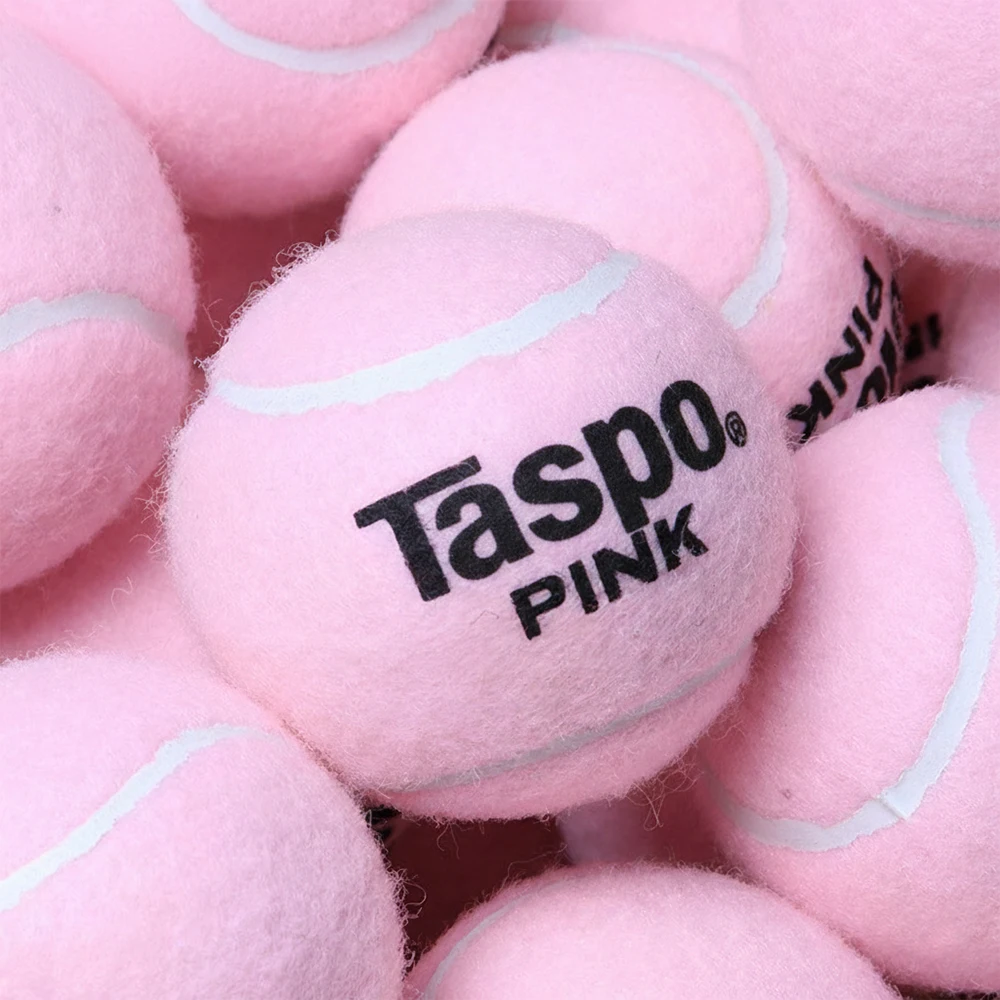
Modern baseline tennis is a game of violent rotational speeds and extreme kinetic collisions where ball velocities regularly exceed one hundred and fifty kilometers per hour. When an athlete swings through a heavy topspin forehand or stretches wide to block a first serve, the racket frame acts as a mechanical lever that must absorb, store, and return energy in less than five milliseconds. Stocking generic, low-grade frames pulled from basic trading catalogs sets players up for immediate biomechanical failure on the court. Cheap frames constructed with low-modulus graphite and inconsistent resin ratios suffer from severe torsional twisting whenever the ball strikes outside the center axis. High-speed lab cameras show that inferior frames twist by several degrees during off-center impacts, robbing the player of up to eighteen percent of their outgoing ball velocity while sending jarring high-frequency shockwaves straight into the wrist and lateral epicondyle. Understanding how ODM tennis racket design enhances performance allows sporting goods brands and academy directors to eliminate these structural flaws. By collaborating with an Original Design Manufacturer to engineer targeted carbon reinforcements and harmonic dampening zones, brands deliver hardware that maximizes shot precision and joint longevity.
Unlocking tour-level playability inside a custom tennis racket design begins with advanced composite metallurgy and computational fluid dynamics. Unlike entry-level recreational rackets made from extruded aluminum alloys or heavy fiberglass blends, a professional ODM tennis racket utilizes multi-directional pre-impregnated sheets of thirty-ton and forty-ton High-Modulus Carbon Graphite infused with nano-epoxy resin systems. Engineers map out a precise layup schedule containing twelve to sixteen overlapping composite plies along the hoop, throat bridge, and handle shaft. By orienting carbon fibers at forty-five-degree braided angles specifically around the throat shoulders, the frame resists lateral twisting at impact while still allowing a comfortable vertical flex rating between sixty-two and sixty-eight on the RA stiffness scale. Simultaneously, custom ODM tooling allows brands to tailor the cross-sectional beam geometry to specific playing styles. A classic rectangular box-beam profile measuring twenty to twenty-one millimeters thick maximizes ball pocketing dwell time and directional feel for advanced serve-and-volleyers. Conversely, a sculpted aerodynamic elliptical beam varying from twenty-three to twenty-six millimeters slices through the air with fourteen percent less drag, enabling aggressive baseliners to generate whip-like racket head acceleration.

Two tennis frames pulled from the exact same exterior steel mold can play like completely different instruments depending on how engineers calibrate internal mass distribution and string bed architecture. During a carbon fiber tennis racket ODM project, product developers manipulate three interconnected physical variables: static unstrung weight, balance point, and dynamic swing weight. Placing high-density tungsten or carbon tape strips at the three o’clock and nine o’clock perimeter zones expands the horizontal sweet spot and pushes dynamic swing weight past three hundred and twenty kilogram-square-centimeters, giving tournament strikers the plow-through stability needed to redirect heavy pace without frame flutter. For intermediate club players and rising juniors, shifting mass toward the butt cap creates a head-light balance around three hundred and fifteen millimeters on a two hundred and eighty-five gram frame, ensuring effortless net maneuverability. Furthermore, CNC hole-drilling programs allow wholesale tennis racket buyers to customize string bed spacing. Specifying an open sixteen-by-nineteen string pattern with widened diamond grommet channels lets main strings deflect and snap back violently to boost topspin revolutions by fifteen percent, whereas a dense eighteen-by-twenty pattern locks in surgical flat-shot trajectory control.
Examining market performance data from regional sports brands illustrates how functional ODM engineering translates directly into retail revenue and coaching endorsements. Consider an independent European racket brand supplying club pro shops and junior academies across Germany, Austria, and Switzerland. For years, their catalog relied on standard open-mold frames that struggled to stand out against global giants on the retail wall. Seeking a true technical differentiator, their product director partnered with a specialized tennis racket ODM factory to co-develop a dual-stage vibration filtration handle system. Instead of stapling a basic polyurethane pallet onto a bare graphite shaft, the factory injected specialized viscoelastic foam inside the handle core and integrated braided aramid-carbon dampening strips into the throat yoke. Laboratory accelerometer tests confirmed that the new custom tennis racket design filtered out thirty-seven percent more arm-shock frequencies above two hundred Hertz without muting crisp ball feedback. Armed with transparent biomechanical test charts and demo frames, club coaches enthusiastically recommended the line to adult league players recovering from tennis elbow. Within two quarters of launch, retail sell-through jumped by fifty-four percent and academy bulk reorders climbed by forty-two percent.
Turning ambitious biomechanical concepts into a commercial product line that performs identically across thousands of units requires an industrial manufacturing partner with deep composite mastery. Sourcing through middleman brokers often results in erratic RA stiffness readings, crooked grommet drill holes that snap strings prematurely, and fragile paint finishes that chip on the first court scrape. Partnering directly with an integrated factory locks in precision engineering from raw carbon yarn to retail shrink-wrap. This is where Taspo empowers global sports brands, national distributors, and elite academies to lead the market. Operating advanced ISO-certified composite production lines, Taspo combines micro-computer carbon bladder molding and precision CNC five-axis drilling with rigorous digital weight, balance, and RA stiffness matching. Every custom tennis racket design developed at Taspo undergoes exhaustive pneumatic ball-impact fatigue testing, string-pull tension stress trials, and dust-free UV multi-layer cosmetic finishing. Better yet, business partners can seamlessly bundle their carbon fiber tennis racket ODM production alongside Taspo’s pressurized court balls, absorbent overgrips, wristbands, and thermal bags, creating a unified, high-margin product ecosystem backed by world-class manufacturing reliability.
 Hot News
2026-11-20
2026-11-20
2026-11-20
2026-11-20
2026-11-20
2026-11-20
 EN