Every regular player has experienced the disappointment of reaching into their court bag on a Thursday evening, pulling out a sleeve of balls used for just one match on Tuesday, and discovering they bounce like heavy clay stones. Even when the exterior yellow wool felt looks practically brand new, the spheres refuse to kick off the back tempered glass and feel harsh against the carbon face of the racket. Asking how pressurized padel ball internal gas works unlocks the scientific explanation behind this rapid performance drop-off. Unlike solid foam spheres or thick-walled recreational toys, a competitive padel ball relies on a trapped pocket of compressed gas to generate roughly sixty percent of its vertical rebound energy. Once that pressurized canister is popped open at court level, a microscopic tug-of-war begins between the high-pressure atmosphere inside the rubber core and the lower ambient barometric pressure outside, dictating everything from smash velocity to elbow comfort.
To see what happens during a high-speed volley or overhead smash, equipment engineers look at the Ideal Gas Law operating inside a hollow vulcanized elastomer shell. When manufacturers seal two hemispherical half-shells together inside a pressurized curing platen, they trap dry gas inside the padel ball core at approximately ten to eleven pounds per square inch above outside atmospheric pressure—slightly lower than the fourteen pounds per square inch used in lawn tennis so the ball stays controllable inside an enclosed twenty-by-ten-meter court. When a player strikes a pressurized padel ball, the carbon racket face flattens the sphere by nearly thirty percent of its diameter. Because the internal volume of the hollow cavity shrinks instantaneously during that four-millisecond impact window, the trapped gas molecules compress violently, spiking internal padel ball pressure and creating an outward pneumatic restoration force. That compressed gas cushion acts as a frictionless spring, pushing the rubber wall back into a round sphere with minimal energy lost to internal friction and launching the ball off the face at blistering speed.
Not all internal gas mixtures behave identically once the sphere leaves the factory floor. Budget factories charge their cores using standard shop-floor compressed air, which consists of roughly seventy-eight percent nitrogen, twenty-one percent oxygen, and trace water vapor. From a polymer chemistry perspective, oxygen molecules have a smaller kinetic diameter than nitrogen molecules, allowing oxygen to wiggle through the microscopic molecular chains of natural vulcanized rubber nearly three times faster via a process known as effusion. Furthermore, residual moisture and oxygen inside a cheap padel ball core accelerate internal oxidative aging, causing the rubber wall to stiffen prematurely. Premium tournament padel ball production lines solve this problem in two ways: first, they inject dry, nitrogen-enriched gas mixtures with larger molecular profiles; second, they line the inner rubber formula with high-impermeability halogen-butyl elastomers. That dual barrier slows gas migration across the shell wall by up to forty percent, keeping rebound speed lively through three full sets.
Because gas pressure is directly proportional to absolute temperature, ambient weather conditions dramatically alter how a pressurized padel ball performs during live competition. During a seasonal telemetry study conducted across indoor and outdoor clubs in Spain and South America, engineers measured internal padel ball pressure and rebound height across varying climates using needle manometers and optical drop towers. When court temperatures dropped from twenty-five degrees Celsius down to eight degrees Celsius during winter evening matches, kinetic molecular energy inside the core slowed down, causing internal pressure to dip by nearly zero point eight pounds per square inch. That thermal drop reduced vertical bounce height off a two-hundred-and-fifty-four-centimeter test drop by eight point five centimeters, making the game noticeably slower and favoring patient defensive right-side players. Conversely, on thirty-five-degree-Celsius summer courts or at high-altitude venues where outside air pressure is thin, internal gas expands aggressively, turning every flat drive into a fast-skidding weapon and allowing power hitters to smash balls out of the four-meter enclosure effortlessly.
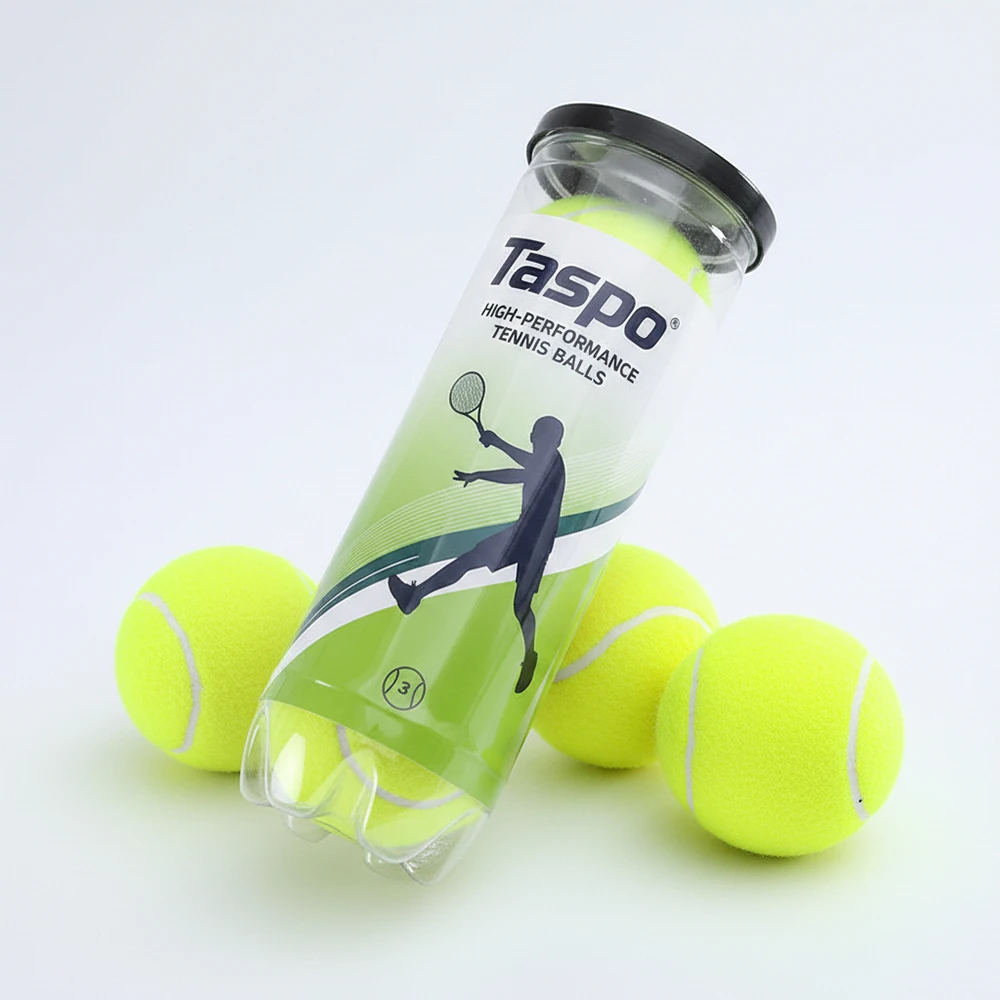
Understanding gas diffusion physics also explains why a pressurized padel ball must be shipped and stored inside a sealed polyethylene terephthalate tube. According to Fick's Law of Diffusion, gas molecules only migrate through a semi-permeable rubber membrane when a pressure gradient exists between the inside and the outside of the wall. By charging the sealed PET canister with compressed air at the exact same ten-to-eleven-pound-per-square-inch atmosphere that exists inside the padel ball core, manufacturers create a state of barometric equilibrium. As long as the aluminum pull-ring lid remains intact, zero net gas escapes from the spheres, preserving factory-fresh bounce for twelve to eighteen months. For club directors and regional distributors managing bulk inventory, storing cartons in climate-controlled rooms between fifteen and twenty-five degrees Celsius away from direct sunlight prevents thermal pressure spikes that strain canister seams before match day.
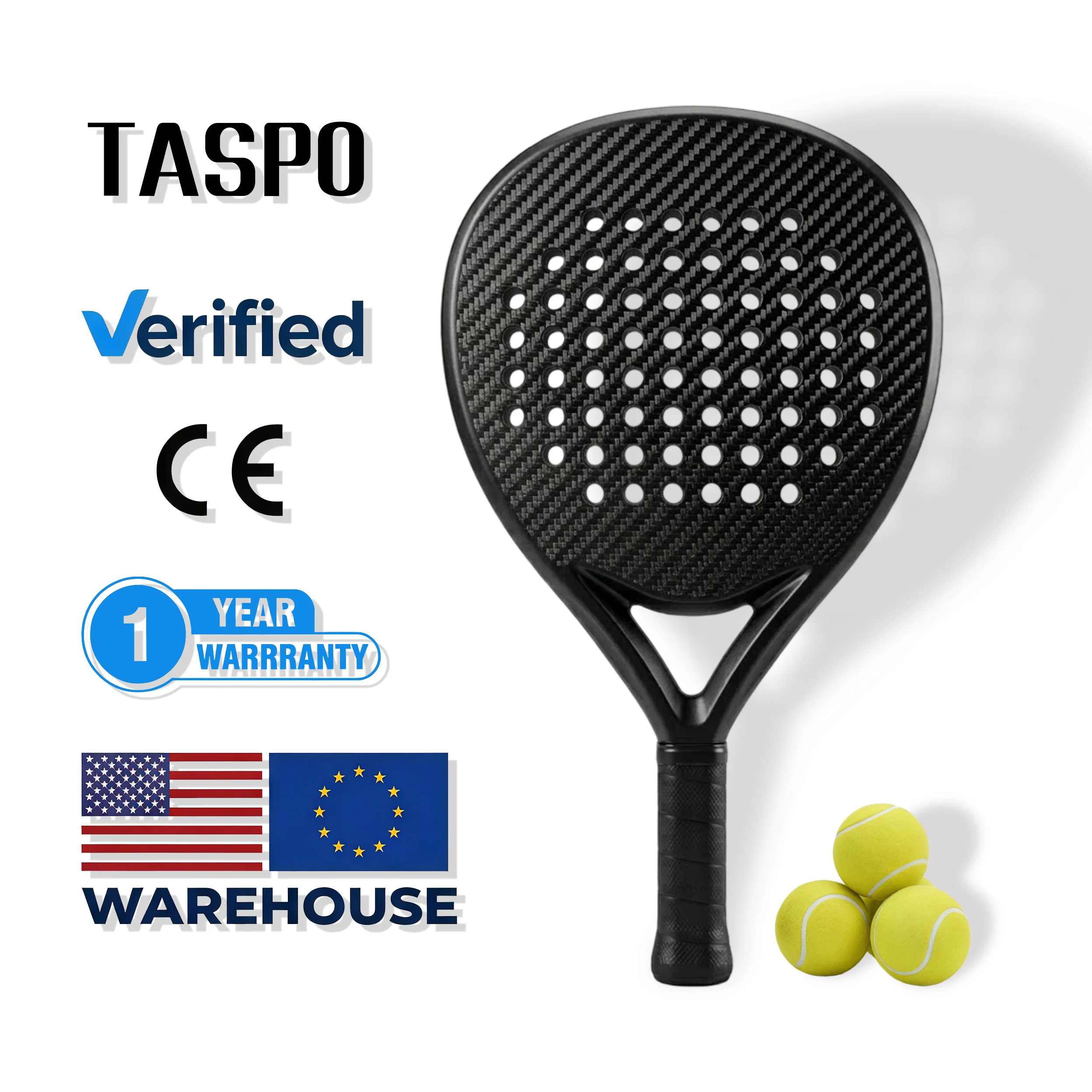
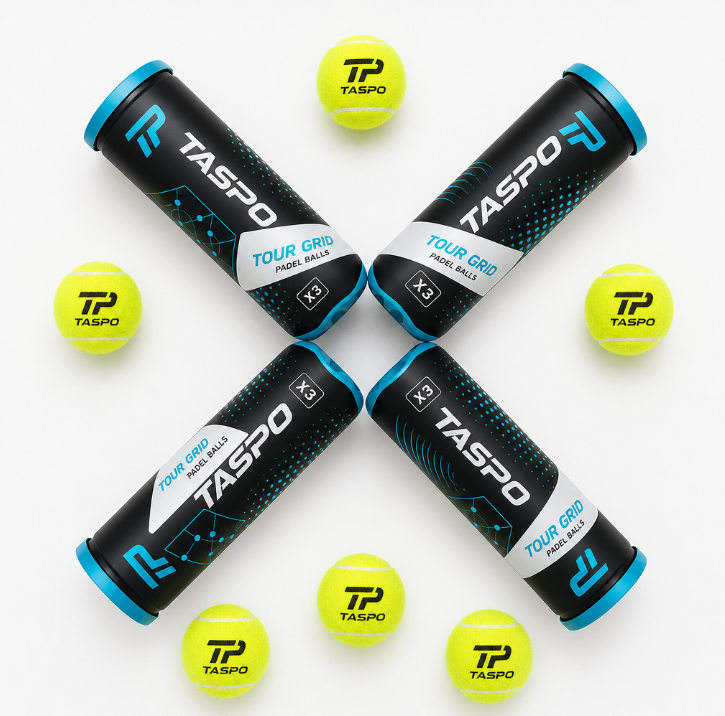
Equipping competitive leagues and retail pro shops with spheres that hold their pressure through grueling three-set marathons requires partnering with a manufacturer that masters elastomer barrier chemistry and precision canning. Taspo operates as a premier B2B sports equipment manufacturer supported by more than one hundred and thirty experienced engineers and self-owned standardized production bases. Alongside manufacturing flagship 3K, 12K, and 18K carbon fiber padel rackets through advanced autoclave curing and resin transfer molding, Taspo provides comprehensive one-stop OEM and ODM solutions for high-retention pressurized padel ball canisters, tacky overgrips, protective frame tapes, sweatbands, and thermal court bags. Every tournament padel ball produced at Taspo passes through seven strict quality inspection gates verifying internal PSI accuracy, butyl core gas retention, wool felt abrasion resistance, and vacuum canister seal integrity. With custom prototypes delivered in seven to fifteen working days and twenty-four-hour technical support, Taspo empowers global brands to deliver unmatched court bounce.
 Hot News
2026-11-23
2026-11-23
2026-11-23
2026-11-23
2026-11-23
2026-11-23
 EN