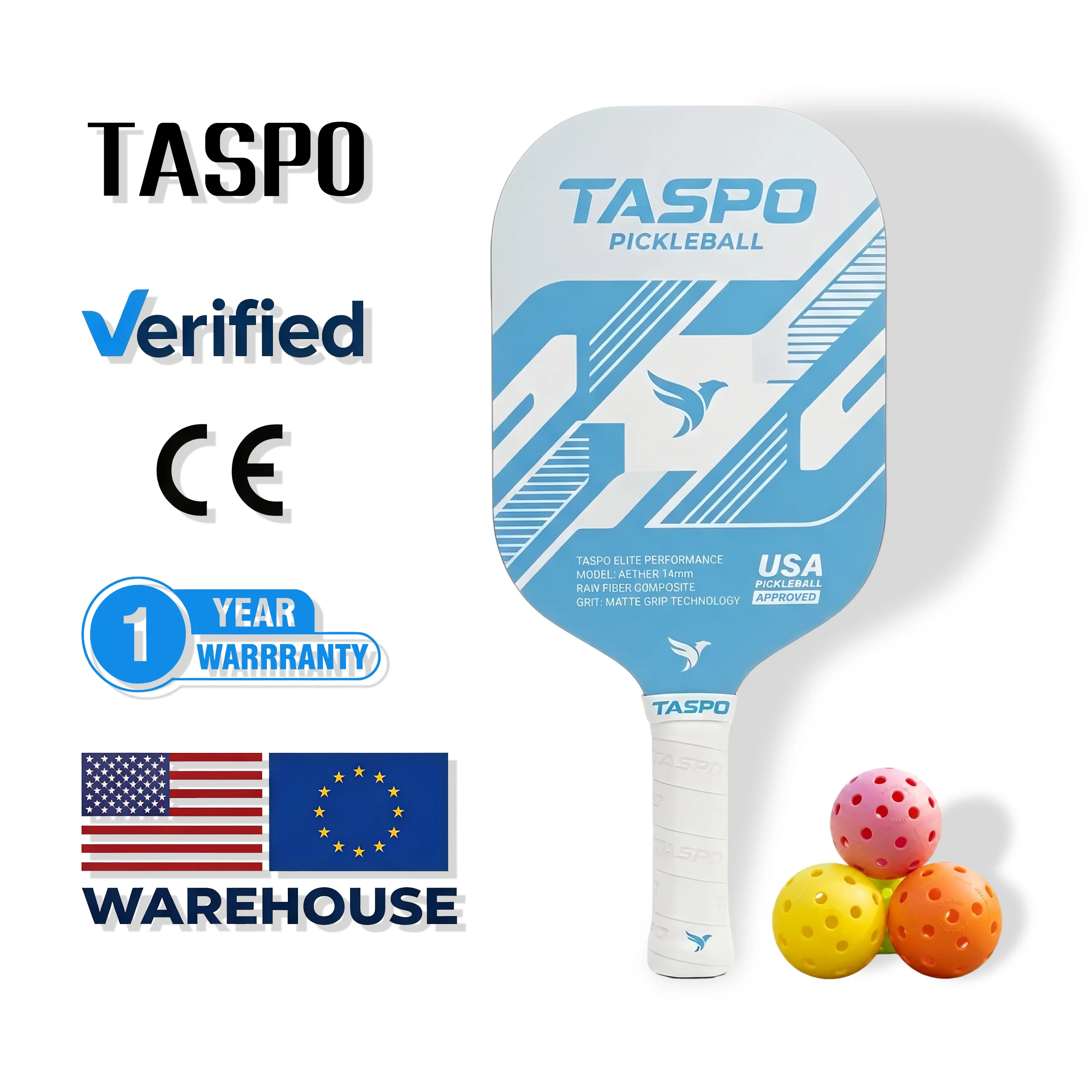
In competitive tournament play, matches are rarely won by reckless baseline banging; they are decided along the non-volley zone line through patient dinking, soft defensive resets, and surgical drop shots. When an opponent blasts a high-velocity drive directly at your chest, executing a soft reset that lands gently inside the kitchen requires equipment engineered to absorb kinetic pace rather than amplify it. Understanding how to select a pickleball paddle for control begins with the structural thickness and cell geometry of the internal core. While power-oriented models utilize thin 11-millimeter to 13-millimeter cores that rebound the ball rapidly like a stiff drum, control-focused weapons rely universally on a 16mm honeycomb core or thicker. Constructed from aerospace-grade polypropylene cellular matrices with narrow eight-millimeter cell diameters, a thick 16mm honeycomb core acts as a progressive mechanical shock absorber. Upon impact with the perforated plastic sphere, the taller polymer cell walls flex microscopically, dissipating incoming kinetic momentum across a wider volume of material. This energy absorption extends ball dwell time on the face by crucial fractions of a millisecond, giving the athlete an unmistakable plush, connected sensation needed to guide thirds-shot drops safely over the net cord.
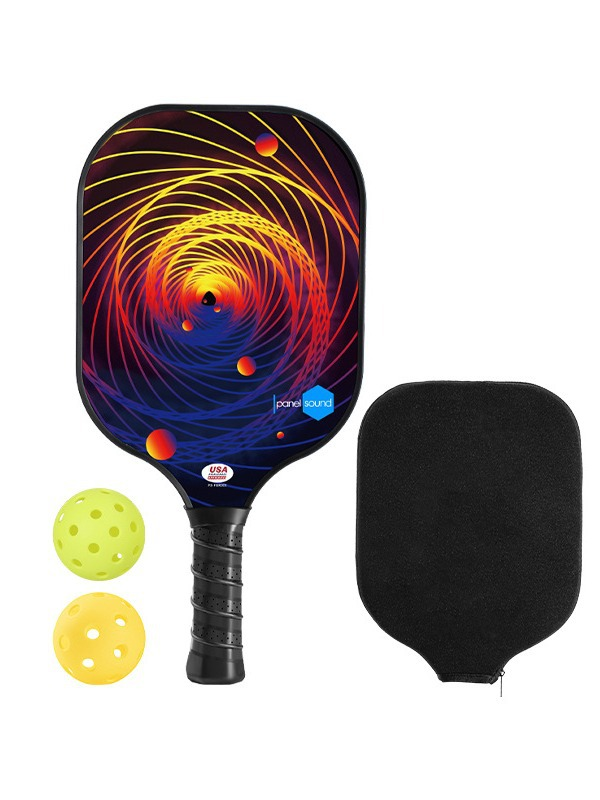
Even the thickest internal core will fail to deliver reliable placement if the frame twists in the player's palm during off-center contact. During rapid hand battles at the kitchen line, reaction windows shrink to less than two hundred milliseconds, making it humanly impossible to strike every volley squarely in the dead center of the face. On traditional narrow, elongated paddles without edge reinforcement, striking a ball near the three-o'clock or nine-o'clock perimeter causes violent torsional recoil, deflecting the ball wide of the sideline or straight into the net. Solving this rotational instability requires pairing a classic wide-body silhouette—measuring between 8.0 and 8.25 inches across the face—with advanced perimeter foam injection. By widening the horizontal profile and shifting the sweet spot closer to the athlete's hand, engineers naturally increase the paddle's lateral moment of inertia, commonly measured as twist weight. Furthermore, injecting high-density expandable polyurethane foam throughout the outer perimeter cells and around the handle throat creates a continuous stabilizing ring. This foam-injected perimeter neutralizes dead spots near the edge guard, ensuring that an off-center defensive block rebounds with the exact same directional stability and controlled pace as a dead-center hit.
While internal core thickness regulates rebound pace, the exterior composite skin dictates directional trajectory and rotational spin bite. In modern court physics, top-level control is inseparable from spin generation: heavy topspin pulls aggressive drives down inside the baseline via the Magnus effect, while sharp backspin allows defensive dinks to grip the court surface and stay low. Early recreational equipment utilized smooth fiberglass sheets that caused the hard plastic sphere to skid unpredictably across the face, launching shots high into the opponent's strike zone. Today, an elite control pickleball paddle is laminated with high-modulus raw T700 carbon fiber fabric. Unlike fiberglass, woven carbon fiber possesses higher tensile stiffness that prevents erratic trampoline launch angles. During the high-pressure thermal curing cycle, manufacturers press a specialized textured release fabric—known in composite engineering as peel-ply—directly against the epoxy-impregnated carbon surface. Once stripped away after curing, the peel-ply leaves behind a permanent, uniform micro-roughness programmed right to the legal tournament friction limit. When a player brushes upward or carves underneath the ball, this raw carbon fiber texture bites firmly into the plastic shell, translating subtle wrist mechanics into pinpoint trajectory control.
Biomechanical harmony between the athlete's hand and the handle shaft represents the fourth pillar of precision shot-making. A common mistake among developing players is selecting an overly heavy, head-heavy paddle that fatigues the forearm and slows down hand speed during rapid net exchanges. Conversely, an ultra-lightweight frame under 7.4 ounces lacks the structural mass needed to absorb heavy opposing drives without getting pushed backward on impact. The optimal pickleball paddle for control typically falls within a mid-weight static range of 7.8 to 8.1 ounces, calibrated with a slightly head-light balance point. This neutral-to-head-light distribution makes the weapon feel nimble during reflex volleys while retaining enough mass behind the sweet spot for effortless deep returns. Down at the handle, tactile indexing is paramount. Premium paddles utilize a one-piece molded foam pallet featuring eight crisp geometric bevels wrapped in a perforated, tacky overgrip. Sharp bevel edges allow the athlete's knuckles to sense the exact angle of the paddle face blindly without looking down, enabling seamless transitions between continental backhand blocks and eastern forehand topspin rolls.
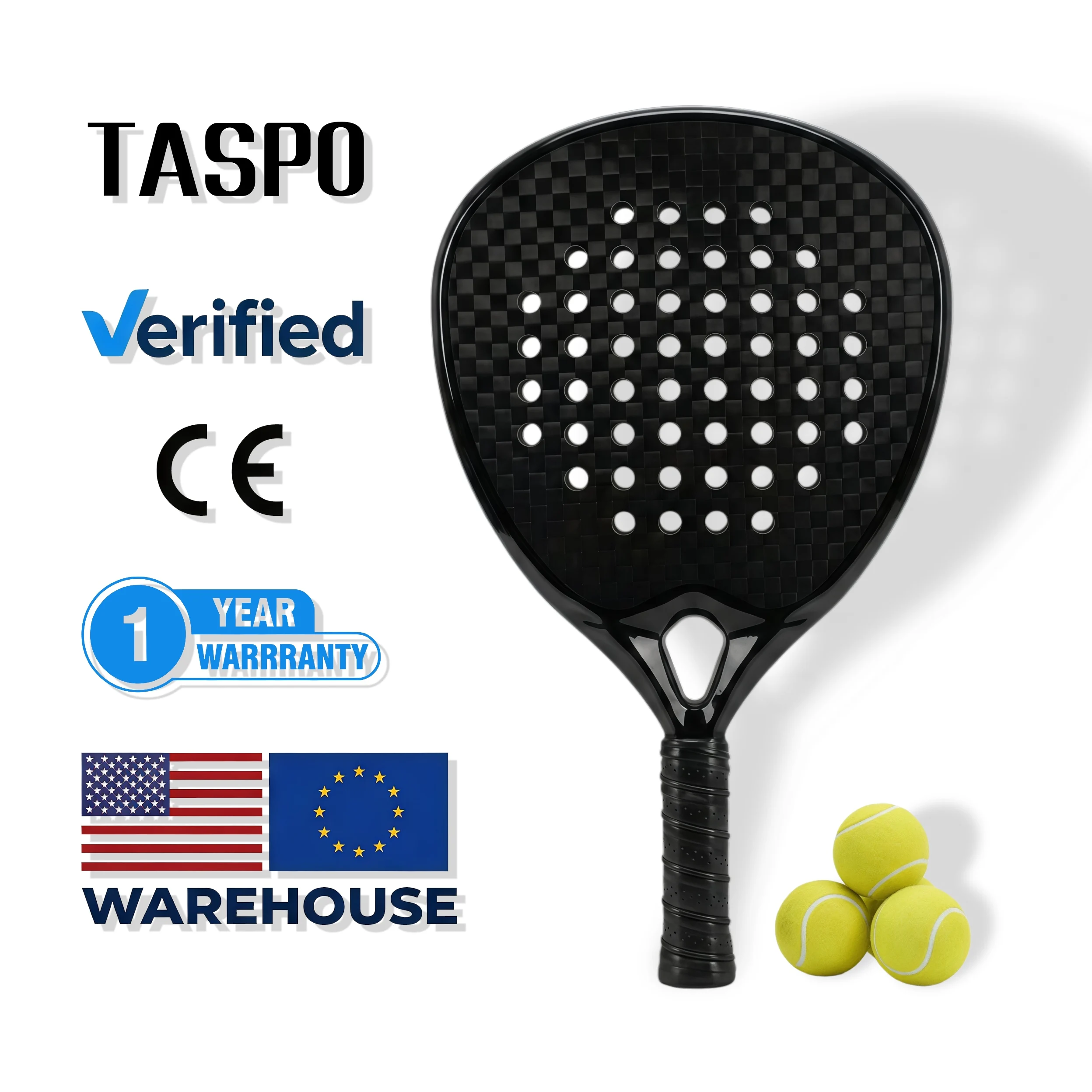
For sporting goods brands, academy directors, and retail distributors, control-oriented paddles represent the most trusted and highest-converting segment of the equipment market. Players ranging from cautious intermediate improvers to touring 5.0 professionals prioritize repeatable accuracy and joint-friendly plushness above reckless speed. However, manufacturing a consistent control pickleball paddle requires advanced unibody thermoforming technology and microscopic quality assurance. If a factory applies uneven hydraulic pressure during curing or leaves gaps in the perimeter foam injection, the sweet spot becomes erratic and the carbon face delaminates after weeks of play. In the global sporting goods arena, Taspo Sports stands as an authoritative pioneer in advanced composite paddle engineering. Operating state-of-the-art heated compression molds, automated foam-edge injection stations, precision CNC routing lines, and laser surface-roughness gauges, Taspo Sports manufactures world-class weaponry for international sports brands. Whether a brand wants to develop a flagship pickleball paddle for control featuring a 16mm honeycomb core and Kevlar-carbon hybrid weaves, or launch a full custom retail series with USA Pickleball compliant peel-ply grit, Taspo Sports delivers turnkey OEM and ODM execution. Partnering with a premier pickleball paddle manufacturer like Taspo Sports guarantees commercial brands flawless weight tolerances, unmatched sweet spot consistency, and elite court performance worldwide.
 Hot News
2026-11-23
2026-11-23
2026-11-23
2026-11-23
2026-11-23
2026-11-23
 EN