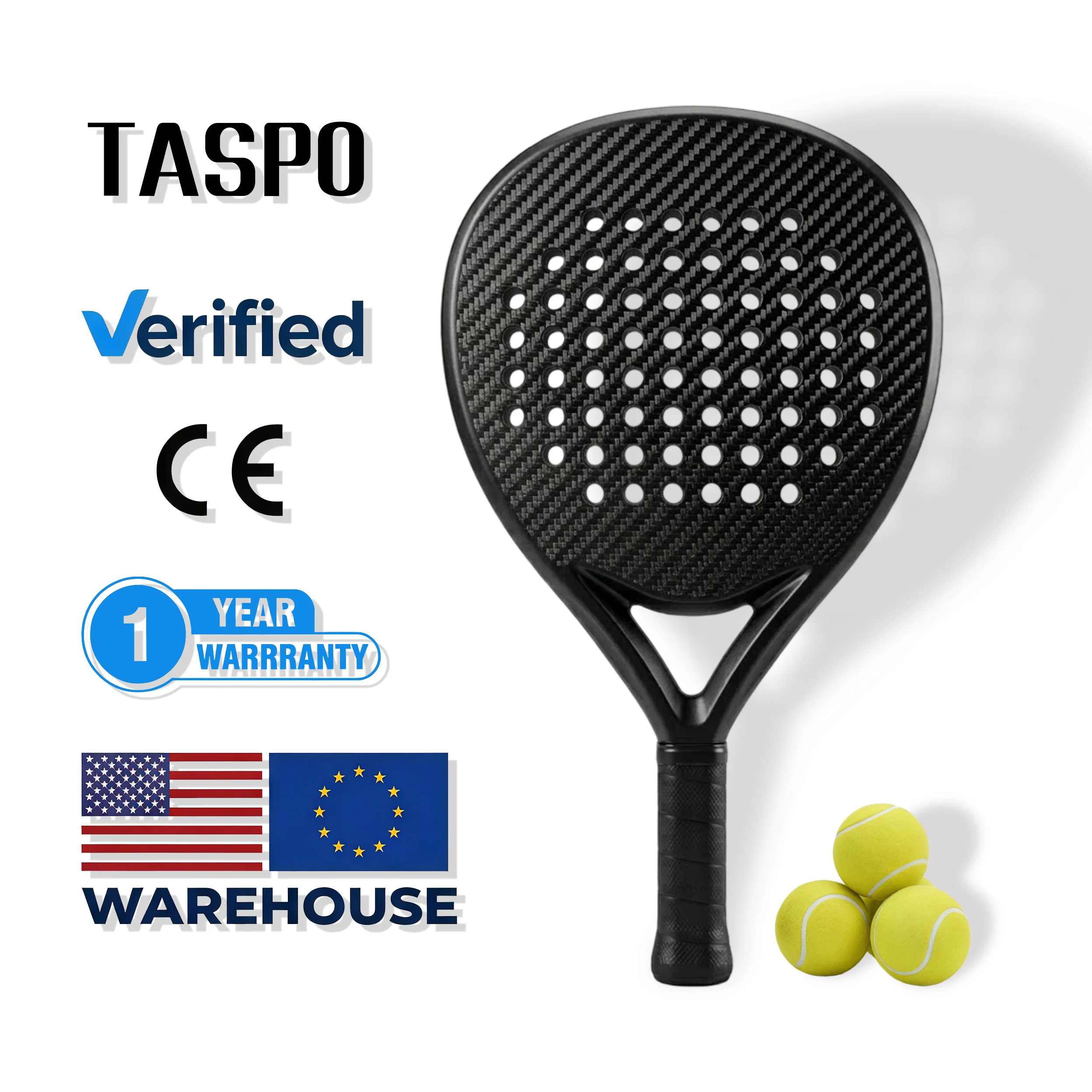
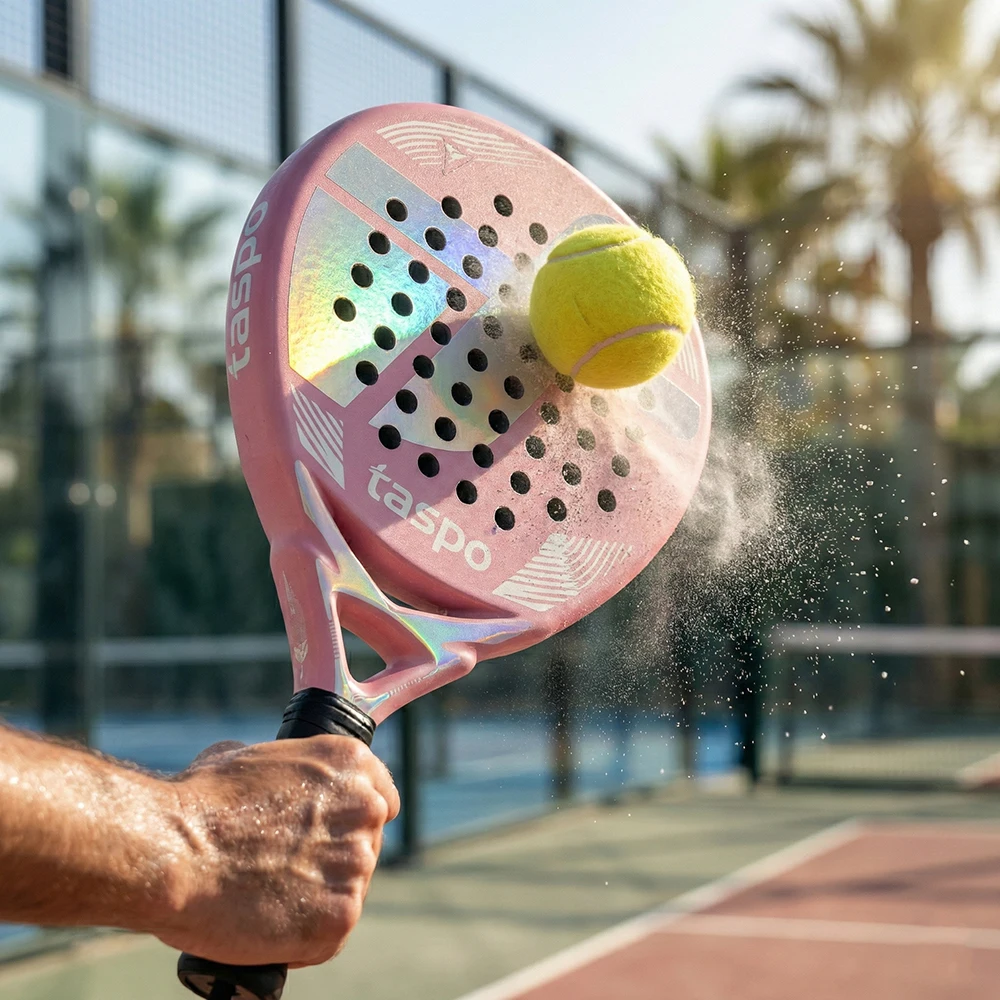
The rapid evolution of modern racket sports has transformed equipment construction from basic woodworking into advanced aerospace engineering. At the center of this technological leap sits the widespread adoption of high-strength carbon composites. Evaluating different carbon fiber padel racket models requires looking beyond surface graphics to understand the fundamental mechanical properties of the raw carbon filaments. Carbon fiber is graded primarily by its tensile modulus—a measure of stiffness under tension—and its tensile strength. While entry-level frames mix fiberglass with standard-modulus fibers, tour-level models rely on high-grade T700 and high-modulus graphite prepregs. Before the hitting face is even assembled, the outer perimeter tube must be engineered to survive violent collisions with tempered glass walls and metallic court fencing. Premium carbon fiber padel racket models utilize a twin-tube or solid-ribbed carbon frame construction. By rolling multiple layers of bidirectional carbon tape around an expandable internal bladder during molding, engineers create a hollow perimeter beam with immense torsional resistance. This rigid outer skeleton prevents the racket head from twisting during off-center defensive blocks, ensuring that kinetic energy remains concentrated within the hitting zone rather than dissipating into frame wobble.
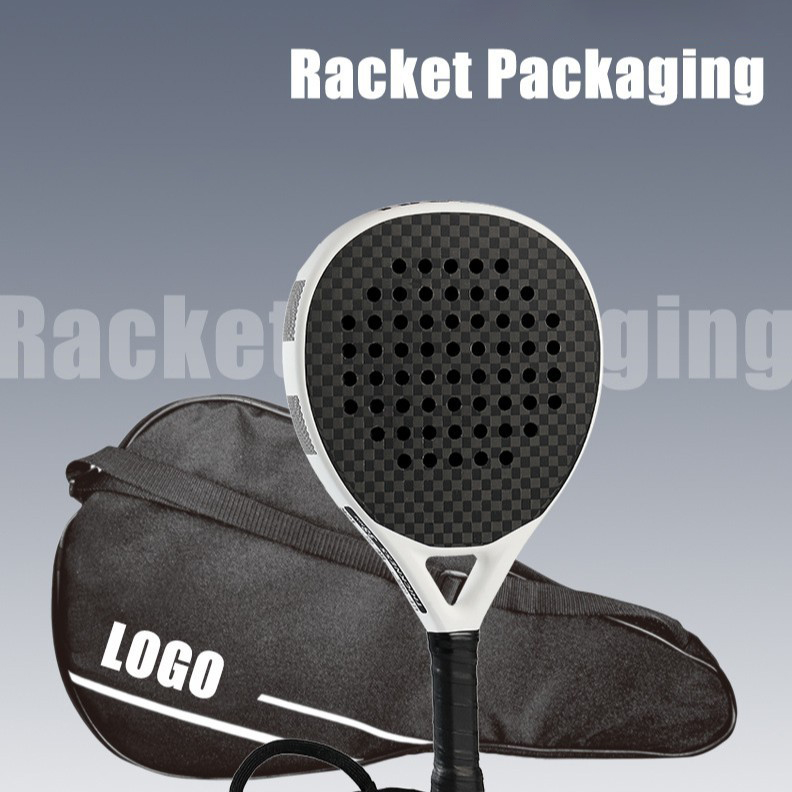
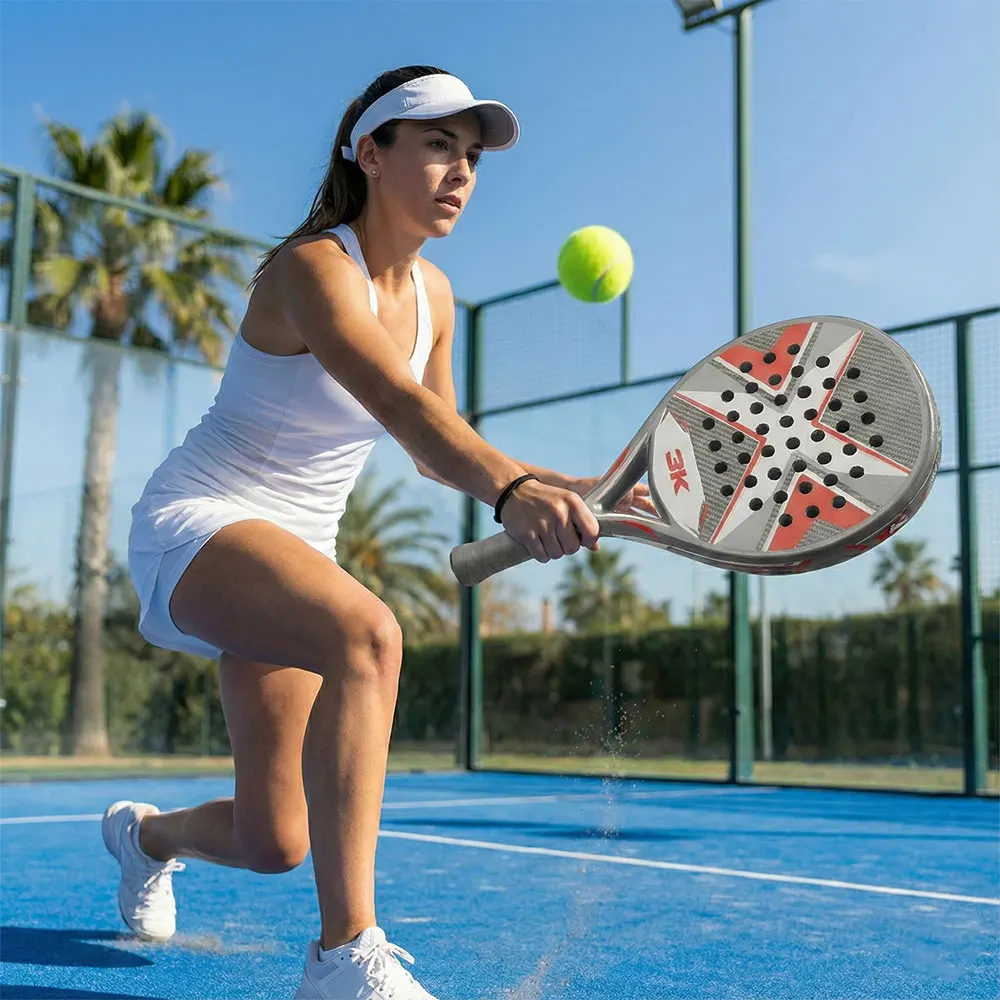
When retail buyers and club athletes compare equipment specifications, the most prominent classification across product catalogs is the K-rating, which denotes the filament tow count of the woven surface fabric. In textile engineering, "K" stands for thousands of individual microscopic carbon filaments grouped into a single roving bundle before being woven into a cloth sheet. Understanding how a 3K 12K 18K padel racket differs on the court is essential for accurate product positioning. A 3K carbon weave utilizes compact bundles of three thousand filaments, resulting in a tight weave with minimal crimp and fewer resin pockets. This structure delivers a crisp, rigid feel that maximizes control during high-speed flat smashes, though it demands impeccable technique from the athlete. Stepping up to a 12K weave introduces twelve thousand filaments per bundle, creating slightly wider interlacing ribbons that offer a harmonious blend of structural stiffness and elastic spring—making it the most popular specification among all-around tournament professionals. At the upper end, 18K and 24K fabrics pack massive filament counts into each bundle. Because these wider ribbons flex slightly more under localized ball impact before snapping back, they provide exceptional trampolining ball output and a cushioned tactile response during long baseline exchanges.
A frequent mistake among developing players and equipment retailers is assuming that a higher carbon rating automatically equates to a better racket for every user. In reality, mismatching composite stiffness with a player's biomechanical swing speed leads directly to degraded court performance and physical strain. When an intermediate player with a moderate, compact swing speed uses an ultra-stiff carbon fiber padel racket paired with a hard core, they fail to generate enough kinetic force to flex the carbon face. Consequently, the ball dies on the paddle, forcing the player to over-swing and straining their shoulder and elbow tendons. Solving this power-versus-comfort dilemma requires strategically pairing weave orientation with internal elastomer selection. Beyond standard zero-ninety degree plain weaves, engineers utilize forty-five degree twill weaves that allow greater diagonal shear flexibility across the face. When a 3K 12K 18K padel racket lineup is engineered thoughtfully, brands pair stiffer 3K or 12K weaves with softer, low-density EVA cores for accessible club models, while reserving rigid dual-density cores and 18K triaxial carbon layups for elite power hitters who generate massive swing velocity naturally.
The long-term structural durability of composite athletic gear depends heavily on how the raw carbon fabric is impregnated with resin and cured under heat. Low-cost factories frequently rely on wet layup techniques, where workers manually brush liquid epoxy resin onto dry carbon sheets inside an open mold. This primitive method results in erratic resin pooling, trapped air micro-voids, and inconsistent frame weights that vary by up to fifteen grams within a single batch. Over a few weeks of heavy play, those microscopic air voids fracture under impact stress, causing the carbon face to crack or delaminate from the foam core. In contrast, an authoritative carbon padel racket manufacturer utilizes aerospace-grade pre-impregnated carbon fabrics, universally known as prepreg. In prepreg materials, toughened epoxy resin is machine-calibrated to an exact weight ratio of thirty-three to thirty-five percent and stored in sub-zero freezers prior to molding. During the high-pressure thermoforming cycle, internal bladder expansion presses the carbon layers tightly against the heated steel mold walls while vacuum extraction removes volatile gases. This precision curing process yields a void-free composite skin with exceptional fatigue resistance, capable of surviving over two thousand high-velocity mechanical impact cycles without losing its original flex profile.
Building a profitable, market-leading equipment brand requires offering a structured catalog where every model serves a clear athletic purpose. By organizing carbon fiber padel racket models into clear performance tiers—such as defensive control, hybrid versatility, and high-modulus attacking power—distributors can guide consumers effortlessly from their first recreational paddle to their ultimate championship weapon. Executing this multi-tier portfolio strategy demands an industrial partner with mastery over composite thermodynamics and automated machining. In the global sporting goods arena, Taspo Sports stands as a premier composite engineering powerhouse. Operating advanced cleanroom prepreg cutting tables, multi-platen thermal presses, and dust-free robotic painting booths, Taspo Sports manufactures tour-grade custom carbon padel paddle collections for leading international brands. Whether a client needs to calibrate the exact rebound mechanics of a 3K 12K 18K padel racket series or engineer proprietary carbon-Kevlar hybrid reinforcements, Taspo Sports provides turnkey OEM and ODM development. Partnering with a trusted carbon padel racket manufacturer like Taspo Sports ensures microscopic quality control, precise weight balancing, and scalable delivery timelines, empowering sports brands to dominate competitive padel markets worldwide.
 Hot News
2026-11-24
2026-11-24
2026-11-24
2026-11-24
2026-11-24
2026-11-24
 EN