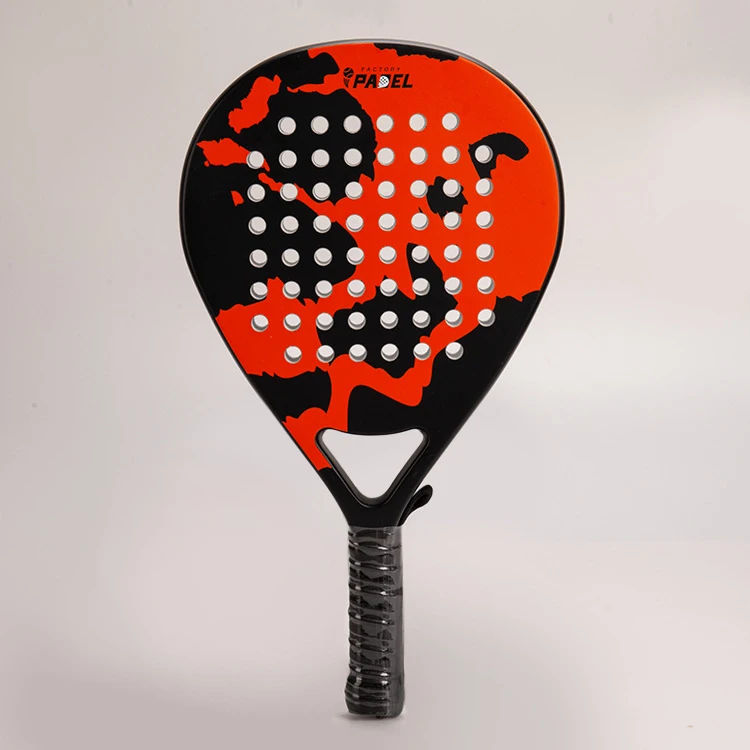
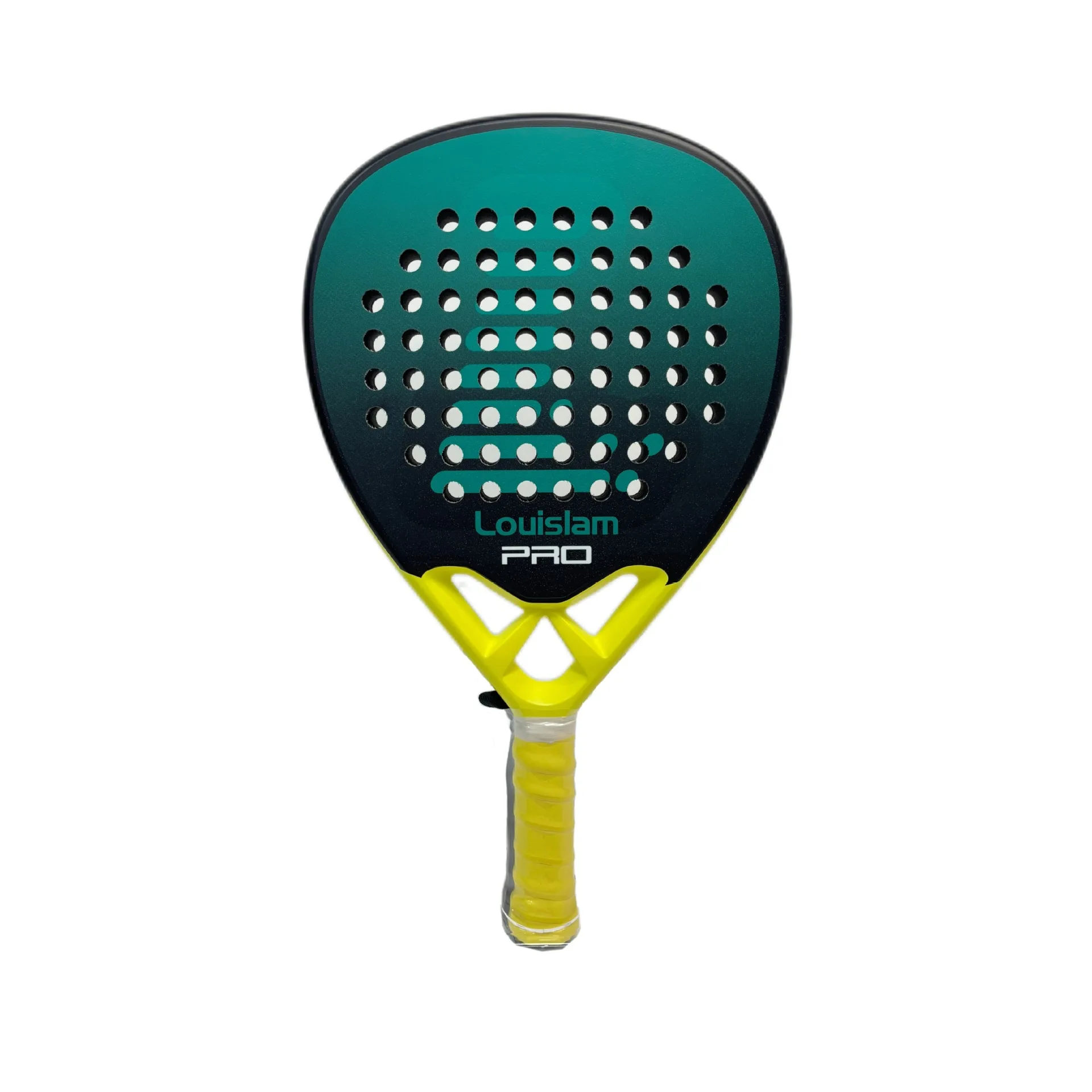
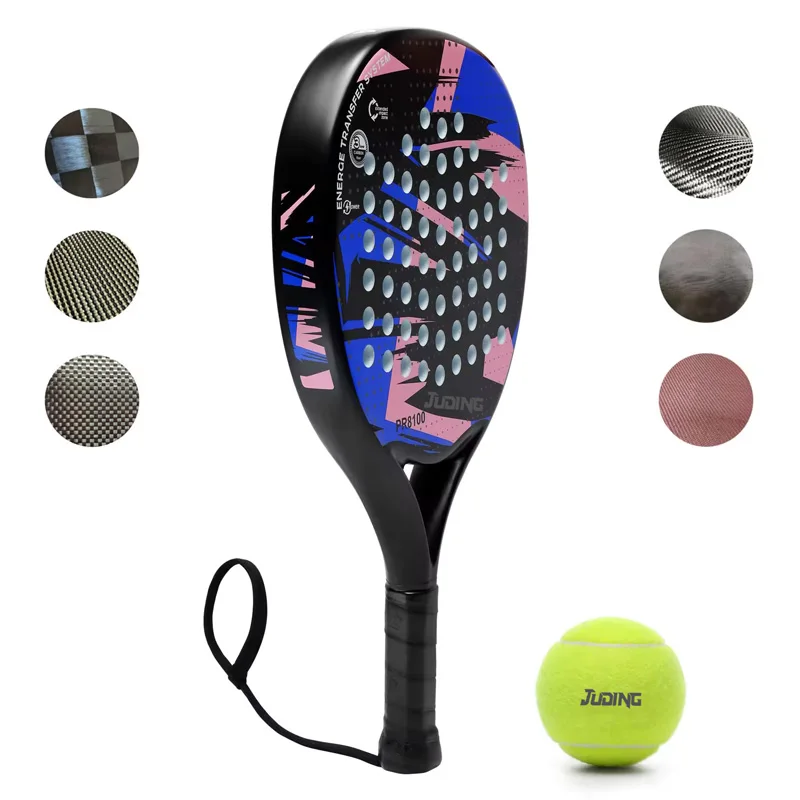
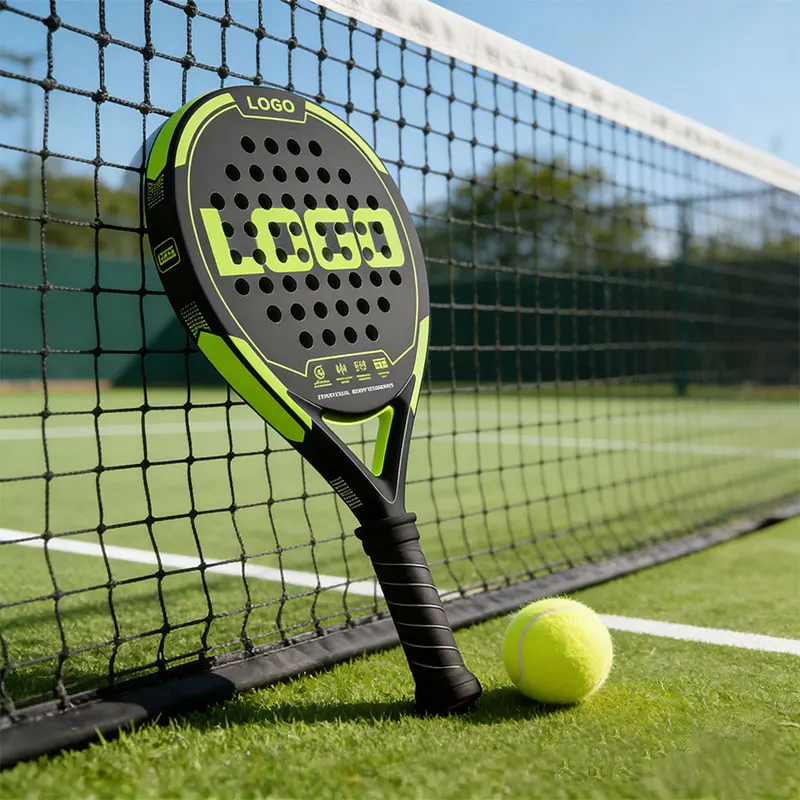
Launching a successful equipment line in the rapidly maturing padel industry requires moving far beyond generic catalog templates. Modern players are highly educated consumers who select equipment tailored specifically to their court side, physical biomechanics, and tactical tendencies. Consequently, developing a bespoke custom padel racket begins with selecting or tooling the foundational geometric mold architecture. Frame silhouette directly dictates the location of the sweet spot, the aerodynamic drag profile, and the rotational moment of inertia. Product managers typically anchor a collection around three foundational head shapes: round, teardrop, and diamond. Round molds locate the widest cross-section across the center of the face, establishing a low balance point between 250 and 260 millimeters that offers unmatched maneuverability and an expansive, forgiving sweet spot for right-side defensive strategists. Teardrop geometries shift structural mass slightly upward to around 265 millimeters, blending defensive forgiveness with added leverage for versatile all-court contenders. Finally, diamond silhouettes concentrate mass near the upper hoop tip, pushing the balance point past 270 millimeters to create a lethal, high-leverage weapon for left-side offensive smashers. Offering finely tunedcustom padel racket features across these distinct geometries allows brands to capture every segment of the competitive player market.
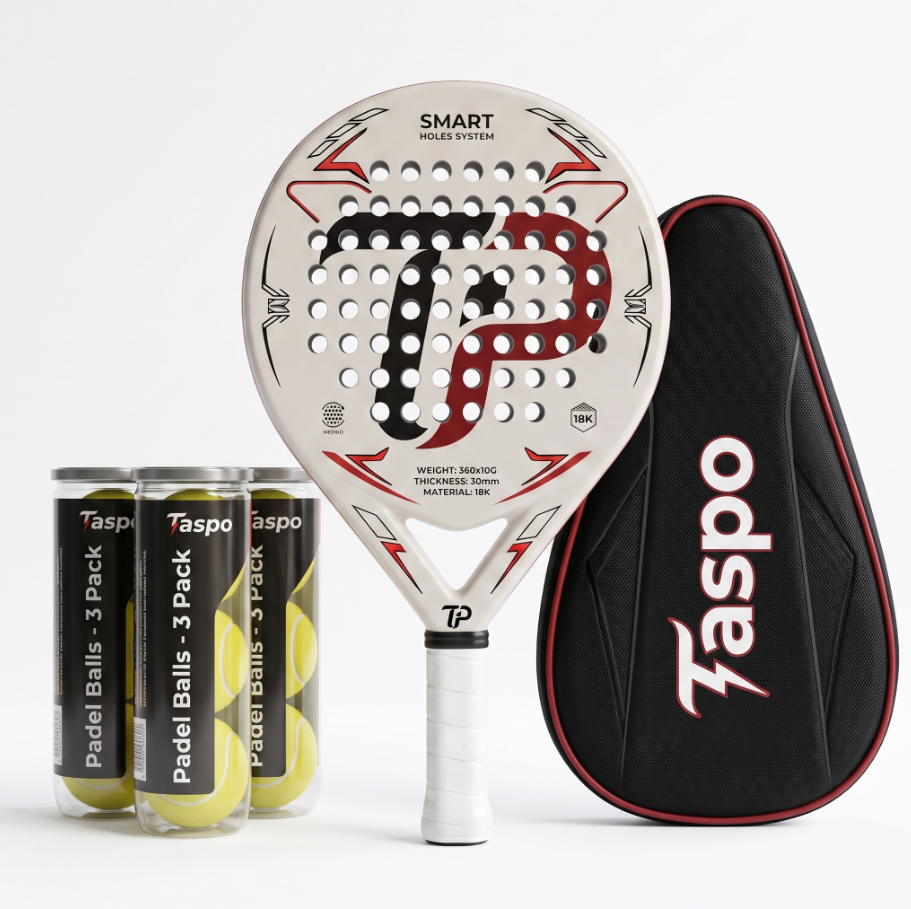
Once the external frame geometry is established, the mechanical soul of a custom padel racket is forged through its composite surface layup. The choice of structural fabric layered over the internal core governs how the paddle flexes upon ball impact, directly determining ball exit speed versus directional precision. Entry-level models often utilize braided fiberglass fabrics, which provide high elastic deformation and effortless rebound power at slow swing speeds, but lack the structural stiffness required for high-velocity tournament play. For premier athletic collections, product developers specify aerospace-grade carbon fiber padel paddle weaves classified by filament tow count, notably 3K, 12K, and 18K configurations. A 3K weave contains three thousand carbon micro-filaments per bundle, yielding a tightly woven, rigid surface that delivers crisp acoustic feedback and pinpoint accuracy during aggressive flat smashes. Conversely, an 18K fabric utilizes wider filament bundles that distribute impact energy across a broader matrix, creating a slightly more damped, progressive rebound response. Furthermore, forward-thinking brands now incorporate hybrid textiles—such as blending carbon fiber with impact-resistant Kevlar aramids or aluminized fiberglass—to stabilize paddle stiffness against seasonal temperature fluctuations, ensuring consistent playability from freezing winter indoor courts to blistering summer tournaments.
Beneath the visible carbon exterior lies the internal engine responsible for energy return and joint protection: the polymer foam core and throat bridge assembly. A standout trend in modern custom padel racket features is the transition from uniform mono-density foams to multi-layered sandwich core constructions. Historically, brands had to choose between soft low-density EVA foam (around 13 to 15 Shore hardness) for comfortable vibration absorption or rigid high-density black EVA (around 20 to 22 Shore hardness) for explosive attacking power. Today, advanced composite engineering fuses two thin outer layers of high-density EVA around a central plush core of ultra-soft foam. This dual-density architecture ensures that gentle defensive dinks activate the forgiving inner core, while violent overhead smashes engage the stiff outer foam layers for maximum ball acceleration. Simultaneously, engineering the heart or bridge of the frame is paramount for torsional stability. By integrating aerodynamic structural struts, asymmetric throat channels, and viscoelastic silicone inserts into the bridge, a skilled padel racket OEM can reduce harmonic vibration transmission to the handle by over thirty percent, effectively shielding competitive players from wrist strain and chronic elbow inflammation.
In modern tactical rallies where heavy slice volleys and kick smashes dominate point construction, surface friction and handle ergonomics represent decisive bespoke custom padel racket upgrades. Rather than settling for smooth gloss paint that causes the ball to skid across the face, premium brands integrate three-dimensional surface topography directly into the mold or finishing cycle. Molded 3D hexagonal decals, raised geometric ribs, or precision-applied crystalline silica sand coatings dramatically increase the friction coefficient during ball contact. This micro-grit bites into the fuzzy ball felt, enabling skilled players to generate massive rotational spin rates that cause rebounds to dive sharply off the back glass. Moving down the frame, handle customization has evolved into a major retail differentiator. Standard paddles often feature short, stubby handles that frustrate players transitioning from tennis. Customizing handle length from the standard 120 millimeters up to an elongated 140 millimeters provides ample room for two-handed backhand drives and increases whip leverage on overheads. Completing the ergonomic package with replaceable, antimicrobial sweat-wicking wrist straps and vibration-dampening octagonal butt caps elevates the product from a standard sporting tool into a luxury athletic instrument.
Transforming an ambitious list of technical specifications into a cohesive, retail-ready product line demands a manufacturing partner with deep composite R&D capabilities and disciplined quality control protocols. Attempting to coordinate custom mold tooling, prepreg carbon layup schedules, CNC hole drilling, and cosmetic water-decal application without experienced industrial oversight inevitably leads to delaminated faces and inconsistent weight tolerances. In this highly technical landscape, Taspo Sports stands out as a premier global manufacturer dedicated to advancing racket sports engineering. Equipped with precision multi-cavity thermoforming presses, automated five-axis CNC drilling centers, and climate-controlled composite curing rooms, Taspo Sports provides comprehensive OEM and ODM solutions for international sports brands. Whether a business seeks to engineer a proprietary bridge geometry for a bespoke custom padel racket or develop a complete carbon fiber padel paddle collection featuring multi-density EVA cores and 3D spin textures, Taspo Sports delivers unmatched industrial execution. By partnering with an authoritative padel racket OEM like Taspo Sports, brand owners secure strict weight tolerances held within plus or minus two grams, vibrant UV-resistant cosmetic finishes, and scalable production capacity, empowering them to launch distinctive equipment that dominates retail shelves and tournament courts worldwide.
 Hot News
2026-11-20
2026-11-20
2026-11-20
2026-11-20
2026-11-20
2026-11-20
 EN