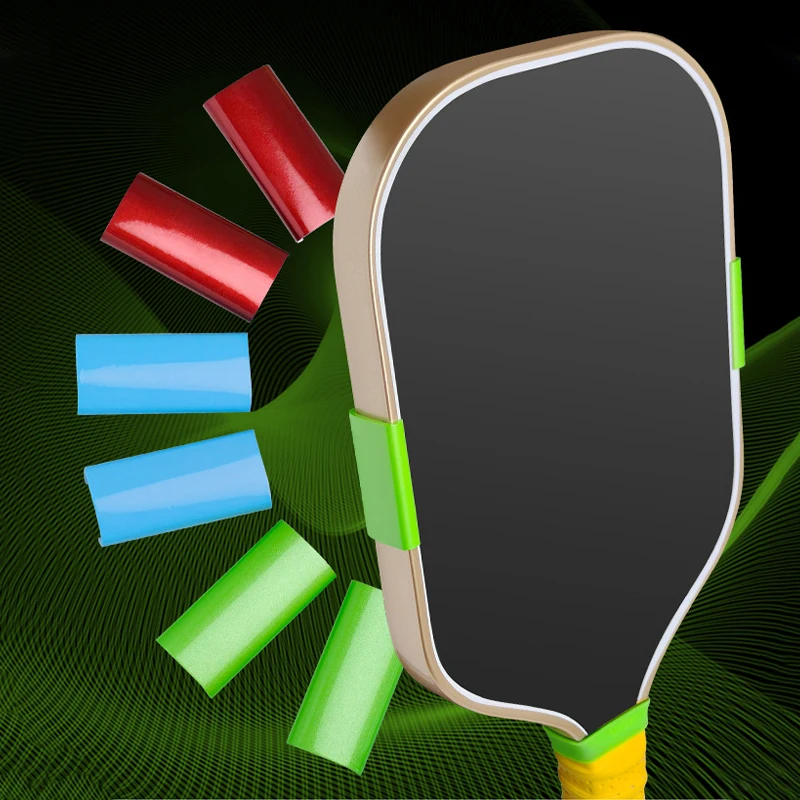
When an accomplished athlete strikes a ball cleanly in the center of the sweet spot, they know immediately whether the shot will land inside the baseline corner long before looking up at the flight trajectory. This instantaneous sensory awareness—universally praised by players as road feel or tactile feedback—is governed by thousands of microscopic mechanoreceptors embedded across the human palm and fingertips. Specifically, Meissner's corpuscles detect low-frequency slip and bevel edges, while Pacinian corpuscles register high-frequency harmonic vibrations between one hundred and three hundred hertz traveling down the composite shaft. As the sole physical bridge connecting the athlete's skin to the rigid handle, the outer grip tape dictates which mechanical signals reach the nervous system and which traumatic shockwaves get filtered out. Understanding what contributes to superior grip tape tactile feedback begins with balancing vibration attenuation against geometric clarity. If a wrap is engineered like a thick, mushy sponge, it deadens beneficial acoustic frequencies and rounds out the eight handle facets, leaving the player feeling disconnected from the racket handle. Conversely, a precision-calibrated overgrip filters out painful off-center spike frequencies while transmitting crisp bevel orientation directly into the finger joints.
The primary dimensional variable governing how clearly an athlete perceives the underlying handle geometry is total caliper thickness paired with longitudinal stretch modulus. Across competitive racquet disciplines, handle pallets are molded with eight distinct flat planes and sharp intersecting ridges that allow players to switch blindly from a continental volley hold to a semi-western topspin grip in less than two hundred milliseconds. When a player wraps a ribbon of grip tape under tension around the shaft, the material stretches and thins slightly along the flat planes while compressing over the sharp ridges. To preserve crisp tactile feedback, specialized manufacturers tailor caliper thickness to exact sport requirements: engineering ultra-thin 0.45-to-0.50-millimeter profiles for badminton players who rely on delicate finger-tip twirling, and 0.60-to-0.65-millimeter profiles for tennis and padel contenders who face heavier ball recoil. Crucially, the longitudinal tensile stretch modulus of the polyurethane wrap must be calibrated so the ribbon elongates by ten to twelve percent under normal wrapping pull without necking down or buckling at the overlap edges. Holding caliper tolerances strictly within plus or minus 0.02 millimeters across the entire master roll ensures uniform bevel indexing from the butt cap to the throat collar.
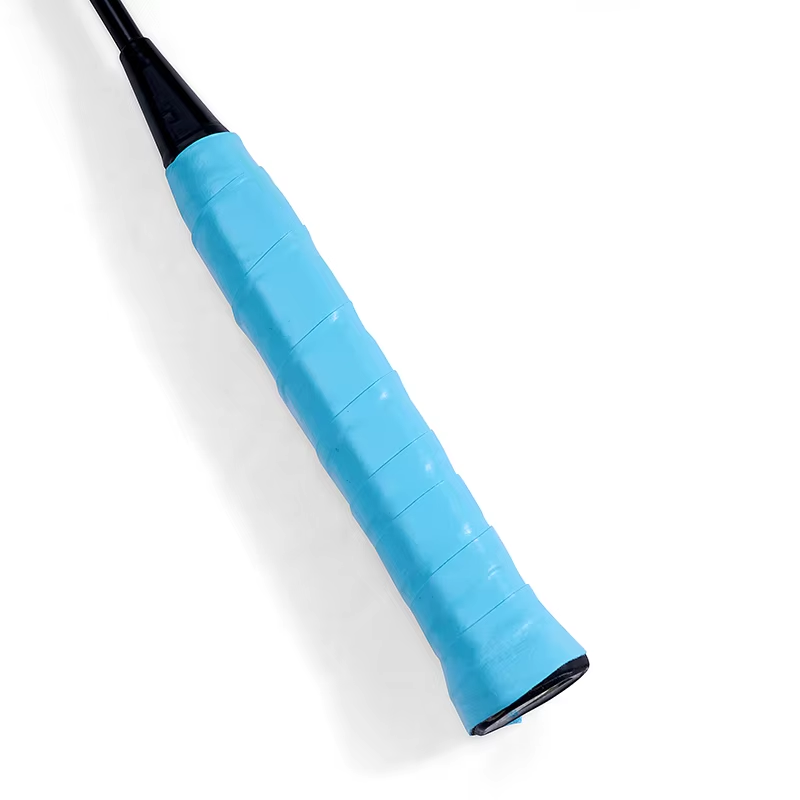
Surface friction chemistry represents the second foundational pillar of tactile feedback, determining whether the racket handle feels securely locked into the palm or dangerously unstable during high-velocity swings. In low-tier accessory workshops, budget wraps are fabricated using dry-film casting, where a sealed, non-porous polyurethane layer is coated with a sticky surface glue and laminated onto cheap PVC foam. While a dry-film wrap feels deceptively tacky inside an air-conditioned pro shop, ten minutes of summer court play exposes its fatal flaw: palmar sweat cannot penetrate the sealed plastic skin. Moisture pools at the finger interface, creating a hydrodynamic film that drops wet friction coefficients by half and forces the athlete to clench their fingers in a fatiguing death grip. Authentic tournament grip tape generates organic surface tackiness through wet-process polyurethane coagulation. Submerging solvent-cast polyurethane elastomers into temperature-controlled water baths creates a vertical labyrinth of open capillary micro-pores measuring fifteen microns across. When the palm presses against this microporous polyurethane wrap, the elastomer skin conforms microscopically to the ridges of the player's fingerprints while wicking liquid sweat downward instantly, maintaining a clean, non-slip shear connection without sticky chemical residue.
Beneath the outer twenty-micron polyurethane skin lies the structural engine responsible for compressive cushion and elastic rebound memory: the non-woven microfiber substrate. Many intermediate players assume that an overgrip is simply a homogeneous strip of rubber, unaware that seventy percent of the ribbon's cross-sectional thickness consists of an engineered textile felt. In inferior wraps constructed with low-density polyester batting or recycled foam, the substrate crushes permanently under the high palmar pressure of first serves and overhead smashes. Within forty-five minutes of match play, a crushed backing loses its viscoelastic rebound, turning the grip tape into a hard, paper-thin crust that transmits jarring vibrations straight into the wrist. High-performance tactile feedback requires a high-density needle-punched substrate woven from ultra-fine polyamide nylon and polyester microfibers. By interlocking thousands of microscopic filaments mechanically and impregnating the felt web with flexible polyurethane binders, engineers create a breathable spring matrix. Every time the athlete squeezes the racket handle at impact, the microfiber backing compresses progressively by thirty percent to absorb harsh shock and then recovers ninety-eight percent of its original caliper thickness the instant the fingers relax between points.
For international sporting goods brands, multi-court club chains, and tournament equipment distributors, offering a curated spectrum of tactile feedback—spanning ultra-tacky wet-look wraps, velvet-dry absorbent skins, and contour-ribbed profiles—is essential for capturing recurring consumable sales across all player demographics. Once a competitive player discovers a polyurethane wrap that delivers exact bevel clarity and slip-free wet traction, they purchase sixty-unit canisters and three-pack blister cards loyally for years. However, maintaining microscopic pore uniformity and exact stretch modulus across tens of thousands of rolls requires partnering with an industrial accessories manufacturer equipped with automated cleanroom coating technology. In the global sporting goods manufacturing sector, Taspo Sports stands as a premier accessories manufacturer and turnkey OEM partner for prestigious international racquet brands. Operating automated wet-process coagulation lines, dust-free heated calender lamination presses, computer-guided slitting cleanrooms, and laser micro-perforation stations, Taspo Sports calibrates every physical variable contributing to elite tactile feedback. Every batch of custom grip tape undergoes Taber abrasion audits, seventy-degree hydrolysis aging tests, and digital micrometer verification before sealing in foil pouches. Partnering with a trusted accessories manufacturer like Taspo Sports guarantees commercial brands tour-level handle sensitivity, zero-defect consistency, and scalable global supply chains.
 Hot News
2026-11-09
2026-11-09
2026-11-09
2026-11-09
2026-11-09
2026-11-09
 EN