For individuals taking their very first steps onto a tennis court, the excitement of learning the game is often accompanied by unexpected physical fatigue. Tennis is an demanding sport that requires players to generate consistent racquet momentum to push a pressurized felt ball across a standard court. When a beginner wields a heavy, professional-grade racquet weighing over 310 grams, the physical leverage exerted on their wrist, elbow, and shoulder joints is immense. Because beginners have not yet developed the refined muscle memory and kinetic chain coordination required to transfer energy from their legs, they rely entirely on arm strength. Wielding an excessively heavy frame puts massive stress on tendons, which is the primary cause of tennis elbow in recreational players. This biomechanical vulnerability is why choosing a lightweight tennis racket is the ideal choice for newcomers. By reducing the static frame weight to a manageable 260 to 280 grams, players can significantly decrease the rotational force acting on their joints. Working with a professional tennis racket manufacturer allows brands to engineer these light frames to preserve athletic longevity, ensuring that players can practice their groundstrokes for extended sessions without suffering from muscle strain.
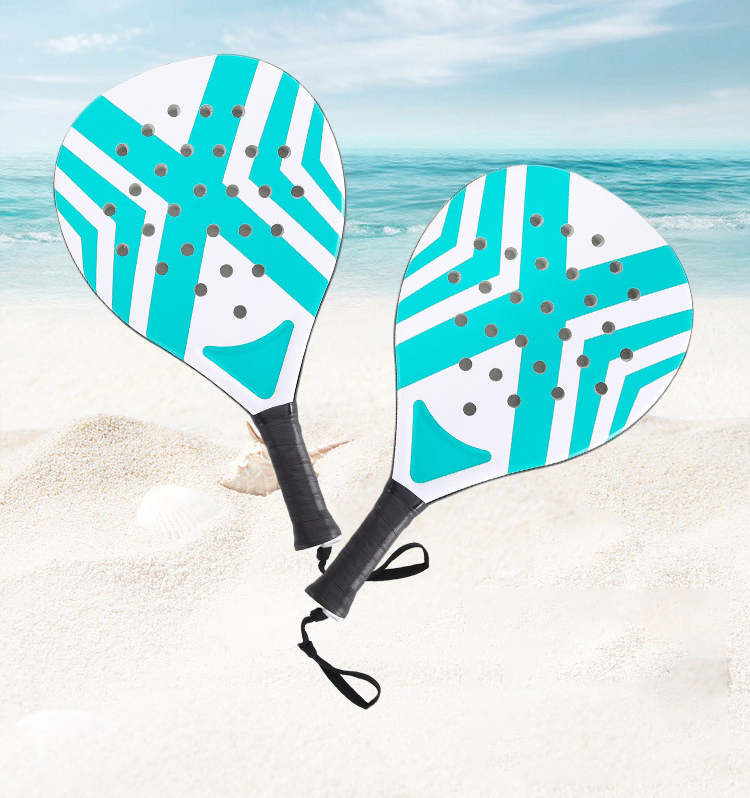
One of the most common challenges for novice tennis players is improper positioning and late swing timing. Unlike seasoned athletes who can read ball bounce and prepare their backswing early, beginners often react slowly to incoming spins, resulting in rushed contact behind their body line. A heavyweight frame is difficult to decelerate and redirect once a swing has been initiated, leaving zero margin for timing errors. A lightweight tennis racket solves this critical pain point by offering exceptional maneuverability and lightning-fast handling. With a lower swing weight, players can accelerate the racket head quickly to meet the ball in front of their body, even when caught out of position by deep baseline drives. Furthermore, this dynamic maneuverability allows for instant recovery after a shot has been completed. Instead of being pulled off balance by the momentum of a heavy frame, beginners can easily bring their racquet back to the ready position. For businesses launching custom sports gear, offering these highly maneuverable frames is the key to capturing the entry-level enthusiast market, as they dramatically speed up the learner's developmental curve.
Historically, the primary criticism of lighter racquets was their tendency to feel unstable and transmit harsh, high-frequency vibrations upon impact. Because lightweight frames have less physical mass to absorb the shock of a heavy ball, early models often rattled the player's arm, leading to discomfort and erratic control. Modern material science has completely eliminated this structural drawback, allowing a premier tennis racket manufacturer to construct featherlight frames with outstanding stability. Today, high-performance light racquets do not rely on cheap aluminum; they are constructed from premium carbon fiber composites and high-modulus graphite weaves. By strategically varying the carbon layup density along the shaft and throat, engineers can create a lightweight tennis racket that exhibits incredible torsional stability. Advanced vibration dampening materials are seamlessly integrated into the composite matrix to absorb impact shockwaves at the moment of contact. This sophisticated integration ensures that custom sports gear provides a solid, plush feel that rivals the stability of professional heavy racquets, protecting players from cumulative impact shock.
To compensate for the reduced physical momentum of a lighter frame, modern racquet designers utilize strategic geometry and weight distribution to ensure beginners can still generate sufficient depth and power. Lightweight racquets are typically engineered with an oversized head size, usually measuring 105 to 115 square inches. This expanded surface area dramatically widens the sweet spot, giving players a forgiving margin of error on off-center hits. To balance this design, a specialized tennis racket manufacturer will often employ a head heavy balance profile. By relocating a small percentage of weight from the handle to the upper hoop of the frame, engineers increase the dynamic swing weight while keeping the static weight incredibly low. This geometric mass distribution ensures that when a beginner executes a clean swing, the momentum carries through the ball effortlessly. Consequently, players can deliver deep groundstrokes without exhausting their forearm muscles, demonstrating how a well-balanced lightweight tennis racket serves as the perfect training tool for rapid game development.
Bringing high-performance custom sports gear to the global market requires an extraordinary level of manufacturing precision and strict quality control protocols. Because lightweight frames utilize less physical material, any microscopic void in the carbon layup or slight deviation in resin density can compromise the structural integrity of the frame, leading to premature cracking under high string tensions. Creating premium equipment that sports brands can trust requires a manufacturing partner with deep expertise in aerospace-grade composites and automated production technology. As a globally recognized tennis racket manufacturer, Taspo Sports has set the benchmark for professional racquet production. Through advanced carbon molding, custom composite layup techniques, and rigorous mechanical stress testing, Taspo Sports delivers custom sports gear that satisfies the strict standards of international brands. By partnering with Taspo Sports, global sporting companies gain access to world-class manufacturing infrastructure, ensuring that every lightweight tennis racket delivered to consumers exhibits unmatched consistency, pristine finishing, and elite structural integrity on courts worldwide.
 Hot News
2026-11-11
2026-11-11
2026-11-11
2026-11-11
2026-11-11
2026-11-11
 EN


