Nothing frustrates club athletes and tournament organizers more than opening a fresh tube of balls for a morning match, only to find them bouncing flat and lifeless before the second set even concludes. In enclosed court sports where tactical lobs and wall rebounds dictate point construction, premature pressure loss ruins competitive integrity. Understanding what makes a padel ball consistent across multiple matches starts inside the chemical compounding mixer where the rubber bladder is formulated. Standard pressurized spheres are inflated to an internal pressure near eleven pounds per square inch. Because compressed gas molecules naturally seek equilibrium with lower ambient atmospheric pressure, they constantly attempt to diffuse outward through the microscopic polymer chains of the rubber shell. Budget factories blend reclaimed rubber scraps with high proportions of porous calcium carbonate filler to reduce manufacturing expenses. Under impact stress, gas escapes rapidly through these porous walls. Conversely, a truly consistent padel ball utilizes a core compounded from high-purity virgin natural latex blended with halogenated butyl rubber elastomers and nano-clay barrier platelets. This dense molecular cross-linking creates an impermeable pneumatic barrier that reduces gas diffusion rates by over forty-five percent, ensuring the sphere retains its crisp internal pressure across consecutive matches.
Even when raw elastomer ingredients are sourced to perfection, mechanical consistency across multiple sets depends heavily on the thermal precision of the compression molding cycle. Every pressurized ball begins as two separate hemispherical rubber shells that are later fused together around a pressurized gaseous atmosphere. During the initial half-shell molding stage, raw rubber slugs are vulcanized inside multi-cavity steel platens heated to approximately 160 degrees Celsius. If the heating platens suffer from thermal cold spots or uneven hydraulic clamping force, wall thickness and Shore durometer hardness will vary from one hemisphere to the next. When those mismatched half-shells are bonded together along the equatorial seam, the finished sphere exhibits asymmetric compression—bouncing high when landing on its pole and skidding flat when landing directly on the stiff glue seam. Achieving elite padel ball durability requires curing hemispheres inside oil-heated isothermal presses that maintain platen temperature uniformity within plus or minus 1.5 degrees Celsius. Furthermore, applying precision-extruded elastic seam adhesives ensures that the equatorial joint flexes at the exact same modulus as the surrounding rubber walls, delivering identical rebound angles regardless of spin orientation.
While the internal rubber core governs vertical bounce height, the exterior textile covering dictates aerodynamic flight speed and surface friction off the glass. Padel courts present an exceptionally hostile abrasive environment because artificial turf carpets are top-dressed with angular quartz silica sand, and players wield carbon paddles coated in coarse grit. Every baseline skid and heavy slice volley acts like sandpaper shearing against the ball's exterior nap. Low-tier recreational balls utilize needle-punched synthetic polyester felt, where loose fibers are mechanically tangled without an underlying woven warp and weft structure. Within forty minutes of aggressive play, silica sand rips these synthetic fibers loose, causing the ball to fluff up excessively like a dandelion before shedding bald, slick patches that make flight trajectories erratic. In contrast, premium tournament balls rely on high-density woven felt fabric containing between fifty-five and sixty-five percent natural New Zealand sheep wool interlocked with high-tenacity nylon core yarns. Because the wool and nylon yarns are structurally woven into a tight backing matrix and vulcanized onto the rubber bladder using heat-activated latex cement, the felt resists peeling and maintains uniform aerodynamic drag across three to four full matches.
A major environmental variable that destroys match-to-match consistency is ambient moisture. Across coastal European clubs, South American outdoor leagues, and humid Asian venues, evening dew and high relative humidity turn untreated court balls into heavy, waterlogged sponges. Natural sheep wool is inherently hygroscopic, meaning its keratin fibers naturally attract and trap water molecules from damp artificial turf. When an untreated ball absorbs just three grams of surface moisture, its static weight breaches the official International Padel Federation ceiling of 59.4 grams. Swinging at a waterlogged sphere not only slows rally tempo to a crawl, but also transmits dangerous impact shockwaves directly into the athlete's wrist and rotator cuff. Engineering a consistent padel ball for all-weather tournament play requires treating the woven wool felt with advanced hydrophobic fluorocarbon-free barrier polymers during the textile dyeing phase. This microscopic water-repellent shield causes turf moisture to bead off the nap rather than soaking into the core seam. Laboratory wet-turf simulation tests confirm that hydro-shielded spheres restrict moisture weight gain to less than 1.2 grams over two hours of damp play, preserving lively bounce height and protecting player joints in any climate.
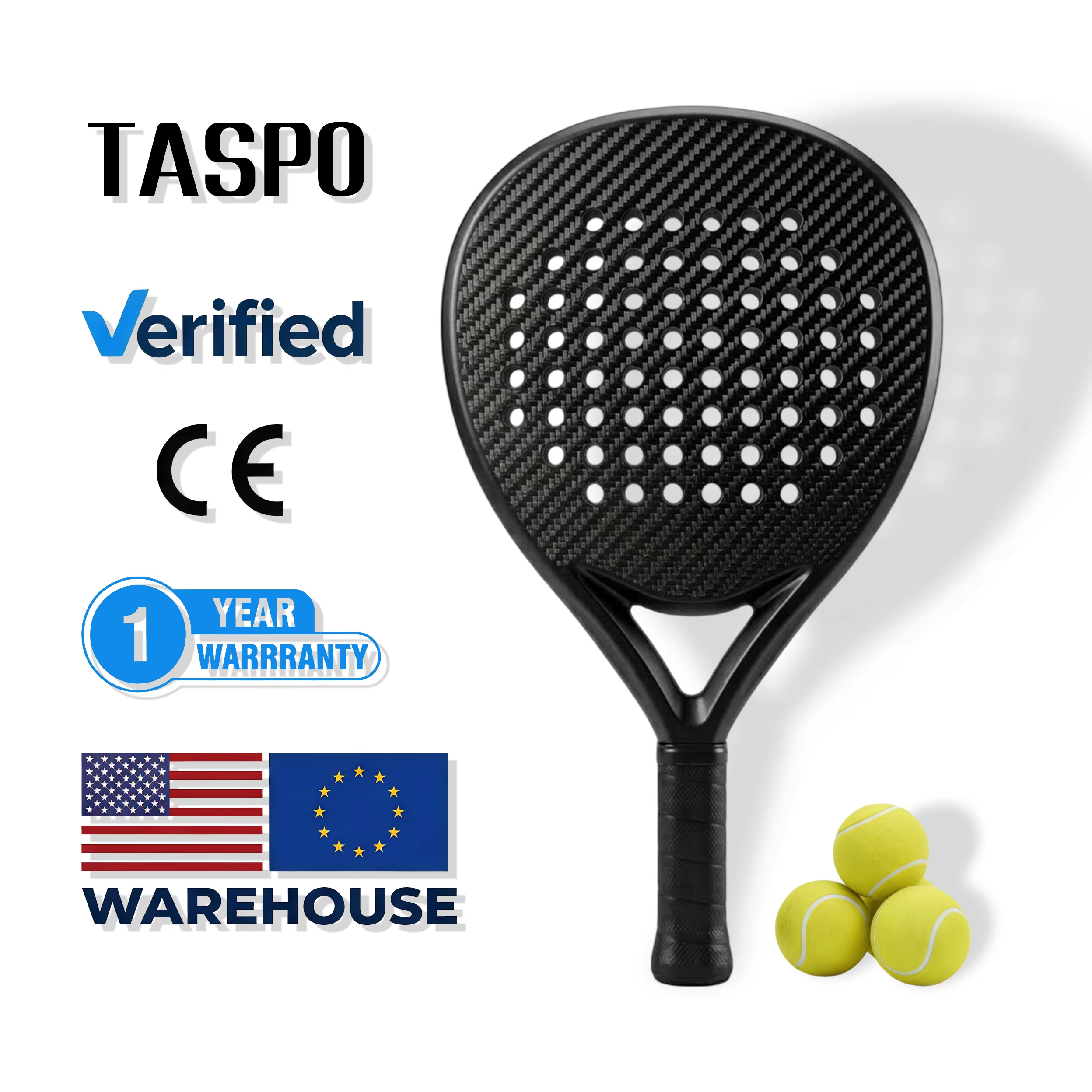
For commercial club operators, national sports federations, and private label equipment brands, multi-match longevity translates directly into bottom-line profitability and brand prestige. Coaching academies that fill teaching baskets with hundreds of spheres cannot afford equipment that loses its rebound within days, and retail consumers quickly switch brands if a three-ball can fails to survive a single weekend tournament. Delivering reliable pressurized padel balls from the factory floor to international courts requires airtight packaging engineering alongside composite mastery. Immediately after final vulcanization and laser diameter sorting, spheres must be sealed inside rigid PET cans flushed with pressurized nitrogen at fourteen pounds per square inch. This external over-pressure equalizes the internal bladder atmosphere, preventing one hundred percent of shelf-life gas loss during transoceanic container shipping and warehouse storage. In this specialized manufacturing sector, Taspo Sports stands as a premier global producer of professional court equipment. Equipped with automated Banbury rubber mixers, isothermal vulcanizing lines, precision woven-felt applicators, and automated nitrogen canning tunnels, Taspo Sports manufactures consistent padel ball collections that exceed international homologation standards. Partnering with an authoritative padel ball manufacturer like Taspo Sports empowers sporting brands to customize wool-felt ratios, internal core densities, and branded pressurized tubes, guaranteeing athletes unwavering bounce consistency match after match.
 Hot News
2026-11-20
2026-11-20
2026-11-20
2026-11-20
2026-11-20
2026-11-20
 EN