Walking off the court after losing a tight three-set match often leaves players questioning their shot selection, when in reality their equipment geometry was working against them the entire time. Countless recreational and intermediate competitors gravitate toward aggressive, head-heavy frames endorsed by professional power hitters, only to suffer from mistimed volleys, balls dying in the bottom of the net, and throbbing lateral epicondylitis in their forearm. Knowing when to select a round shaped padel racket transforms defensive scrambles into composed point construction. When an opponent fires a heavy slice into the back corner glass, a player rarely has time to set their feet and execute a textbook full swing. In those split-second defensive lunges, a forgiving padel racket with a centralized hitting zone absorbs off-center shock and redirects the ball safely deep into rival territory without taxing the wrist or elbow joints.
Understanding frame architecture starts with examining how mass distribution alters swing weight and sweet spot location across the three primary silhouettes: diamond, teardrop, and round. A diamond frame shifts carbon mass toward the top tip of the head, shrinking the effective hitting zone and moving it high toward the twelve o'clock edge to maximize leverage during overhead smashes. Teardrop models split the difference with a mid-high balance. By contrast, a round shaped padel racket features a symmetrical circular head profile that expands the sweet spot directly across the geometric center of the face. Biomechanical laboratory testing shows that the usable sweet spot on a round control padel racket covers up to twenty-eight percent more surface area than an equivalent diamond mold. Because the optimal impact zone sits closer to the player's gripping hand, hand-eye coordination becomes significantly more intuitive, drastically reducing torsional twisting when contact occurs a few centimeters away from the center axis.
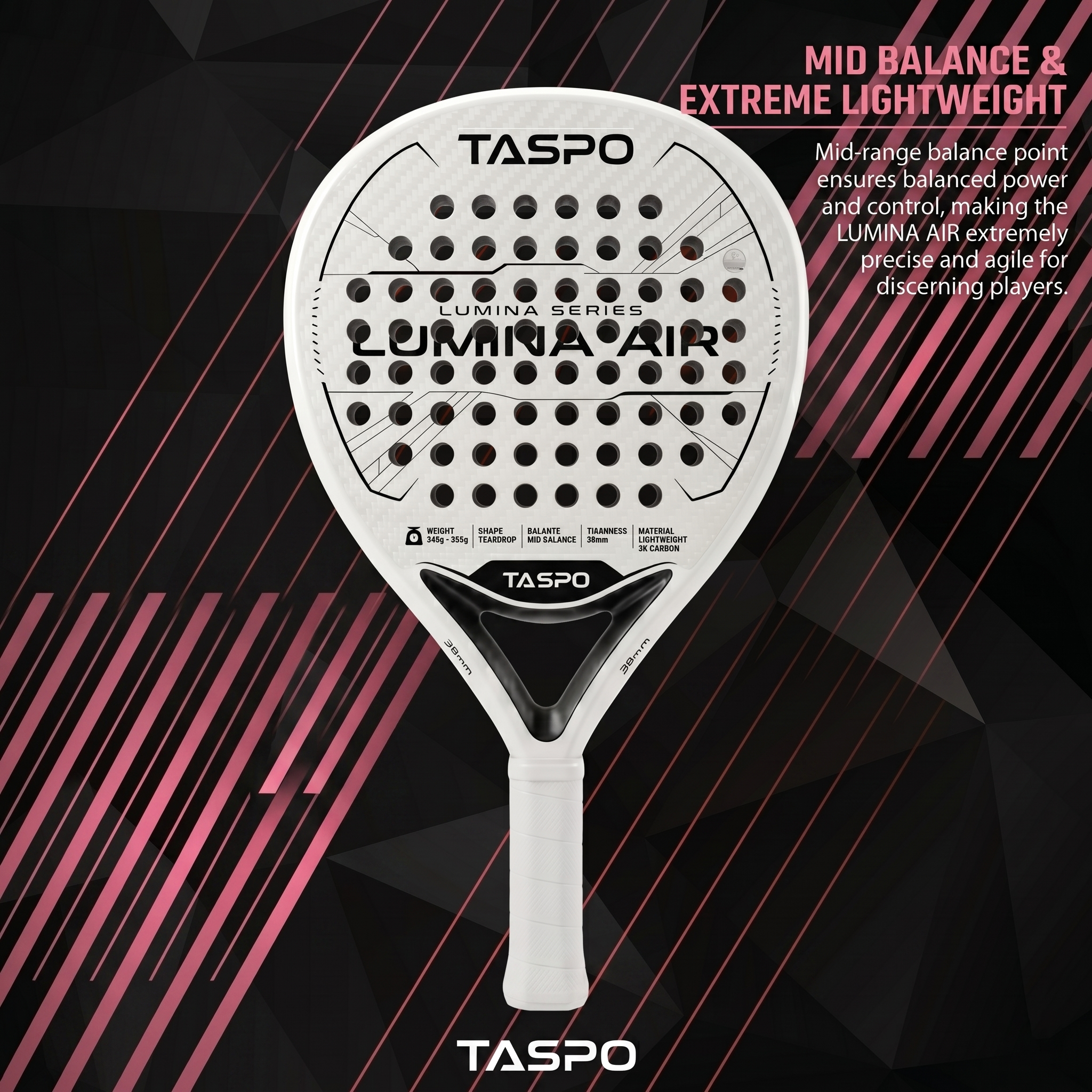
The magic of a round shaped padel racket comes alive when its low balance point is paired with the right internal foam core and exterior carbon fiber layup. Typically, a low balance padel racket places its center of gravity between two hundred and fifty-two and two hundred and sixty millimeters measured from the bottom butt cap. This handle-biased weight distribution lowers the moment of inertia, making a three-hundred-and-sixty-five-gram frame feel remarkably light and whippy during rapid grip switches from forehand to backhand. However, geometry alone does not dictate ball output. Pairing a round mold with a low-density soft EVA core creates a trampoline effect that launches the ball effortlessly during low-speed defensive blocks, ideal for developing players or cold weather conditions. Conversely, combining that same round shaped padel racket geometry with a medium-hard Black EVA core and a stiff 12K or 18K woven carbon fiber padel racket face gives advanced tournament players crisp tactile feedback, pinpoint directional accuracy on chiquitas, and surprising punch when stepping in to finish points at the net.
Tactical data from competitive doubles academies illustrates why even elite athletes frequently choose round molds over power-oriented frames. In traditional court positioning, the right-side or drive player acts as the tactical architect, responsible for patient cross-court exchanges, deep defensive lobs, and setting up the left-side partner for offensive overheads. During an eight-week performance study at a premier training center in Madrid, thirty-six advanced right-side players alternated between a head-heavy teardrop frame and a precision-balanced round control padel racket weighing three hundred and sixty-two grams. Video tracking revealed that when using the round shaped padel racket, players improved their defensive lob depth accuracy—landing balls within one meter of the opponent's baseline glass—by twenty-four percent. Furthermore, unforced errors during fast reflex volley exchanges at the net dropped by eighteen percent, proving that superior maneuverability directly translates into more points won during high-pressure tournament rallies.
Deciding when to transition to a round shaped padel racket comes down to evaluating four specific playing scenarios and physical benchmarks. First, athletes who build their game around counter-attacking defense, lobs, and precise placement into the side wire mesh benefit immediately from the enlarged central sweet spot. Second, players who frequently compete on fast indoor courts or at high altitudes—where the ball naturally flies quickly—need a control padel racket to tame excess rebound speed and keep drives inside the glass walls. Third, anyone recovering from tennis elbow, wrist tendinitis, or shoulder fatigue should prioritize a low balance padel racket fitted with vibration-dampening EVA cores and carbon-kevlar bridge stabilizers. Finally, intermediate players transitioning from tennis or squash find that the hand-close sweet spot of a round carbon fiber padel racket shortens their adaptation curve, allowing them to master wall rebounds without fighting a top-heavy swing weight.
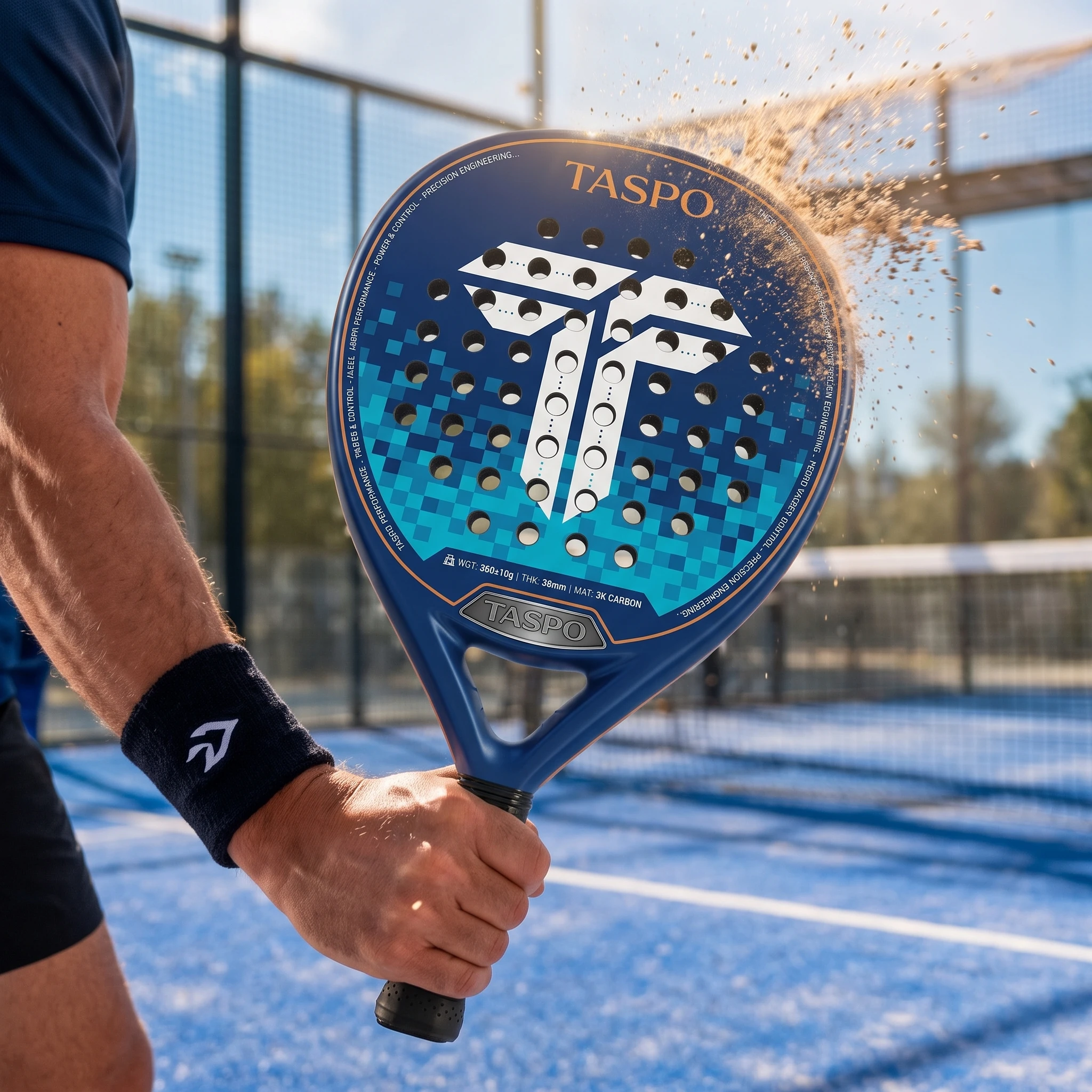
Developing a high-performing round shaped padel racket line that satisfies everyone from weekend club regulars to right-side tournament pros requires world-class composite manufacturing capabilities. Taspo serves as a trusted manufacturing partner operating standardized self-owned factories backed by more than one hundred and thirty specialized engineers. Utilizing advanced autoclave curing, resin transfer molding, and precision 3D CNC mold fabrication, Taspo crafts custom carbon fiber padel racket collections across round, teardrop, and diamond geometries with exact balance tolerances down to plus or minus two millimeters. Clients can customize every technical layer—from 3K, 12K, and 18K carbon weaves to multi-density EVA cores, 3D textured spin surfaces, and ergonomic anti-vibration handles—alongside matching court bags, balls, and overgrips. Every control padel racket produced by Taspo passes through seven rigorous quality inspection stages before shipment, supported by seven-to-fifteen-day rapid prototyping and twenty-four-hour engineering service to help global sports brands dominate their regional markets.
 Hot News
2026-11-20
2026-11-20
2026-11-20
2026-11-20
2026-11-20
2026-11-20
 EN