Digging out a low kitchen dink is one of the most satisfying plays in racket sports, right up until the top corner of a prized carbon paddle scrapes across rough asphalt. Smart players protect their investment with protective strips, yet many end up frustrated when their freshly installed pickleball edge tape bubbles up along the top curve or peels back after a single humid afternoon session. Learning how to apply pickleball edge tape without air bubbles is more than a cosmetic exercise; trapped air pockets and folded creases allow court grit and moisture to seep underneath the adhesive layer. Once sand grains compromise the bond, the strip catches on the court surface during low backhand scoops, creating drag and exposing the fragile edge guard or raw carbon rim beneath. Achieving a factory-smooth, second-skin seal requires combining proper surface decontamination, correct strip width sizing, and a disciplined thumb-tension installation method.
As paddle manufacturing shifted from traditional injection-molded plastic rims to edgeless and unibody thermoformed carbon fiber frames, protective accessories had to evolve alongside them. Early players relied on standard electrical tape or rigid vinyl hockey strips, both of which lacked the multi-axial elasticity needed to wrap around tight ten o'clock and two o'clock paddle corners without buckling. Today, specialized pickleball paddle edge tape utilizes high-density thermoplastic polyurethane and cross-linked synthetic leather compounds engineered with controlled four-way stretch. Furthermore, leading equipment designers introduced precision-die-cut sawtooth or V-notch edges along the outer borders of the strip. When a serrated paddle edge guard tape bends around a compound curve—moving simultaneously across the flat profile of the rim and tapering down onto the bevel—those V-shaped teeth close together seamlessly rather than overlapping into bulky ridges. That geometric innovation eliminates the root cause of corner air bubbles before the adhesive ever touches the frame.
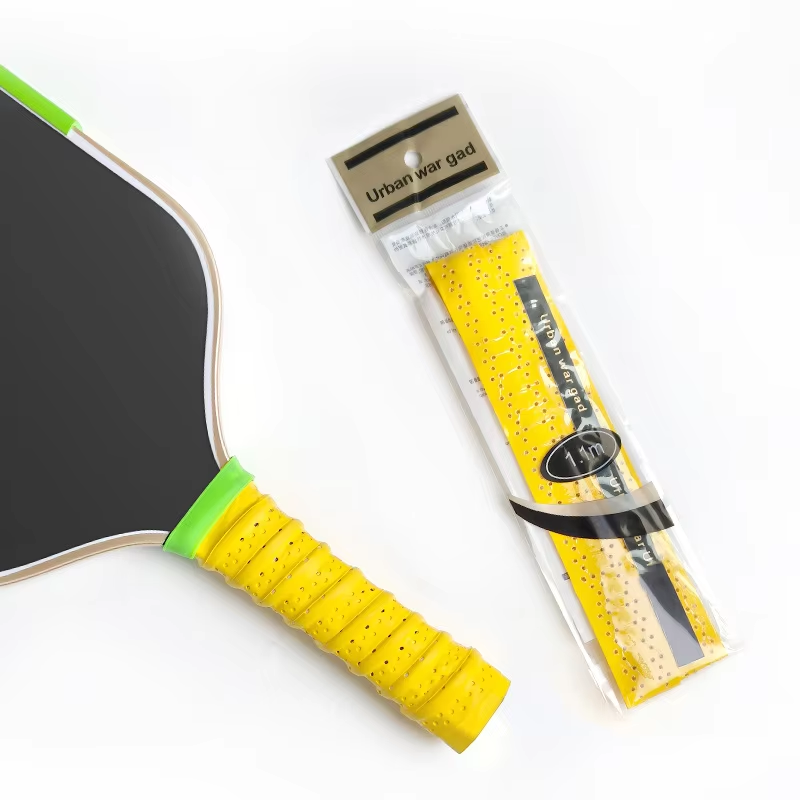
One of the most common mistakes players make before unrolling a single inch of custom pickleball edge tape is choosing a width that fights their paddle core thickness. Modern competitive paddles generally fall into two primary core categories: fourteen-millimeter power models and sixteen-millimeter control models, along with occasional thirteen-millimeter speed frames or twenty-millimeter defensive builds. If an athlete applies a wide twenty-six-millimeter pickleball edge tape onto a slim fourteen-millimeter frame, the excess overhang wraps too far onto the textured hitting face, trapping air along the beveled step where the edge guard meets the carbon sheet. Conversely, a narrow twenty-millimeter strip on a thick sixteen-millimeter core leaves the outer rims vulnerable to court rash. For optimal bubble-free adhesion, fourteen-millimeter paddles pair best with twenty-millimeter to twenty-two-millimeter strips, while sixteen-millimeter paddles demand twenty-four-millimeter to twenty-six-millimeter pickleball paddle edge tape. Matching the exact millimeter profile ensures the outer tabs sit flush against the transition bevel without bridging over empty space.
Executing a flawless installation starts with a two-minute prep routine on a clean workbench. First, wipe the entire perimeter of the paddle rim using a microfiber cloth dampened with seventy percent isopropyl alcohol to strip away skin oils, manufacturing release agents, and court dust, then let it dry completely for sixty seconds. Next, locate the exact center of the pickleball edge tape and peel back only two inches of the release liner from the middle, keeping the side backings intact. Align that exposed midpoint directly at the twelve o'clock apex of the paddle head and press the spine down firmly with the pad of the thumb before smoothing out the side wings. Working down one side toward the handle throat, peel the liner back in small two-inch increments while applying steady, roughly ten-percent forward stretch tension with one hand and chasing the center spine with the opposite thumb. Pressing the center backbone of the paddle edge guard tape first forces any trapped air outward toward the open side margins. Once both sides are anchored down to the four o'clock and eight o'clock throat shoulders, running a warm hairdryer on low heat over the corners for ten seconds activates the pressure-sensitive adhesive for a permanent, wrinkle-free lock.
Serious tournament players frequently layer protective pickleball edge tape directly over tungsten or lead weighting strips to customize paddle stability, making adhesive chemistry a critical performance factor. Low-grade rubber-based glues melt under summer sun exposure, oozing sticky black residue across the paddle face and losing structural grip when exposed to palm sweat. A professional-grade custom pickleball edge tape utilizes solvent-free medical or automotive acrylic pressure-sensitive adhesive engineered to bond tenaciously to thermoplastic polyurethane guards and raw carbon fiber while peeling away cleanly after thirty hours of hard court abuse. Additionally, athletes should account for mass adjustments: a standard eight-hundred-millimeter pre-cut protective strip weighs between one point five and two point five grams depending on thickness. While a single pickleball paddle edge tape application protects the rim with minimal impact on hand speed, double-layering thick armor strips at the head apex can raise swing weight by three to four points, noticeably altering kitchen reload speed.
For pickleball brands, club pro shops, and tournament organizers, offering branded protective accessories is one of the smartest ways to boost customer retention and recurring revenue. Taspo operates as a premier sports equipment manufacturer backed by over one hundred and thirty experienced engineers and self-owned standardized production facilities. Alongside manufacturing world-class carbon fiber pickleball paddles through advanced thermoforming and autoclave processes, Taspo specializes in engineering custom pickleball edge tape, high-tack overgrips, weighted tungsten strips, and court bags. Brand partners can customize sawtooth die-cut geometries, carbon-weave or metallic PU textures, exact width profiles from twenty to thirty millimeters, and embossed or UV-printed brand logos packaged in retail-ready blister packs. Every batch of paddle edge guard tape produced at Taspo passes through seven strict quality inspection stages testing peel strength, abrasion resistance, and residue-free removal. With rapid prototyping delivered in seven to fifteen working days and twenty-four-hour client support, Taspo makes it effortless for global sports brands to launch professional court accessories.
 Hot News
2026-11-20
2026-11-20
2026-11-20
2026-11-20
2026-11-20
2026-11-20
 EN