Stand beside the non-volley zone during a high-level pickleball match and you will witness a chess game played inches above the net cord. Athletes trade twenty consecutive soft dinks and third-shot drops, relying on muscle memory to judge exactly how high the perforated polymer sphere will rise off the acrylic court surface. Nothing ruins that delicate tactical rhythm faster than a sphere with an unpredictable bounce. When a club or retail brand orders cheap, unverified stock from a general trading catalog, players quickly notice that one ball pops up dangerously into the opponent’s smash zone while the very next shot hits a dead spot and skids along the floor like a wet bar of soap. High-speed camera audits conducted across indoor and outdoor pickleball venues reveal that low-grade two-piece welded spheres exhibit up to nineteen percent variance in vertical rebound height depending on which part of the plastic shell strikes the ground. Understanding why bounce consistency defines quality custom pickleball balls gives wholesale buyers and tournament directors the technical benchmark needed to separate tour-grade consumables from frustrating toy-store plastic.
Tracing the root cause of erratic court rebounds leads straight to how the polymer shell is formed inside the factory mold. Budget manufacturers produce spheres using basic two-piece injection molding, pressing two separate plastic cups together with glue or ultrasonic heat along a raised center seam. Because the equator where those two halves meet is nearly twice as thick and rigid as the top and bottom poles, a welded ball behaves like two different objects: landing on the seam launches a stiff, high kick, whereas landing on the thin pole produces a flat, mushy thud. In contrast, premium custom pickleball balls are engineered through dual-axis centrifugal rotational molding. Inside a computer-controlled rotomolding oven, seamless spherical cavities filled with measured polymer powder rotate simultaneously across vertical and horizontal axes while heating and cooling. Centrifugal force distributes the molten resin into a completely uniform, stress-free shell with identical wall thickness across all three hundred and sixty degrees. When dropped from seventy-eight inches onto a granite reference plate under USA Pickleball test rules, a rotomolded sphere rebounds reliably within the narrow thirty-to-thirty-four-inch tournament window regardless of spin orientation.
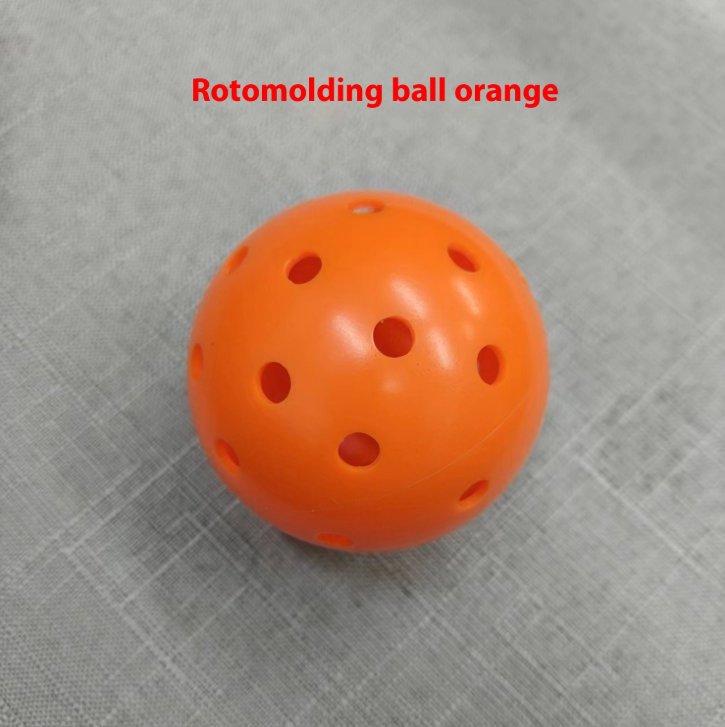
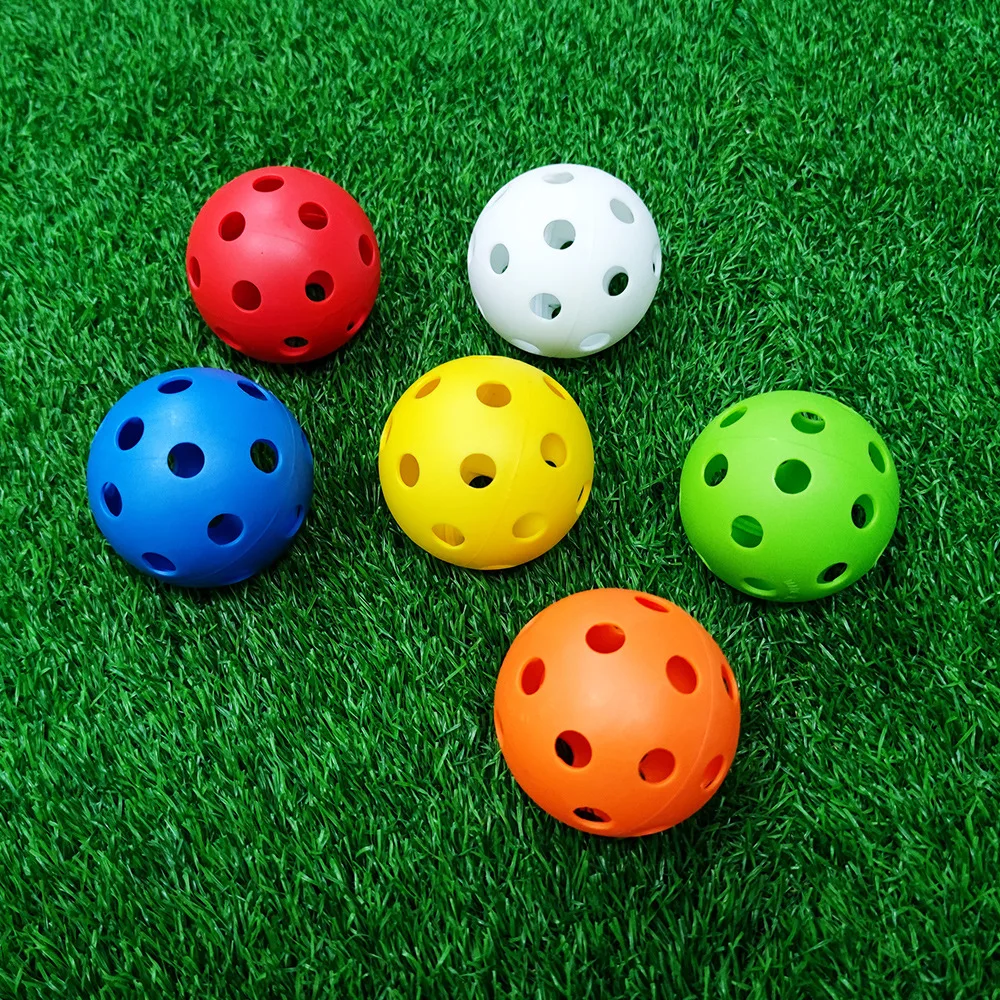
Even a seamlessly molded sphere will lose its bounce consistency if its raw plastic formula cannot handle extreme court temperatures. Basic polyethylene is highly sensitive to thermal drift: on an outdoor asphalt court baking at thirty-eight degrees Celsius in Arizona or Spain, standard plastic softens into a gummy state that absorbs kinetic energy and kills ball bounce after three games. Conversely, on a brisk ten-degree Celsius morning in Canada or northern Europe, un-modified plastic stiffens into brittle glass that bounces overly high before cracking along the drill holes. Leading wholesale pickleball balls manufacturers solve this thermodynamic challenge by compounding high-density polyethylene with proprietary cross-linked Thermoplastic Elastomer modifiers and UV-stabilizing agents. This engineered copolymer blend locks the sphere’s Shore D durometer hardness inside an optimal forty-three to forty-six rating across a thirty-degree Celsius temperature swing. Furthermore, post-curing multi-spindle Computer Numerical Control drilling guarantees that all twenty-six indoor holes or forty outdoor holes are spaced with mathematical symmetry, preventing uneven structural flex around the apertures during heavy baseline drives.
Reviewing consumable sales and member feedback from commercial court franchises demonstrates how uniform bounce physics directly drives brand loyalty and repeat revenue. Consider an eighteen-court indoor-and-outdoor pickleball club and pro shop franchise based in Charlotte, North Carolina, with sister venues in Brisbane, Australia. Two years ago, the procurement team stocked an inexpensive private label ball sourced through a promotional goods broker. During summer outdoor leagues, players complained that balls went soft and unplayable within fifteen minutes, while indoor winter tournament competitors refused to use them due to wild skidding off the kitchen line. Ahead of the next seasonal calendar, the franchise director partnered directly with a specialized rotational molding factory to develop a tournament-grade custom pickleball balls line featuring a thermal-stabilized TPE-polymer formula and forty CNC-beveled holes. Blind bounce-test demonstrations in the pro shop showed less than a half-inch variance across fifty consecutive drops. Member complaints about dead rebounds plunged by ninety-one percent, the ball was adopted as the official league sphere across all club locations, and retail three-pack tube sales doubled within four months.
Delivering thousands of custom spheres that bounce identically from the first carton to the last requires partnering directly with an industrial manufacturer equipped with automated laboratory quality gates. When bulk pickleball balls orders are routed through third-party trading intermediaries, factories often mix regrind scrap plastic into the virgin resin hoppers or rush the cooling cycle to cut costs—resulting in oval-warped spheres that wobble in flight and bounce crookedly. Collaborating directly with a vertically integrated factory eliminates those production shortcuts completely. This is where Taspo serves as the trusted manufacturing powerhouse for global pickleball brands, club networks, and sporting goods distributors. Operating modern ISO-certified rotational molding ovens, multi-axis CNC bevel-drilling stations, and climate-controlled testing labs equipped with optical laser drop-height sensors and granite rebound slabs, Taspo verifies that every custom pickleball balls batch holds strict USAPA bounce, weight, and Shore D hardness tolerances. By consolidating bulk pickleball balls orders alongside Taspo’s USAPA-approved thermoformed T700 raw carbon paddles, tacky overgrips, protective edge tapes, and thermal bags, brands lock in factory-direct margins and earn unshakeable player trust on every bounce.
 Hot News
2026-11-20
2026-11-20
2026-11-20
2026-11-20
2026-11-20
2026-11-20
 EN