In the fast-paced enclosure of a modern padel court, point construction relies entirely on geometric predictability. Unlike traditional lawn tennis where players mostly judge a single ground bounce before striking the ball, padel athletes must constantly calculate complex multi-surface trajectories involving silica-sand artificial turf, tempered glass walls, and metallic mesh fencing. This dynamic three-dimensional environment explains why a consistent padel ball bounce serves as the foundational pillar of competitive playability. When a defending player retreats to the back corner to execute a defensive lob off the double glass, muscle memory and spatial timing are calibrated to fractions of a second. If a ball suffers from erratic rebound behavior, skidding dead off the turf on one point and flying unpredictably high off the glass on the next, tactical rhythm collapses completely. Superior padel ball quality ensures that kinetic energy transfers uniformly during both vertical ground impacts and angled wall collisions. For tournament contenders executing delicate overhead shots like the bandeja or the vibora, knowing the exact apex of the rebound allows them to strike the ball at the optimal contact window. Without reliable rebound uniformity, matches degenerate into frustrating guessing games, stripping athletes of the confidence needed to aim for tight angles and accelerating forearm fatigue due to last-millisecond swing adjustments.
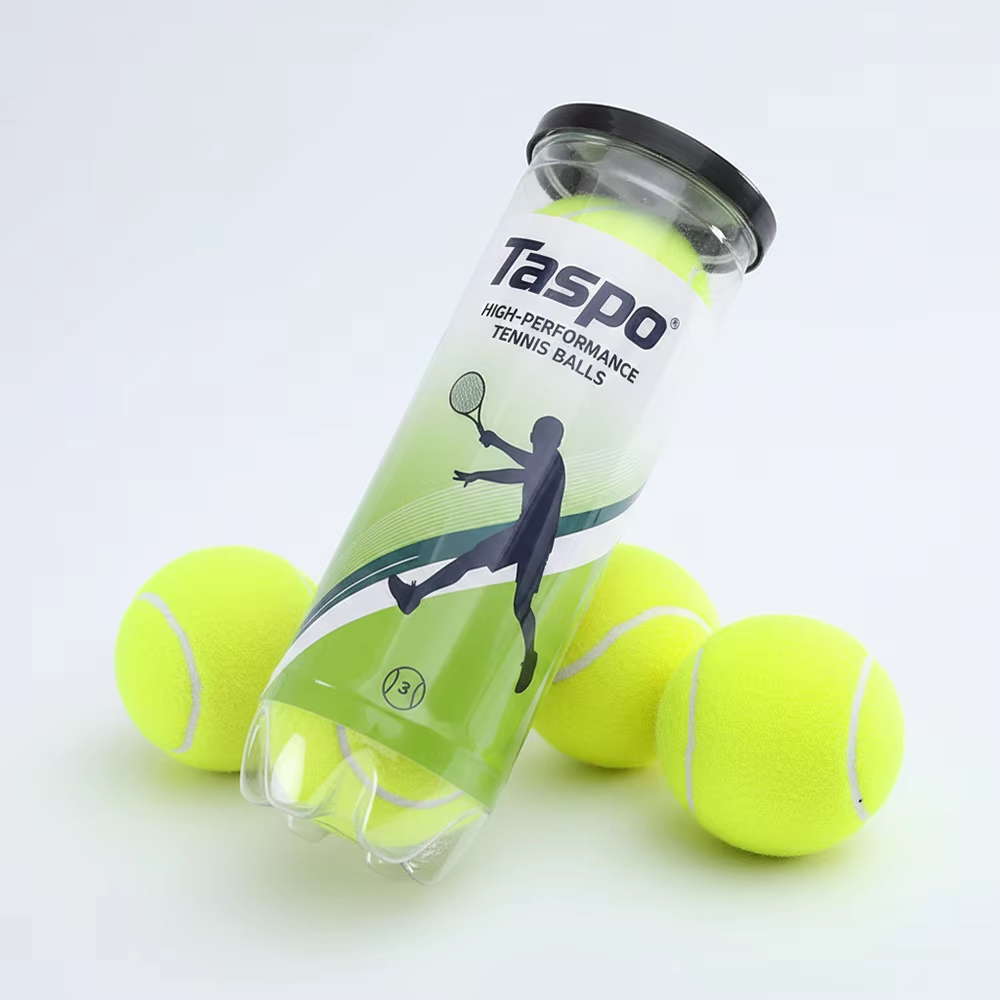
Achieving predictable court dynamics begins deep beneath the exterior yellow felt, right inside the pressurized rubber bladder. The mechanical engine driving a consistent padel ball bounce is the precise synergy between internal gas pressure and elastomeric wall elasticity. High-performing pressurized padel balls are typically inflated to an internal gauge pressure hovering between ten and eleven pounds per square inch, which is slightly lower than standard tennis balls to accommodate smaller court dimensions. Maintaining this internal atmosphere requires formulating the core from high-purity virgin butyl rubber compounds blended with specialized curing agents. Lower-tier factories frequently cut manufacturing costs by incorporating reclaimed rubber scraps and porous mineral fillers into their core batches. Under the microscope, these inferior rubber matrices contain microscopic voids that allow pressurized air molecules to escape rapidly once the seal of the packaging tube is broken. Furthermore, inconsistent rubber wall thickness across the two molded hemispheres creates lopsided mass distribution, causing the sphere to wobble in flight and kick sideways upon hitting the turf. A dedicated padel ball manufacturer prevents these structural flaws by utilizing high-shear internal mixers and precision-machined compression molds. By achieving uniform cross-linking density across the entire rubber shell, premium cores resist sudden pressure drops and retain their lively elastic memory across hundreds of high-velocity racket impacts.
In professional sporting goods manufacturing, subjective court impressions must always be backed by rigorous, quantifiable laboratory verification. Governing bodies such as the International Padel Federation enforce strict physical parameters to safeguard tournament fairness worldwide. According to official homologation regulations, tournament padel balls must weigh between 56.0 and 59.4 grams and measure between 6.35 and 6.77 centimeters in diameter. Most importantly, when dropped from an exact height of 254 centimeters onto a solid granite slab under controlled temperature and atmospheric conditions, the sphere must exhibit a vertical rebound height strictly between 135 and 145 centimeters. Achieving this narrow ten-centimeter window across tens of thousands of production units is the ultimate benchmark of padel ball quality. Beyond static drop testing, advanced quality assurance laboratories subject samples to dynamic Stevens compression testing, measuring exact forward and return deformation under an applied load of 8.165 kilograms. If a core compresses too easily, the ball feels mushy and dead on the carbon paddle face; if it resists deformation excessively, it transmits jarring shockwaves straight into the athlete's wrist and elbow joints. An established padel ball manufacturer conducts automated batch sampling across every vulcanization shift, ensuring that every single pressurized can leaving the assembly line satisfies international championship tolerances without deviation.
Even when a rubber core is molded to perfection, external environmental variables and textile dynamics heavily influence how a ball behaves during a grueling ninety-minute match. Ambient temperature, barometric altitude, and court surface moisture constantly interact with the exterior cloth covering. A consistent padel ball bounce depends heavily on the mechanical marriage between the rubber core and the outer woven felt. During high-speed collisions with rough, sand-textured carbon rackets and abrasive turf, the outer felt compresses and expands in unison with the rubber bladder. Premium tournament padel balls utilize tightly woven wool and nylon fabrics treated with hydrophobic polymers. In humid coastal regions or damp evening outdoor leagues, cheap synthetic needle-punched felt acts like a sponge, absorbing ambient moisture from the turf. As the felt becomes waterlogged, static weight spikes above legal limits and rebound height drops drastically within a single set. Conversely, in high-altitude arid environments where thinner air reduces aerodynamic drag, inferior balls bounce uncontrollably out of the court cage. By calibrating wool-to-nylon ratios and vulcanizing seam adhesive tension with microscopic accuracy, engineers stabilize pressurized padel balls against climatic extremes, ensuring that rebound decay remains under five percent from the opening serve to match point.
For international sports brands, regional padel federations, and commercial club chains, the commercial value of equipment is measured by player satisfaction and repeat purchase velocity. Club managers who purchase thousands of cans annually quickly abandon suppliers whose products go flat after forty-five minutes of recreational play. Elevating padel ball quality from a marketing slogan into an industrial reality requires partnering with a vertically integrated manufacturing powerhouse. Producing reliable tournament padel balls at scale demands automated rubber calendar lines, multi-cavity isothermal vulcanizing presses, and computerized nitrogen-flushed canning tunnels that lock in factory pressure for up to twenty-four months of warehouse storage. In this specialized industrial sector, Taspo Sports stands at the forefront of global racket sports engineering. Through continuous elastomer formulation research, precision textile bonding, and strict multi-stage sorting protocols, Taspo Sports delivers pressurized padel balls that exemplify world-class rebound stability and abrasion resistance. Operating as a trusted, full-service padel ball manufacturer, Taspo Sports empowers private label brands and international distributors with customized felt densities, bespoke pressurized packaging, and rock-solid batch consistency, ensuring that every player steps onto the court with absolute confidence in every bounce.
 Hot News
2026-11-17
2026-11-17
2026-11-17
2026-11-17
2026-11-17
2026-11-17
 EN


