EN



Why String Pattern Selection Enhances Tennis Racket Control
When buyers compare a tennis racket, weight and head size often lead the specification sheet. String pattern merits the same attention. The number and spacing of the mains and crosses influence how the string bed responds at impact, which in turn affects the feedback a player uses to direct the ball. For a brand, distributor, or sourcing team, pattern selection is not a shortcut to a universal “control racket.” It is a configuration decision that should match the intended player, string setup, and sample-test method.
As a B2B procurement coordinator, I would start with the player brief rather than a pattern label. A denser bed can suit a player who values a more contained, repeatable response. A more open bed can support a different launch and spin profile. Neither choice is automatically better; the useful question is whether the finished tennis racket helps the intended user manage depth, direction, and confidence at their usual swing speed.
What a string pattern actually describes
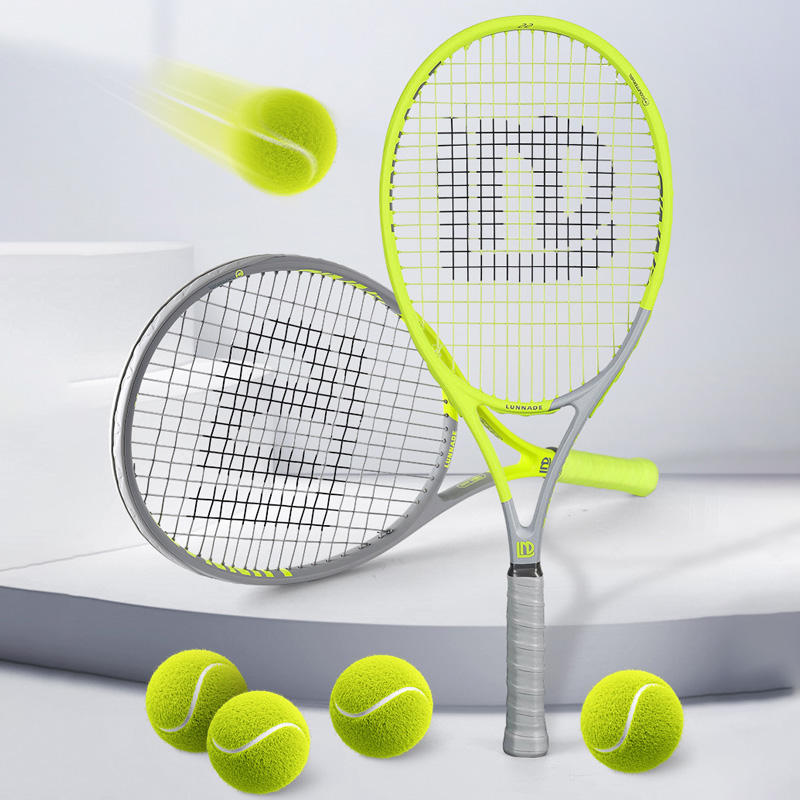
A pattern such as 16×19 refers to 16 main strings and 19 cross strings. An 18×20 layout is commonly described as denser because more strings occupy the hitting area. That shorthand is helpful, but it is not the whole specification. Head shape, the location of shared holes, and the spacing through the central hitting zone can make two rackets with the same count feel meaningfully different.
That is an important correction for a factory direct wholesale tennis racket program. A count on a purchase order does not fully define the string bed. Ask for a string map, drill pattern, and a strung sample. These details make it possible to compare central spacing rather than assuming every 16×19 or 18×20 tennis racket performs alike.

Why density can support a sense of control
Control is not a single laboratory number. On court, players often mean predictable direction, manageable depth, and a response they can trust when they accelerate. A denser pattern adds more contact points across the ball impact area. In practical terms, that can produce a more contained and consistent feel for players who hit flatter or who prefer to drive through the ball.
There is a real trade-off. With less open space between strings, there is generally less room for the main strings to move. Research and technical guidance on string beds describe how lateral main-string movement and snap-back can contribute to spin. A dense layout may therefore appeal to a player seeking a firmer directional reference, while an open layout may appeal to a player who wants more opportunity for string movement and spin. String type, gauge, and tension can shift the result, so pattern should not be presented as the only explanation.
Open versus dense: compare the decision, not the slogan
| Configuration question | Relatively dense pattern | Relatively open pattern |
|---|---|---|
| Typical reason to evaluate it | A player wants a more contained, repeatable response. | A player wants more string movement and a spin-oriented response. |
| What to test | Directional consistency, depth on driven balls, and feel as tension changes. | Launch behavior, spin response, string movement, and durability over play. |
| Common sourcing mistake | Assuming every high-count layout is equally controlled. | Calling it “more powerful” without matching string and tension. |
For either option, use the same ball type, string model, gauge, and reference tension when comparing samples. Otherwise, the test mixes too many variables. A useful sample review records where shots land, how quickly strings notch or move, and whether testers change their swing because the racket’s response feels unfamiliar.
Pair the pattern with the complete string-bed specification
A tennis racket’s pattern cannot be evaluated in isolation. Polyester, multifilament, natural gut, and hybrid constructions can differ in friction, stiffness, and tension maintenance. Gauge changes the contact geometry; tension changes perceived firmness and launch. Even two frames with identical patterns can create different outcomes when their head geometry or drill spacing changes.
For an export custom strung tennis racket request, the brief should include more than the mains-by-crosses count. Confirm the frame pattern, string family, gauge, target tension or range, one-piece or two-piece method, and the intended player profile. If the buyer needs a claim for a product page, limit it to what the final sample and approved evidence support. “Designed for a controlled response” may be appropriate after validation; an unconditional performance promise is not.
A practical sampling checklist for buyers
- Define the player and shot pattern. Is the target user a developing club player, a heavy topspin hitter, or a flatter ball striker? The right tennis racket brief starts there.
- Compare like for like. Keep frame weight, balance, grip, string material, gauge, and tension aligned while changing the pattern where possible.
- Inspect the central string map. Check actual spacing in the hitting zone, not only the 16×19 or 18×20 label.
- Use a repeatable court protocol. Include crosscourt rallies, directional targets, returns, and pressure shots. Capture tester observations immediately.
- Review wear and movement. Control on day one is only part of the decision; document tension feel, notching, and string displacement after consistent use.
- Approve the production reference. Retain the signed sample, stringing instructions, and inspection points for repeat orders.
Turn pattern selection into a clearer product decision
A useful approach is specific rather than sweeping. Dense and open patterns establish different starting conditions for ball contact and string movement, but the finished tennis racket must be judged as a system. If the objective is dependable directional feedback, start by testing a denser candidate against a comparable open candidate. Then keep the evidence: the string map, stringing settings, tester profile, and on-court notes.
For wholesale or custom programs, that record helps product, sourcing, and sales teams describe the racket consistently. It also prevents a familiar mistake: choosing a pattern from a catalog label, then trying to explain an unexpected feel after production. Ask what the player needs to control, test the whole string bed, and approve only the configuration that proves suitable for the intended use.
 Hot News